Pope Francis Lies in State as World Prepares for Funeral
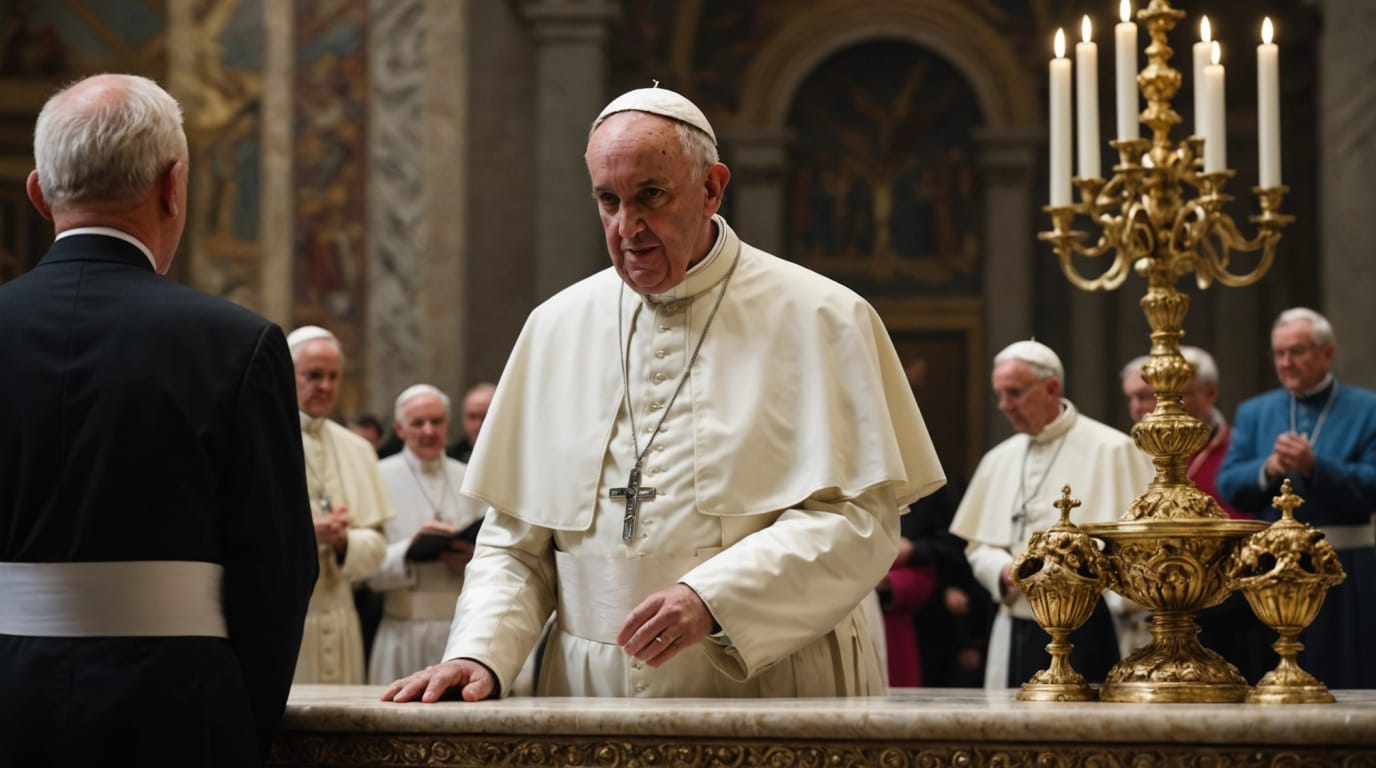
VATICAN CITY (AP) — Pope Francis, who died unexpectedly on Monday at the age of 88, is lying in state at St. Peter's Basilica, drawing thousands of mourners from around the world to pay their final respects. The Vatican has announced that his funeral will be held on Saturday, April 26, in St. Peter's Square.
The pontiff's death, attributed to a stroke and cardiac arrest following a bout of double pneumonia earlier this year, has set in motion the ancient traditions of the Catholic Church, including the public viewing and the eventual conclave to elect his successor.
A Somber Procession
On Wednesday morning, the Pope's body was moved from the chapel of the Casa Santa Marta, where he resided for the past 12 years, to St. Peter's Basilica. The solemn procession was led by cardinals, with the coffin entering the basilica through its central door. Cardinal Kevin Joseph Farrell, the camerlengo of the Holy Roman Church, presided over a prayer service before the public viewing commenced.
Images released by the Vatican show Pope Francis in repose, dressed in a white mitre and a red chasuble, with a rosary in his hands. Two Swiss Guards stood watch as cardinals, officials, and Vatican staff paid their respects in the Casa Santa Marta chapel before the transfer.
Global Leaders to Attend Funeral
The funeral Mass, scheduled for 10:00 am (08:00 GMT) on Saturday, will be led by Cardinal Giovanni Battista Re, the dean of the College of Cardinals. World leaders, including the Prince of Wales, U.S. President Donald Trump, French President Emmanuel Macron, and Ukrainian President Volodymyr Zelensky, are expected to attend, alongside clergy from around the globe and hundreds of thousands of pilgrims.
Security measures are being heightened in Rome in anticipation of the large crowds. The city is preparing for an influx of visitors, with hotels near the Vatican fully booked.
A Legacy of Reform and Compassion
Pope Francis's 12-year papacy was marked by his advocacy for the marginalized, his focus on social justice issues, and his efforts to reform the Catholic Church. He championed the cause of migrants and refugees, spoke out against economic inequality, and called for action on climate change.
His papacy also saw clashes with traditionalist factions within the Church, particularly over his more inclusive approach to LGBTQ+ individuals and his efforts to decentralize power within the Vatican. Despite these challenges, he remained a popular figure, admired for his humility, his pastoral approach, and his commitment to serving the poor.
The Path to a New Pope
Following the funeral, the cardinals will convene in a conclave to elect Pope Francis's successor. The conclave, expected to begin after May 6, will involve 135 cardinal electors, nearly 80 percent of whom were appointed by Francis himself. They will gather in the Sistine Chapel, seal themselves off from the outside world, and engage in a series of secret ballots until a new pope is elected by a two-thirds majority.
The process is steeped in tradition, with prayers, rituals, and the burning of ballots to signal the outcome to the waiting world. Black smoke indicates that no decision has been reached, while white smoke signifies that a new pope has been chosen.
A Final Resting Place
In a departure from recent tradition, Pope Francis requested to be buried in the Basilica of St. Mary Major in Rome, rather than in St. Peter's Basilica. This basilica holds special significance for Francis, as he often prayed there before and after his international trips. He will be laid to rest in a simple tomb bearing only the inscription of his papal name, Franciscus. Seven other popes are buried there, but the last one to be buried there was Clement IX in 1669.
Mourning and Reflection
As the world mourns the loss of Pope Francis, many are reflecting on his legacy and his impact on the Catholic Church and the world. His emphasis on mercy, compassion, and social justice resonated with people of all faiths and backgrounds. His papacy challenged the Church to be more inclusive, more responsive to the needs of the poor, and more engaged in addressing the pressing issues of our time.
The coming days will be a time of mourning, reflection, and preparation for the future of the Catholic Church. The election of a new pope will mark the beginning of a new chapter, but the legacy of Pope Francis will continue to inspire and guide the Church for generations to come.


