Portugal Calls for Early Elections After Government's Collapse
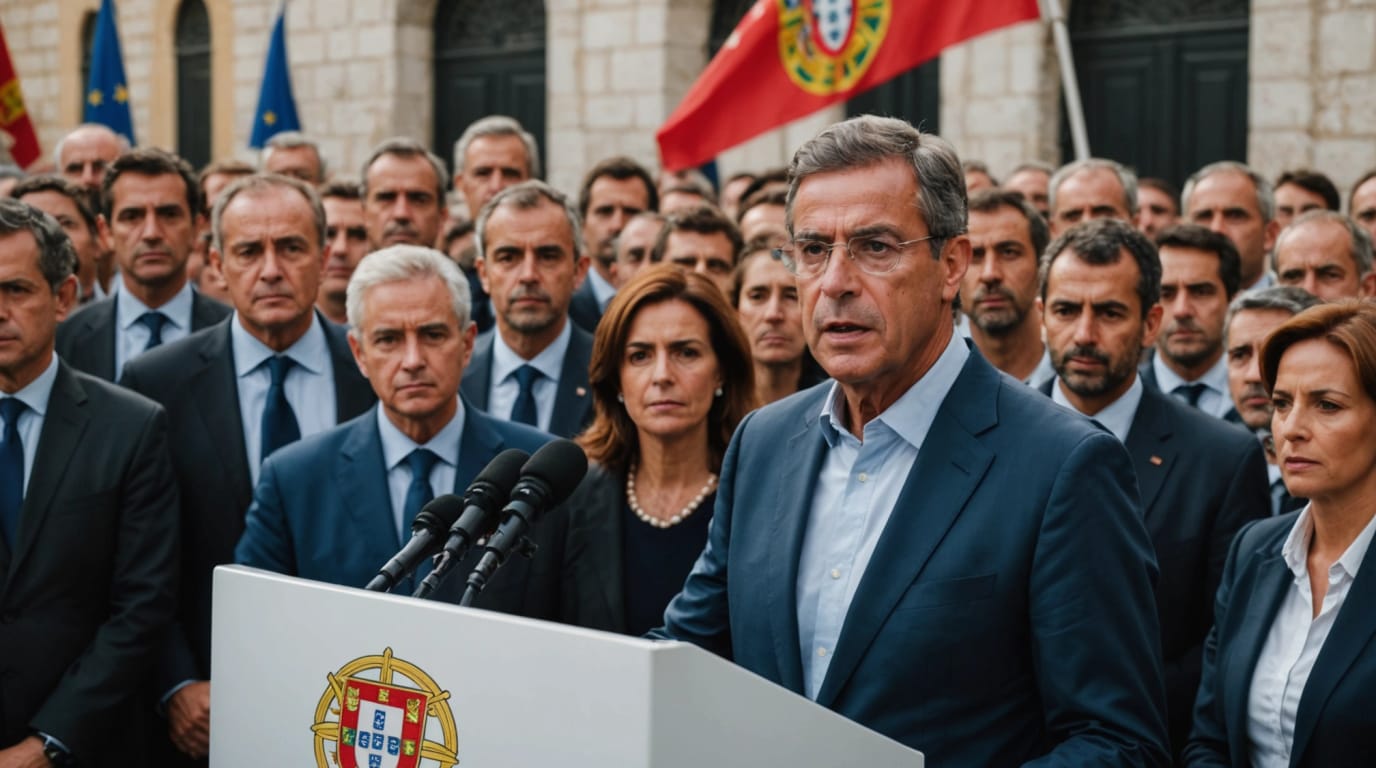
LISBON, Portugal – Portugal is set to hold early parliamentary elections on May 18 after the minority government led by Prime Minister Luís Montenegro collapsed following a failed confidence vote. President Marcelo Rebelo de Sousa announced the election date Thursday, marking the third time in just over three years that the country will head to the polls. The political turmoil comes amid concerns about potential conflicts of interest involving the Prime Minister and his family business.
The collapse of Montenegro's center-right government, which had been in power for less than a year, plunges Portugal into a period of uncertainty as it grapples with critical economic decisions and navigates challenges facing the European Union. The government's downfall occurred Tuesday when it lost a confidence vote in parliament, with 142 members voting against the government and only 88 in favor.
Confidence Vote Fails Amidst Conflict of Interest Allegations
The crisis stems from allegations of conflicts of interest surrounding Montenegro and a family-owned consultancy firm, Spinumviva. Opponents claimed that Spinumviva received payments from companies involved in government contracts. Montenegro has denied any wrongdoing, asserting that he never prioritized personal interests over the public good.
Despite his pleas for stability, key opposition parties, including the Socialist Party and the far-right Chega party, united to vote against the government. The failed confidence vote underscores the difficulties faced by minority governments in Portugal, where traditional parties have lost ground to smaller, emerging political forces.
Political Instability and Economic Implications
The government's collapse raises concerns about potential delays to key policy decisions, including the privatization of state-owned airline TAP SA and investments in infrastructure projects such as high-speed railway links. Montenegro's administration also aimed to increase defense spending, aligning with other European nations.
Portugal is currently in the process of investing more than 22 billion euros ($24 billion) in EU development funds, and the political instability could disrupt these crucial investments. The uncertainty also comes as the EU faces significant challenges to its security and economy, further emphasizing the need for political stability within member states.
Rise of Populist Sentiment
The upcoming election could see a surge in support for the right-wing populist party Chega (Enough), which has capitalized on voter frustration with the two mainstream parties, the Social Democratic Party and the Socialist Party. Chega already holds 49 seats in parliament, making it the third-largest party.
Portugal has experienced a rise in populism, mirroring trends seen across Europe. Voter discontent with repeated elections could further fuel support for Chega, potentially reshaping the country's political landscape.
A History of Minority Governments
Portugal has a history of unstable minority governments. In the 50 years since the Carnation Revolution that ended a four-decade dictatorship, only two minority governments have completed their full four-year terms. The traditional dominance of the Social Democratic Party and the Socialist Party has been challenged in recent years, leading to increased political fragmentation.
The last parliamentary election was held in March 2024 after then-Prime Minister António Costa resigned due to corruption investigations. Costa is now the President of the European Council.
Election Outlook
Montenegro has stated that he will seek reelection. Polls suggest a close race between his AD coalition and the Socialist Party, led by Pedro Nuno Santos. Santos, a former infrastructure minister, advocates for a strong state role in key industries.
One poll showed the AD coalition leading with 34% support, followed by the Socialists with 29% and Chega with 14%. Another poll indicated the Socialists leading the ruling coalition by a narrow margin. The outcome of the election remains uncertain, and the potential for another minority government looms large.
Portugal now faces a period of intense political campaigning as parties vie for power. The election results will determine the country's direction as it navigates economic challenges and contributes to the broader European agenda. The need for a stable and effective government is paramount as Portugal seeks to secure its future within the European Union.


