Portugal Faces Historic Presidential Runoff as Socialist Contender Seeks Mandate Amidst Rising Far-Right Influence
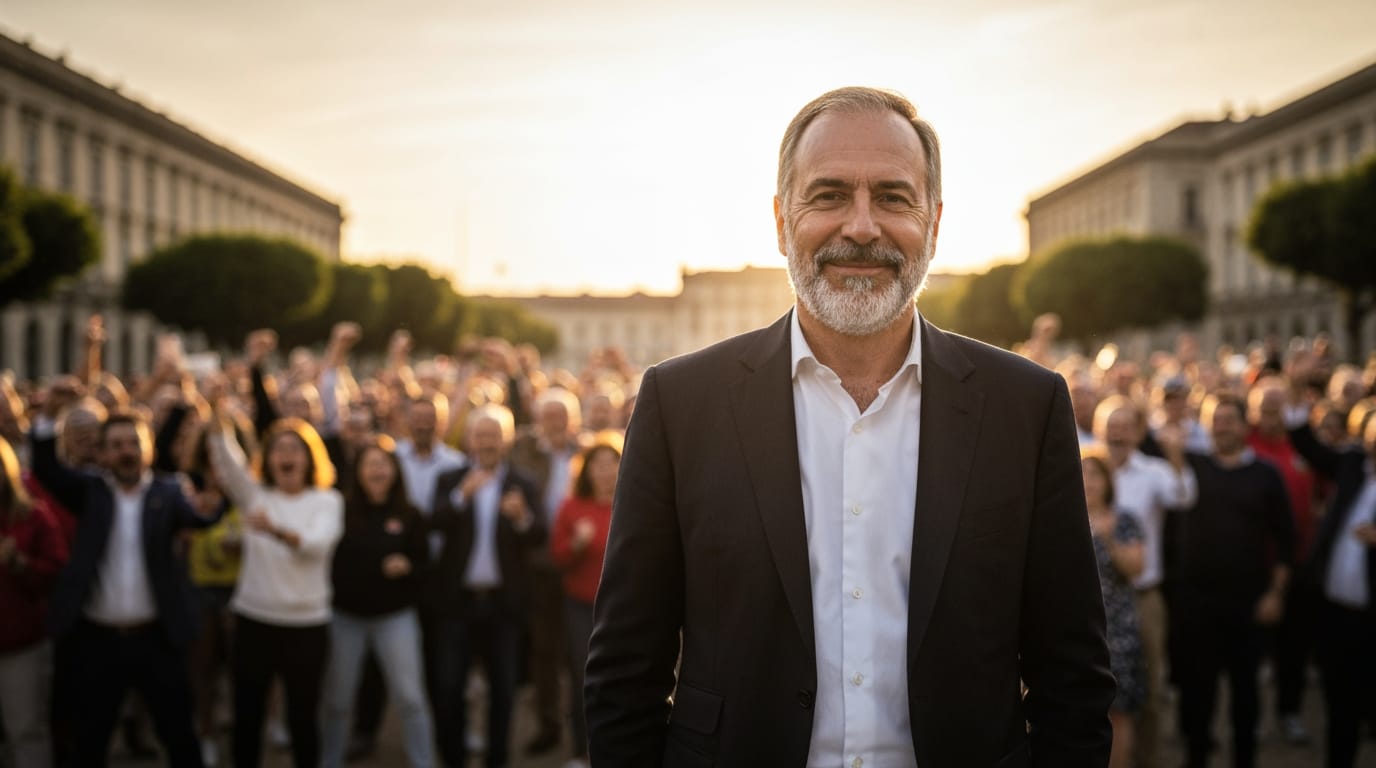
LISBON, Portugal – Portuguese voters head to the polls today, February 8, 2026, for a pivotal presidential runoff election, a contest that pits Socialist candidate António José Seguro against André Ventura, the leader of the surging far-right Chega party. The election marks only the second time in Portugal's democratic history, since the end of its fascist dictatorship in 1974, that a presidential race has extended beyond a single round. The outcome is poised to shape the nation's political trajectory for years to come, with moderate forces rallying behind Seguro to counter the populist tide represented by Ventura.
A Nation at a Crossroads: The Runoff Decides
The electoral drama unfolded on January 18, 2026, when no candidate secured the required absolute majority in the first round of voting. António José Seguro, a former leader of the Socialist Party (PS), emerged as the frontrunner, securing approximately 30.6% to 31.1% of the ballots cast. His closest rival, André Ventura, captured a significant share of the vote, ranging from 23.5% to 24.2%, demonstrating the continued growth of his seven-year-old party. Joao Cotrim Figueiredo of the Liberal Initiative came in third with around 15.5% to 16%, among a field of 11 contenders. The first round's turnout was 52.39%, indicating considerable public engagement in this critical election.
The necessity of a second round is a stark departure from recent Portuguese presidential elections, reflecting a notably fragmented political landscape. The last instance of a presidential runoff occurred in 1986, underscoring the unusual nature of the current electoral cycle. This runoff is widely seen not just as a choice between two individuals, but as a referendum on the country's direction, particularly concerning the rise of populist and far-right movements that have gained traction across Europe.
António José Seguro: The Call for Unity
António José Seguro, supported by the Socialist Party, has positioned himself as the bulwark against what he describes as "extremism," urging "all democrats" to unite behind his candidacy. His campaign has focused on traditional center-left themes, appealing to a broad segment of the electorate seeking stability and continuity within Portugal's established democratic institutions. Seguro's platform, though not extensively detailed in initial reports, is understood to align with the Socialist Party's focus on social welfare, economic stability, and European integration.
In the run-up to the runoff, moderate political figures, including some from the conservative spectrum, have openly called for their voters to support Seguro. This unusual cross-party appeal highlights a perceived urgency to prevent a far-right presidency. However, Prime Minister Luís Montenegro, who leads a center-right minority government, has notably refrained from explicitly endorsing Seguro, a silence interpreted by some as a calculated political move within the complex parliamentary dynamics. The incumbent president, Marcelo Rebelo de Sousa, from the Social Democratic Party, was ineligible for re-election after serving two five-year terms.
André Ventura and the Ascendant Far-Right
André Ventura's strong showing in the first round underscores the significant shift in Portuguese politics. His Chega party, founded just seven years ago, has rapidly ascended, becoming the main opposition party in a parliamentary election in May 2025 by winning 22.8% of the vote. Ventura's campaign has resonated with a segment of the electorate expressing discontent with mainstream parties, advocating for anti-establishment and anti-immigration policies. His performance in the first round, where opinion polls had surprisingly tipped him as a favorite, demonstrates a growing appetite for his populist rhetoric.
Ventura's success mirrors a broader trend across Europe, where far-right parties have gained increased influence. The prospect of a far-right candidate reaching the second round of a Portuguese presidential election for the first time in four decades has generated considerable debate about the country's political future and its traditional resistance to such movements. A strong showing for Ventura, even in defeat, could further solidify Chega's position and potentially reshape the political landscape for a generation, potentially at the expense of the traditional right.
The President's Role in a Dynamic Political Climate
While the role of the Portuguese president is largely ceremonial, it is far from purely symbolic. Under Portugal's semi-presidential system, the president acts as a "guarantor of the institutions" and wields significant "reserve powers." These powers include the authority to dissolve the Assembly of the Republic, call for early legislative elections, and veto legislation. This authority is particularly relevant given Portugal is currently governed by a center-right minority administration led by Prime Minister Luís Montenegro. The president's capacity to influence the legislative agenda and intervene in times of political deadlock makes this election's outcome exceptionally consequential.
The election also follows a period of heightened political activity in Portugal, including three legislative elections since 2021, culminating in the March 2024 legislative elections, the European elections in June 2024, and local elections in October 2025. This backdrop of frequent electoral contests highlights a dynamic and sometimes volatile political environment, where the presidential office serves as a crucial balancing force.
Conclusion: A Decisive Moment for Portuguese Democracy
As the final votes are tallied today, February 8, 2026, Portugal stands at a defining juncture. The runoff between António José Seguro and André Ventura represents more than just a choice for the nation's head of state; it is a test of the resilience of its democratic traditions against the backdrop of rising populism. A victory for Seguro would likely be seen as a reaffirmation of Portugal's centrist and pro-European path, while a significant performance by Ventura would signal a continued and perhaps irreversible shift in the country's political priorities. Regardless of the outcome, this election will undoubtedly leave an indelible mark on Portugal's political future, setting the stage for subsequent legislative and social debates.


