Portugal's Government Collapses After No-Confidence Vote, Triggering Snap Election
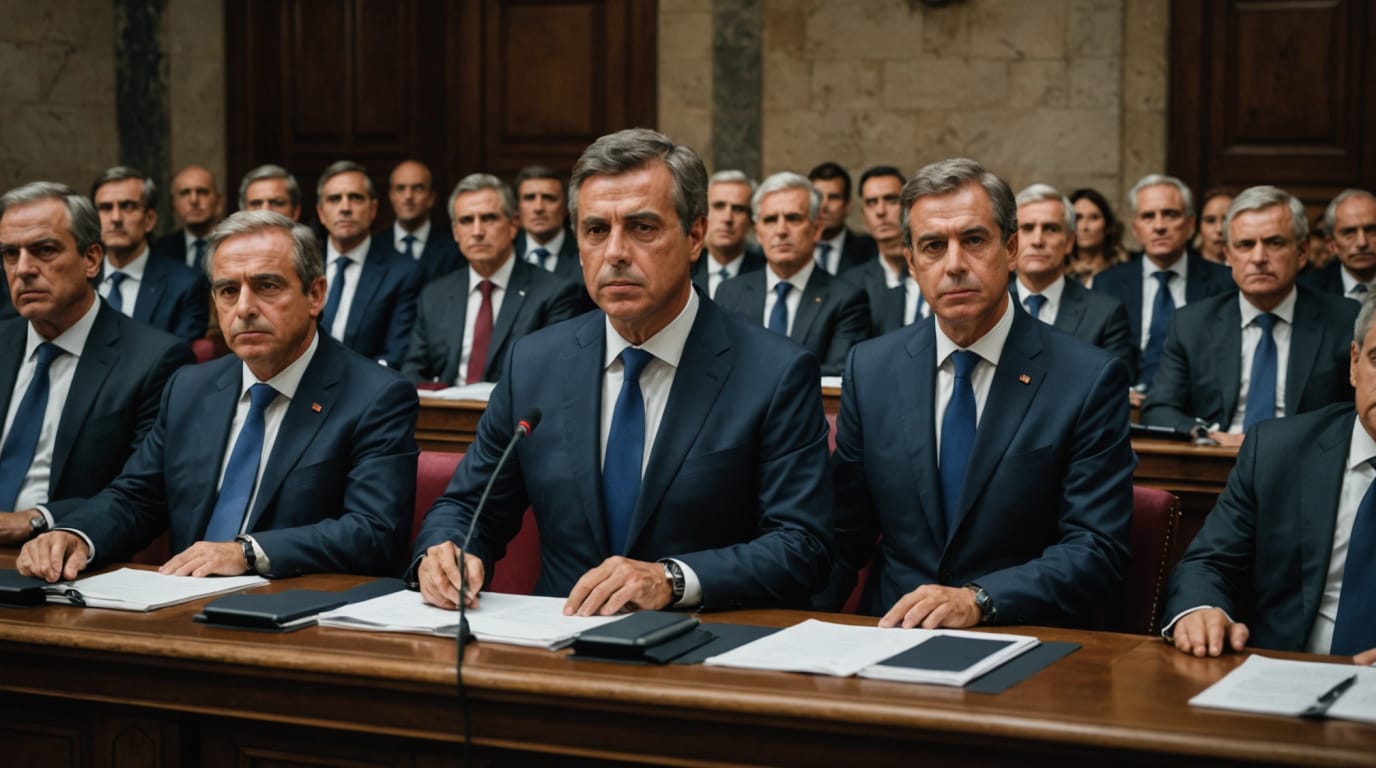
LISBON, Portugal — Portugal's minority government is set to fall after losing a confidence vote in parliament Tuesday, paving the way for a snap election. The move plunges the country into a period of political uncertainty for the third time in as many years, adding to Europe's existing economic and security concerns.
The government, led by Social Democrat Prime Minister Luis Montenegro, requested the confidence vote in an attempt to "dispel uncertainty" surrounding its future. However, the vote backfired as an overwhelming majority of opposition lawmakers indicated their intention to vote against the center-right administration.
Under the Portuguese Constitution, a defeat in a confidence vote automatically triggers the government's collapse, necessitating a new general election. This latest political crisis stems from allegations of conflicts of interest involving Montenegro's family law firm.
Conflict of Interest Allegations
The controversy centers on the business dealings of Montenegro's family law firm. Opposition parties have raised concerns about potential conflicts of interest, particularly regarding payments the firm receives from a company holding a major gambling concession granted by the government.
Montenegro has denied any wrongdoing, stating that he relinquished control of the firm to his wife and children upon becoming leader of the Social Democratic Party in 2022 and has not been involved in its operations since. Despite these claims, opposition parties, led by the center-left Socialist Party, have demanded further explanations and called for a parliamentary inquiry.
Political Landscape and Potential Outcomes
The current government, a coalition between the Social Democratic Party and the smaller Popular Party, holds 80 seats in the 230-seat parliament. Having been in power for less than a year, its collapse underscores the fragile political landscape in Portugal.
A snap election presents several possible outcomes. While Montenegro has stated his intention to stand for re-election, voter discontent with repeated trips to the polls could benefit the Chega (Enough) party, a radical-right populist movement that has gained traction by capitalizing on frustration with mainstream parties.
Economic Context and EU Implications
Portugal's political instability comes at a crucial time for the European Union. The country is in the process of investing over 22 billion euros in EU development funds. Protracted political uncertainty could jeopardize these investments and hinder Portugal's economic progress.
Despite the political turmoil, Portugal's economy has shown signs of resilience. Last year, the country's economic growth was estimated at 1.9%, surpassing the EU average of 0.8%. The unemployment rate stands at 6.4%, roughly in line with the EU average. The Social Democrats hope these figures will bolster their support in the upcoming election.
Historical Precedent and Future Outlook
Portugal has experienced a period of political instability in recent years. The upcoming election will be the third in three years, reflecting deep divisions within the Portuguese electorate and the challenges of forming stable coalition governments.
The next steps involve the formal dissolution of parliament and the scheduling of a new election. The President of Portugal will play a key role in this process, ensuring a smooth transition and adherence to constitutional procedures. The election date is yet to be announced, but it is expected to take place within the next few months.
Conclusion
The collapse of Portugal's government marks a significant moment in the country's political history. The upcoming election will be a crucial test of the electorate's preferences and will determine the future direction of the nation. As Portugal navigates this period of uncertainty, its European partners will be closely watching, hoping for a swift resolution and a return to stability. The outcome of the election will not only shape Portugal's domestic policies but also influence its role within the broader European context.


