Powerful Earthquake Rocks Myanmar and Thailand, Leaving Dozens Dead and Trapped
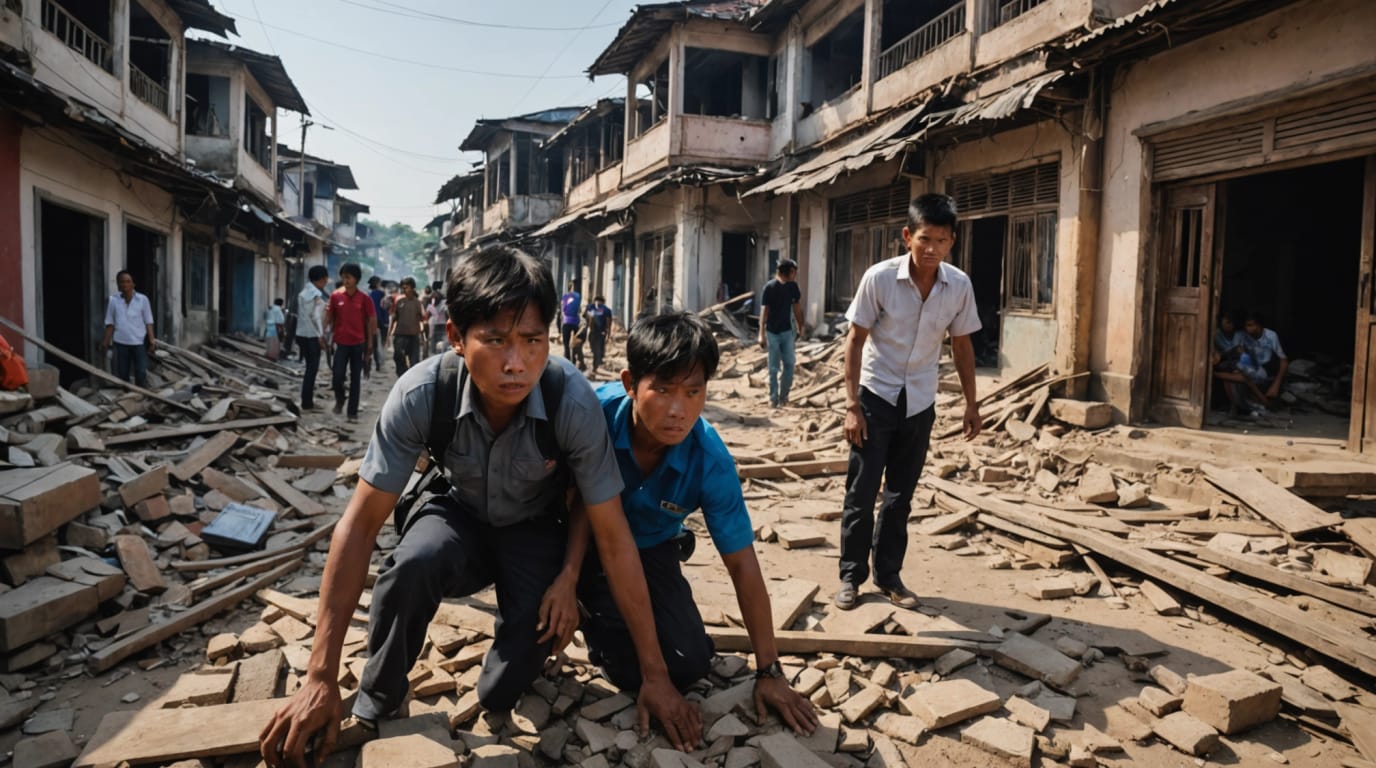
A powerful earthquake struck Myanmar on Friday, March 28, 2025, sending shockwaves through the region and causing widespread damage and casualties in both Myanmar and neighboring Thailand. The initial quake, measuring a magnitude of 7.7, was followed by a series of aftershocks, exacerbating the destruction and hampering rescue efforts. The disaster has prompted Myanmar to declare a state of emergency in several regions and states, while Thailand grapples with the collapse of a high-rise building in its capital, Bangkok.
Tremors Felt Across Southeast Asia
The earthquake, which hit at approximately 12:50 PM local time, was centered 16 kilometers northwest of the city of Sagaing in Myanmar, at a shallow depth of 10 kilometers. This shallow depth contributed to the intensity of the shaking, which was felt across a wide geographical area, including parts of China, India, Vietnam, and Bangladesh. Buildings swayed in Bangkok, Thailand, and residents reported feeling the tremors as far away as Hanoi, Vietnam.
Devastation in Myanmar
Myanmar has borne the brunt of the earthquake's impact. State-run broadcaster MRTV reported that at least 144 people have been killed and 732 injured. The quake buckled roads in the capital, Naypyidaw, and damaged numerous buildings, forcing residents to flee into the streets. The ruling military has declared a state of emergency in six regions and states, promising swift inquiries, rescue operations, and humanitarian aid. The country's strained medical system, particularly in rural areas, is facing immense pressure as it struggles to cope with the influx of injured.
Skyscraper Collapse in Bangkok
In Bangkok, Thailand, the earthquake triggered the collapse of a 30-story building under construction. At least three people were killed, and dozens more were trapped under the rubble. Deputy Prime Minister Phumtham Wechayachai announced the casualties and the ongoing rescue efforts. The collapse has led to the closure of Bangkok's public transportation system for safety reasons, leaving many stranded and adding to the sense of chaos in the city. Rescue workers are facing a race against time to locate and extricate those trapped within the debris.
Economic Impact and Aftershocks
The economic impact of the earthquake is already being felt. The Stock Exchange of Thailand suspended all trading activities for the afternoon session following the quake. This decision reflects concerns about market stability in the face of the disaster. The suspension affected all markets, including the Stock Exchange of Thailand (SET), the Market for Alternative Investment (MAI), and the Thailand Futures Exchange (TFEX). A strong 6.4 magnitude aftershock struck the same area minutes after the initial quake, further rattling nerves and hindering rescue operations. Authorities are warning of the possibility of further aftershocks in the coming days.
Historical Context and Regional Cooperation
Earthquakes are relatively common in Myanmar, which lies near the Sagaing Fault, a major geological feature running north to south through the country. Between 1930 and 1956, the region experienced six strong quakes of 7.0 magnitude or higher. A 6.8-magnitude earthquake in 2016 damaged the ancient city of Bagan, highlighting the region's vulnerability to seismic activity. Secretary (East) Jaideep Mazumdar emphasized the relevance of the BIMSTEC region in addressing extreme weather events and natural disasters, noting the devastating impact of the current earthquake.
International Response and Aid
Myanmar has indicated it is open to receiving assistance from "any country" to deal with the aftermath of the earthquake. While no Filipinos have been reported hurt in Thailand and Myanmar, according to Filipino diplomats, the broader international community is mobilizing to provide support. The immediate priorities are search and rescue operations, medical assistance, and the provision of shelter and essential supplies to those affected. The long-term recovery will require significant investment in infrastructure and disaster preparedness.
The earthquake serves as a stark reminder of the vulnerability of Southeast Asia to natural disasters. The immediate focus remains on rescuing those trapped and providing aid to the injured and displaced. As the region begins to assess the full extent of the damage, the need for improved building codes, disaster preparedness measures, and regional cooperation is more apparent than ever. The road to recovery will be long and challenging, but the resilience of the people of Myanmar and Thailand will be crucial in overcoming this tragedy.


