Pro-Palestinian Campus Protest Leader Arrested, Sparking Outcry
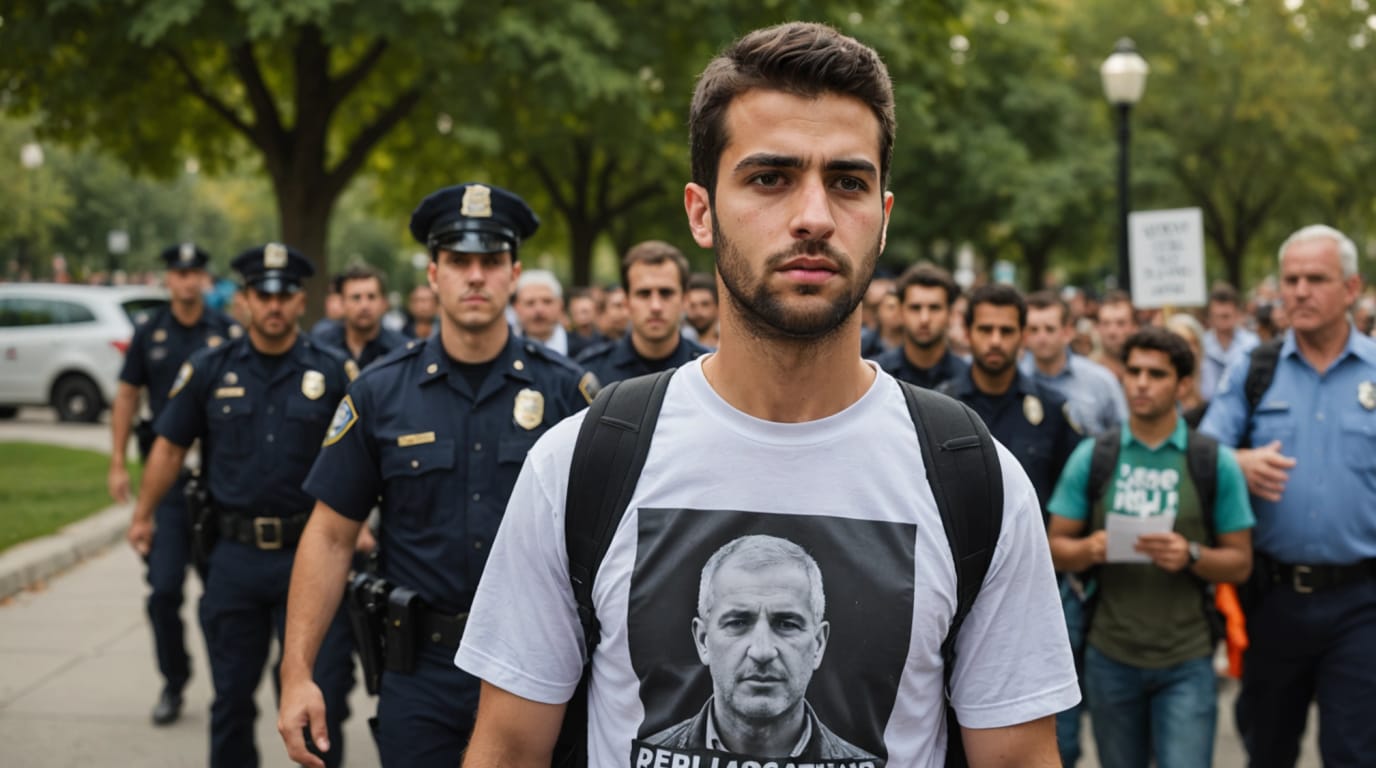
NEW YORK – A prominent leader of pro-Palestinian protests at Columbia University was arrested by U.S. Immigration and Customs Enforcement (ICE) agents, igniting a wave of condemnation from activists and raising concerns about freedom of speech on college campuses. The arrest comes amid heightened tensions surrounding campus activism related to the Israeli-Palestinian conflict and follows President Donald Trump's pledge to deport international students involved in protests.
Mahmoud Khalil, a Palestinian graduate student at Columbia's School of International and Public Affairs, was taken into custody at his university residence Saturday, according to the Student Workers of Columbia, a union representing student employees. Khalil, who holds a green card granting him permanent residency in the United States, played a key role in organizing and negotiating on behalf of student protesters who established a tent encampment on Columbia's campus last year and briefly occupied an academic building.
The Department of Homeland Security (DHS) confirmed the arrest, stating the action was taken "in support of President Trump's executive orders prohibiting antisemitism, and in coordination with the Department of State." Khalil's arrest occurred days after the Trump administration announced it was withholding $400 million in grants to Columbia University, citing concerns about the university's handling of alleged antisemitism on campus.
Arrest Details and Legal Challenges
According to Khalil's attorney, Amy Greer, ICE agents initially stated that Khalil was being detained due to orders from the State Department to revoke his student visa. However, after Greer clarified that Khalil was a permanent resident with a green card, the agents indicated they would also revoke his green card. As of Sunday, Khalil was being held at an immigration detention facility in Elizabeth, New Jersey. Greer told the Associated Press that federal agents have not informed Khalil's wife, who is eight months pregnant, whether he has been charged with a crime.
Greer expressed concern about the circumstances surrounding the arrest, stating, "We have not been able to get any more details about why he is being detained. This is a clear escalation. The administration is following through on its threats."
Reactions to the Arrest
The arrest has drawn sharp reactions from various groups and individuals. Progressive and pro-Palestinian organizations have denounced the arrest as an attack on free speech and a dangerous precedent. The Council on American-Islamic Relations (CAIR) called the arrest "a blatant attack on the First Amendment's guarantee of free speech, immigration laws, and the very humanity of Palestinians." Democratic Representative Pramila Jayapal tweeted, "Deporting legal residents solely for expressing their political opinions is a violation of free speech rights." A petition opposing Khalil's arrest garnered over 700,000 signatures within hours of his detention.
Conversely, some pro-Israel groups and figures have praised the arrest. Shai Davidai, an Israeli Columbia professor who has been critical of the university's response to anti-Israel activism, tweeted, "To be clear: Mahmoud Khalil was detained because he broke the law and his green card conditions." Betar US, a right-wing pro-Israel group, commended President Trump for the arrest and called for similar actions against other individuals.
Background: Campus Protests and Allegations of Antisemitism
Columbia University, along with other college campuses across the United States, experienced widespread student protests last year in response to the Israeli-Palestinian conflict. The protests, often characterized by encampments, demonstrations, and disruptions of campus activities, sparked heated debates about free speech, academic freedom, and the line between legitimate criticism of Israeli policies and antisemitism.
Columbia University has faced increasing scrutiny over its handling of alleged antisemitism on campus. The Department of Education has launched investigations into complaints of discrimination, and some members of Congress have called for stricter measures to combat antisemitism in higher education. In response, Columbia has taken steps to address these concerns, including implementing new policies and disciplinary measures. However, critics argue that the university has not done enough to protect Jewish students and faculty from harassment and intimidation.
Prior to his arrest, Khalil was reportedly under investigation by Columbia University for his role in the pro-Palestinian protests. He claimed the university had levied approximately 13 allegations against him, primarily related to "social media posts that I had nothing to do with." Khalil also stated that Columbia had threatened to block his transcript and prevent him from graduating after he refused to sign a non-disclosure agreement.
Implications and Future Outlook
Khalil's arrest raises significant questions about the future of campus activism and the rights of international students in the United States. The Trump administration has signaled a willingness to take a hard line against individuals who express support for groups designated as terrorist organizations or who engage in activities deemed to be antisemitic. Civil liberties advocates argue that these actions could have a chilling effect on free speech and academic freedom, particularly for students and scholars who hold dissenting views on controversial issues.
The case is likely to face legal challenges, with Khalil's attorneys expected to argue that his arrest and potential deportation violate his First Amendment rights and due process protections. The outcome of the case could have far-reaching implications for the rights of immigrants and the scope of government authority to restrict political expression.
As the legal proceedings unfold, the arrest of Mahmoud Khalil is certain to fuel further debate about the balance between national security concerns, the protection of civil liberties, and the role of universities as spaces for open inquiry and dissent. The case also underscores the increasingly complex and contentious landscape of campus activism in the United States, particularly in relation to the Israeli-Palestinian conflict.


