Putin Vows Security as Ukraine Intensifies Deep Strikes into Russian Territory
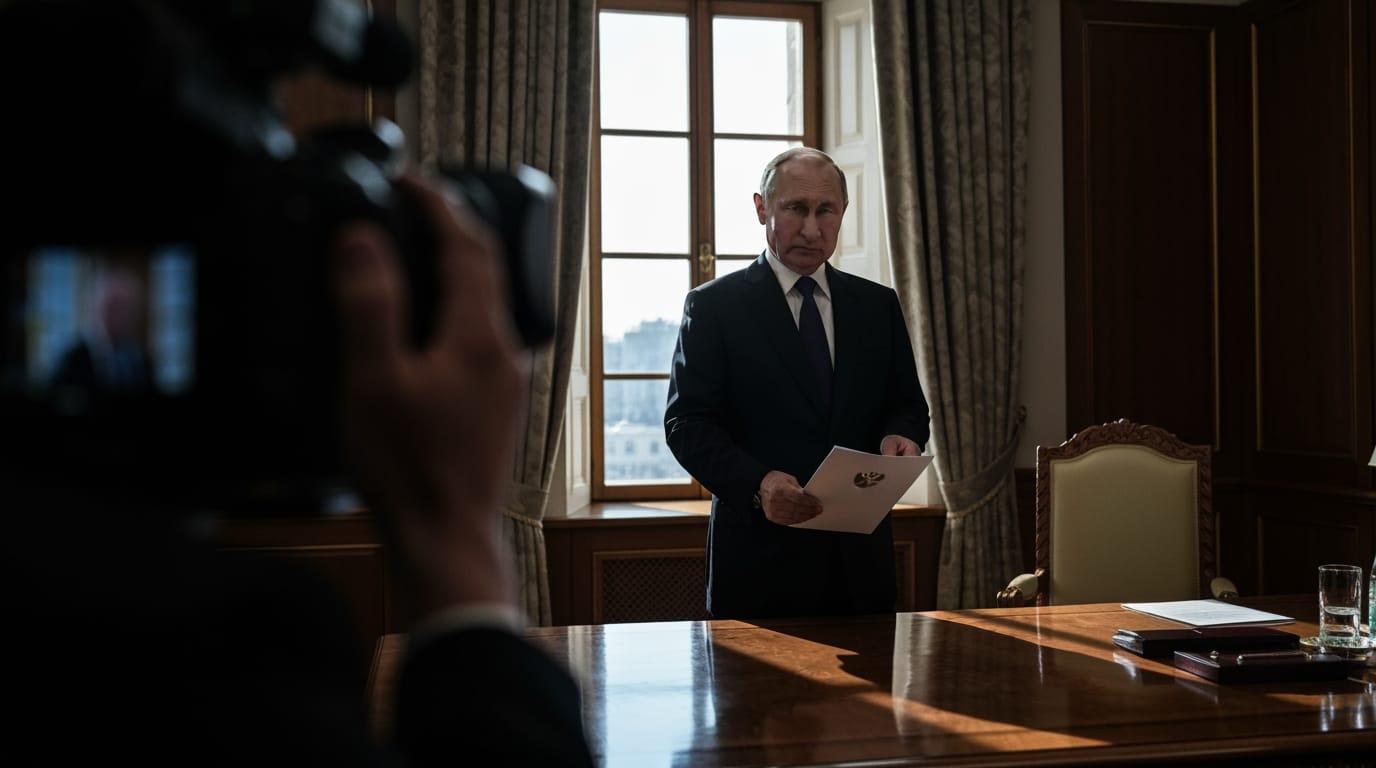
MOSCOW, RUSSIA – Russian President Vladimir Putin has pledged robust security for the nation and its citizens, asserting that Russia will overcome all challenges, including what he termed "terrorist attacks" on its territory and infrastructure. His assurances come as Ukraine escalates its cross-border offensive, deploying a growing number of drones and missiles that have struck deep inside Russia, targeting critical energy and military-industrial facilities. The intensifying Ukrainian campaign marks a significant shift, bringing the direct impact of the over four-year-long conflict closer to Russian population centers and key strategic assets.
Escalating Frontline at Home: Ukrainian Attacks Strike Deep
Ukraine has markedly intensified its drone and missile assaults throughout the spring and summer of 2026, targeting a range of vital infrastructure across Russia and the Russian-occupied Crimean Peninsula. These sophisticated attacks have notably aimed at energy and logistics hubs, including multiple oil terminals and refineries. Specific targets have included oil facilities in Kerch, the St. Petersburg region, Krasnodar, and Yaroslavl, as well as a naval base near St. Petersburg.
The scale of these operations has been significant. One major drone assault saw Ukrainian forces target 12 Russian regions and Crimea, with Russian defense ministries claiming to have intercepted 660 drones in that single event. Another large-scale attack involved 556 drones on May 17. These strikes have led to tangible consequences, including fires at facilities, rolling power outages in Crimea, and the suspension of fuel sales in the occupied peninsula. Reports indicate that gasoline production across Russia plummeted by 25% during one week in mid-June, contributing to deepening fuel shortages. Civilian casualties have also been reported, with at least two individuals killed in drone attacks in the Krasnodar and Belgorod regions, and several others injured. Beyond energy infrastructure, Ukrainian drones have also targeted military-industrial sites, such as the VZPP-S semiconductor plant in Voronezh, which produces components for ballistic missiles, and the Azot chemical plant in Tula, crucial for explosives production.
Putin's Vow Amidst Growing Pressure
In response to the intensified Ukrainian attacks, President Putin has issued firm assurances regarding Russia's national security. Speaking at a United Russia party congress, he affirmed that the country would "undoubtedly overcome all the challenges facing us today," specifically mentioning "terrorist attacks on our territory and infrastructure facilities." He underscored the importance of ensuring the security of both the country and its citizens, as well as the inviolability of Russia's borders.
Earlier in June, during a meeting with international news agencies, Putin acknowledged the damage caused by Ukrainian drone attacks and vowed to strengthen Russia's air defenses in response. He also directed the FSB security service and other law enforcement agencies to enhance protection for government officials, defense industry personnel, and public figures amidst a wave of attacks blamed on Ukrainian intelligence services. Furthermore, Putin has ordered ongoing efforts to establish a "security zone" along the Russia-Ukraine border, a measure first announced in May 2025 to create a buffer against incursions. Despite acknowledging the "problems" caused by the attacks, the Kremlin maintains a resolute stance, with Putin instructing his government and the Defense Ministry to take measures to "reduce to zero" the consequences of Ukrainian strikes, particularly those affecting Crimea.
Strategic Objectives and Human Toll
Ukrainian President Volodymyr Zelenskyy has openly stated the strategic rationale behind these deep strikes, characterizing them as "operations that weaken Russia's ability to wage this war." He has also referred to them as "long-range sanctions," intended to reduce the resources fueling the Russian war machine and to compel Russia to end the conflict. Kyiv views these attacks as a direct and justified retribution for Russia's sustained aerial barrages against Ukrainian civilians and energy infrastructure since the full-scale invasion began in February 2022.
The escalating cross-border exchanges have a clear human cost on both sides. In addition to civilian fatalities in Russia, Ukrainian authorities reported that a Russian ballistic missile attack on Kyiv wounded at least two people, and drone and artillery strikes in Ukraine's Dnipropetrovsk region killed one civilian and injured another. The intensification of attacks underscores the broadening impact of the conflict, extending beyond the immediate front lines to affect civilian populations and critical infrastructure in both nations.
Geopolitical Ripple Effects
The mounting Ukrainian offensive and Russia's responses highlight a deepening unease within Russia regarding its perceived vulnerability to long-range strikes. Reports suggest concerns among Russian officials and citizens about the military's ability to foresee and counter Ukraine's evolving drone capabilities, and the adequacy of existing air defense systems. President Zelenskyy has also noted that Russia has been shifting its air defenses to protect key sites, including Moscow, in response to these drone strikes.
While Russia's Ministry of Defense continues to claim advances in its ground offensive within Ukraine, these internal pressures add another layer of complexity to the ongoing conflict. The Kremlin has vowed "systematic" retaliatory strikes on Ukraine, indicating a cycle of escalation. The prospects for peace talks remain distant, with Putin reiterating his stance that any renewed negotiations must be based on understandings from 2022 Istanbul talks, which included Russia's demand for Ukraine to surrender the Donbas region.
The ongoing exchange of deep strikes and promises of security underscores the protracted nature of the conflict. While Russia seeks to project an image of control and resilience through its leader's pronouncements, the tangible impacts of Ukraine's intensified attacks present a growing domestic challenge, reshaping the dynamics of the war and the experience of its consequences for citizens on both sides.


