Uganda Military Chief Silences Major Media Outlets, Declares Disbelief in Free Press
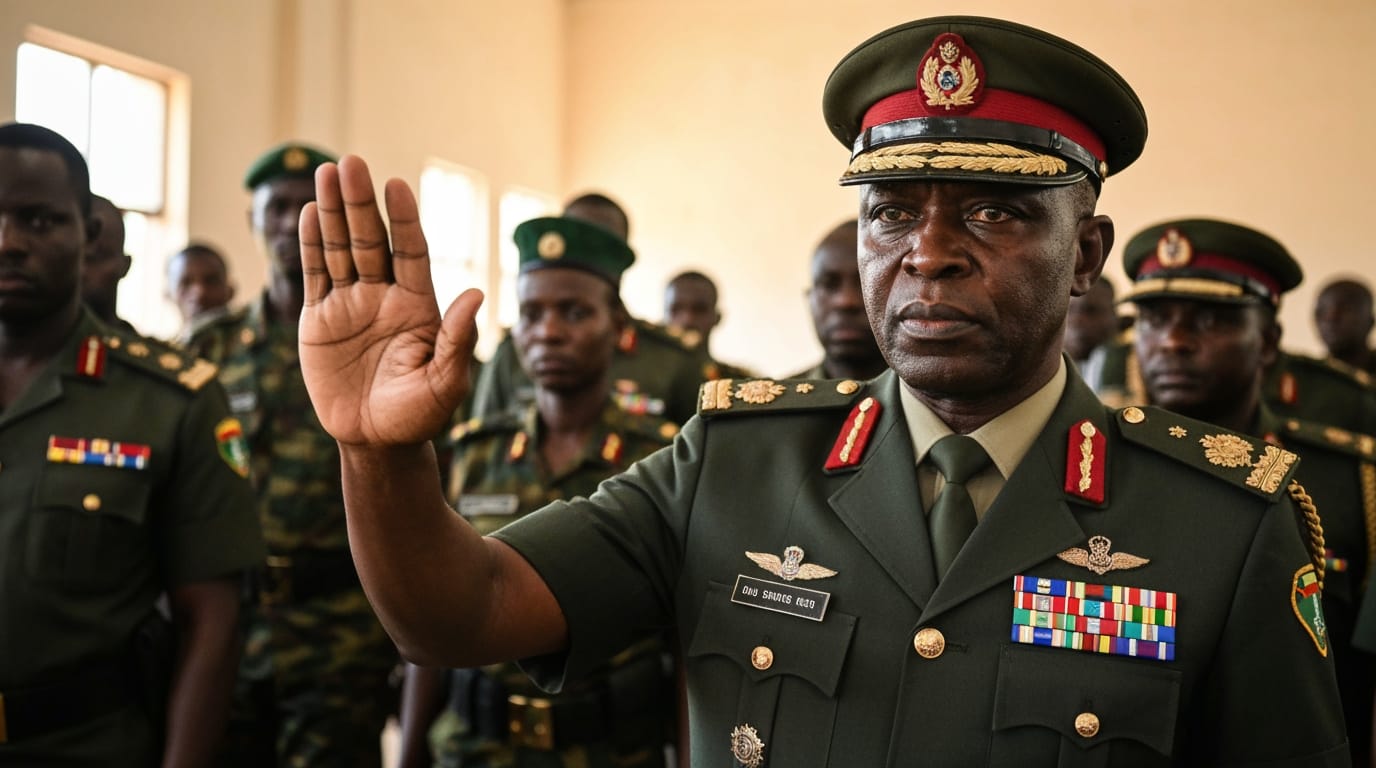
KAMPALA, UGANDA – In a dramatic escalation of tensions surrounding media freedom, Uganda’s Chief of Defence Forces, General Muhoozi Kainerugaba, ordered the immediate shutdown of several prominent independent media outlets on Sunday, June 28, 2026. Troops were deployed to the headquarters of the Nation Media Group (NMG) in Kampala, effectively halting operations for the Daily Monitor newspaper, NTV Uganda, Spark TV, KFM, and Dembe FM. The unprecedented move was accompanied by General Kainerugaba’s stark declaration on social media that he does not "believe in a free press" and that journalists in Uganda must now be "guided by cadres of the revolution," signaling a profound challenge to the nation's democratic principles and freedom of expression.
Military's Iron Grip Descends on Newsrooms
The directive, which General Kainerugaba announced via posts on X, saw armed military personnel besiege the Nation Media Group premises in the early hours of Sunday morning. Employees inside were reportedly prevented from leaving, while those attempting to enter were turned away. NTV Uganda and its sister stations, along with the Daily Monitor, a long-standing independent voice, were forced off air and out of print, their screens displaying "Video unavailable" messages across the country. General Kainerugaba asserted his authority over the media landscape, stating that the affected outlets would "not re-open without my permission." He further claimed that his father, President Yoweri Museveni, had approved these actions and had granted him the power to shut down media houses as early as 2017. The military chief also declared that moving forward, "ALL bad stories about Uganda have to be cleared by my office!" This sweeping command leaves no ambiguity regarding the military's intent to control the national narrative, raising immediate and severe concerns about censorship and the erosion of journalistic independence in Uganda.
A Pattern of Suppression and Declining Freedoms
This sudden clampdown is not an isolated incident but rather the latest and perhaps most brazen in a series of actions aimed at curbing press freedom in Uganda. The Nation Media Group, particularly the Daily Monitor, has a history of confrontation with the government over its critical reporting. In 2013, the Daily Monitor was shut down for 10 days following its reports on an alleged plot to prepare General Kainerugaba for presidential succession. NTV Uganda also faced a similar fate in 2007 for coverage critical of the government. These incidents underscore a persistent pattern where independent media outlets, despite operating under constitutional guarantees of freedom of expression, frequently face government pressure and punitive measures for challenging the official narrative or reporting on sensitive political issues.
Uganda's standing in global press freedom indices has consistently declined in recent years, reflecting a deteriorating environment for journalists. The country ranked 133rd out of 180 nations in the 2023 World Press Freedom Index, a significant drop from its 125th position in 2021. Reports from 2025 indicate a further decline to 143rd. Journalists frequently face intimidation, violence, arrests, and charges, often for covering political opposition or engaging in investigative journalism. While Uganda's 1995 Constitution guarantees freedom of speech and expression, including media freedom, various legal and extralegal mechanisms are often employed to restrict these rights. Bodies like the Uganda Communications Commission (UCC), responsible for regulating the media, have faced criticism for their perceived inadequacy in protecting press freedom and addressing censorship.
The Heir Apparent's Ascendance and Authoritarian Drift
General Muhoozi Kainerugaba, President Museveni's eldest son, has increasingly emerged as a powerful figure in Ugandan politics, widely seen as a potential successor to his 81-year-old father, who has ruled Uganda since 1986 and was recently sworn in for a seventh consecutive term. Kainerugaba's influence in security matters has grown substantially, and he has recently taken to issuing directives and orders that typically fall within the purview of the head of state, leading to speculation that he is consolidating power and acting as the country's de facto ruler. His controversial statements on social media, including past threats against opposition figures, have fueled concerns about his leadership style.
The timing of this media shutdown, following reports by NMG on Kainerugaba's tenure, governance, human rights, and security issues, suggests a direct reprisal for critical journalism. Opposition leader Bobi Wine has publicly condemned the military's actions, interpreting them as a deliberate attempt to silence independent voices and a clear manifestation of growing authoritarianism in Uganda. International observers and press freedom advocates echoed these concerns. The Committee to Protect Journalists (CPJ) described the use of state security forces against independent media as a "deeply troubling escalation," highlighting the severe implications for democratic governance and human rights in the East African nation.
Conclusion: A Grim Outlook for Ugandan Journalism
The decisive action by General Muhoozi Kainerugaba to forcibly shut down major independent media houses and openly denounce the concept of a free press marks a perilous turning point for journalism in Uganda. It not only stifles dissenting voices and restricts access to independent information for the Ugandan populace but also reinforces the perception of an authoritarian trajectory within the country's political landscape. The assertion of military control over news dissemination, coupled with a history of declining press freedoms and a potential dynastic succession, paints a grim picture for the future of civil liberties. As the international community watches, the ability of Ugandan journalists to report without fear or favor appears more imperiled than ever, posing a profound threat to transparency, accountability, and the democratic aspirations of the nation.


