Putin's Historic Kuril Islands Visit Ignites Fresh Diplomatic Firestorm with Japan
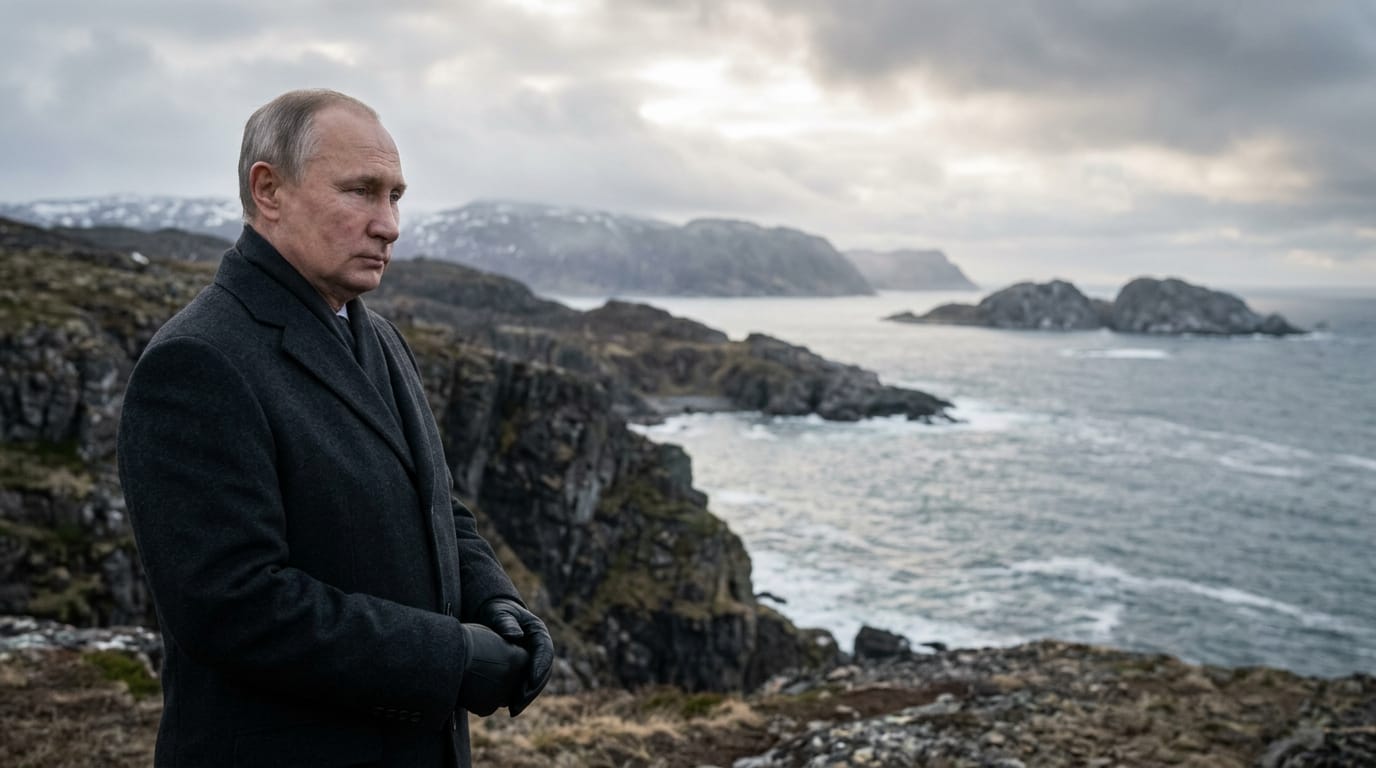
TOKYO/MOSCOW – August 13, 2026 – Russian President Vladimir Putin's unprecedented visit to the disputed Kuril Islands on Thursday, August 13, has ignited a furious diplomatic protest from Japan, plunging already strained relations between the two nations to a new low. The trip, marking the first time a Russian president has set foot on the archipelago claimed by both countries, underscored Moscow's unwavering assertion of sovereignty over the strategically vital territory and delivered a potent blow to any lingering hopes of resolving a decades-old post-World War II territorial dispute. Japan swiftly condemned the visit, reiterating its claim to the islands and underscoring the deep chasm that continues to prevent the signing of a formal peace treaty.
A Deliberate Assertion of Sovereignty
President Putin's itinerary on Iturup, known as Etorofu in Japan, was a clear demonstration of Russian control and investment in the island chain. He toured the "Yasny" fish processing plant, visited the Kuril Central District Hospital, and made a stop at a local school named after Hero of Russia Narpalov. Russian state media extensively covered the visit, showing Putin sampling locally produced fish roe, painting a picture of routine presidential engagement with a sovereign Russian territory. The president also held discussions with Valery Limarenko, the governor of the Sakhalin region, which administers the islands.
The visit followed closely on the heels of extensive Russian Pacific Fleet exercises in the Far East, with Putin having inspected the flagship missile cruiser Varyag just a day prior. During these military drills, Putin explicitly rejected Japan's territorial claims, signaling the robust military backing for Russia's stance. The Kremlin's decision to post videos of the visit further amplified Moscow's message of indisputable ownership. For Japan, a nation that considers the four southernmost Kuril Islands its "Northern Territories," this high-profile visit by the Russian head of state was not merely symbolic but a provocative act designed to solidify Russia's administrative and political presence.
Japan's Immediate and Vehement Condemnation
Tokyo's reaction was swift and unequivocally strong. Japanese Foreign Minister Toshimitsu Motegi lodged a "strong protest" against Putin's visit, conveying Japan's outrage through a public statement on social media platform X and official diplomatic channels. The foreign ministry emphasized that Japan views the islands as an inherent part of its territory and does not recognize Russia's sovereignty over them. This diplomatic firestorm highlights the enduring fragility of Russo-Japanese relations, particularly given the backdrop of global geopolitical tensions.
The Japanese government's stance is rooted in its historical claim to the islands and the understanding that this territorial dispute is the primary impediment to signing a formal peace treaty, officially ending World War II hostilities between the two nations. The current visit by Putin is seen in Tokyo as a deliberate affront and a move that further complicates any future dialogue aimed at resolution. Diplomatic efforts to bridge the divide have historically been arduous, and Putin's direct engagement with the disputed territory is widely interpreted as a clear signal that Moscow has no intention of ceding ground.
A Century-Old Territorial Quagmire
The core of the dispute lies over the four southernmost islands of the Kuril chain: Iturup (Etorofu), Kunashir, Shikotan, and the Habomai Rocks. These islands were unilaterally seized by the Soviet Union in the final days of World War II in August 1945, following Japan's surrender. This act, stemming from agreements made at the Yalta Conference, led to the expulsion of the Japanese inhabitants, who were subsequently replaced by Soviet citizens.
The history of these islands is complex, marked by shifting allegiances and treaties. The 1855 Treaty of Shimoda initially drew a boundary, granting Japan the four southern islands while Russia retained the rest of the Kurils. This was later superseded by the 1875 Treaty of St. Petersburg, which saw Japan acquire the entire Kuril chain in exchange for Russia gaining full control of Sakhalin Island. However, the balance of power shifted again after Russia's defeat in the 1904-05 Russo-Japanese War, resulting in Japan gaining the southern half of Sakhalin through the Treaty of Portsmouth. These borders largely remained stable until the Soviet Union's decisive military action at the close of World War II, which effectively reset the territorial claims and laid the groundwork for the enduring dispute. The failure to agree on the ownership of these islands has meant that Russia and Japan have never formally concluded their World War II peace settlement.
Geopolitical Ramifications and Future Prospects
The timing of President Putin's visit carries significant geopolitical weight. Relations between Moscow and Tokyo have deteriorated sharply since Russia's full-scale invasion of Ukraine in February 2022. Japan, aligning with Western nations, imposed sanctions on Russia, a move that prompted Moscow to retaliate by withdrawing from long-standing peace treaty negotiations and freezing joint economic projects linked to the disputed islands. This recent visit by Putin can be interpreted as a further hardening of Russia's position, signaling a clear disinterest in compromising on the territorial issue, especially given the current geopolitical climate.
Beyond historical claims, the Kuril Islands hold considerable strategic value. They form a natural barrier separating the Sea of Okhotsk from the Pacific Ocean, offering Russia unhindered access to the Pacific for its naval forces, particularly its Pacific Fleet based in Vladivostok. The waters surrounding the islands are also rich in fishing grounds and are believed to contain valuable natural resources, adding an economic dimension to the dispute. The visit, immediately following naval exercises, underscores the military and strategic significance Russia attaches to the archipelago. Putin's previous remarks about Japan changing its position on resolving the dispute further illustrate the deep mistrust and divergent expectations between the two capitals.
In conclusion, President Putin's direct visit to the Kuril Islands has served as a stark reminder of Russia's uncompromising stance on the territorial dispute and its commitment to asserting sovereignty over the archipelago. This provocative act has drawn a sharp rebuke from Japan, further exacerbating bilateral tensions that were already at a nadir due to the Ukraine conflict. The prospects for a formal peace treaty between Russia and Japan appear more distant than ever, with this latest development reinforcing the long-standing geopolitical impasse and highlighting the enduring complexities that define the relationship between these two Pacific powers.


