Pyongyang Escalates Tensions with Dual Missile Launches Ahead of Allied Drills
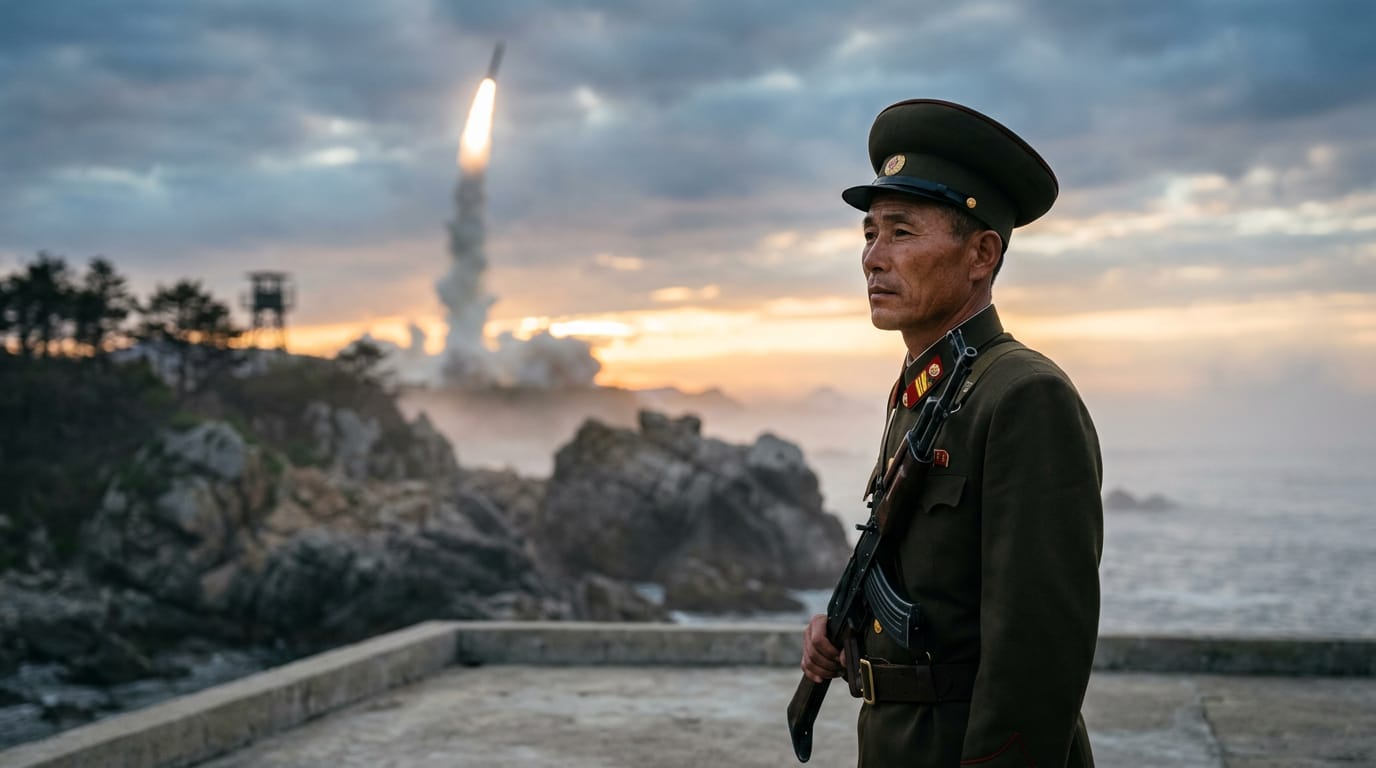
SEOUL, South Korea – North Korea has significantly heightened regional tensions by conducting its second ballistic missile test in less than a week, just days before large-scale joint military exercises between the United States and South Korea are set to commence. The latest provocation, detected early Wednesday, August 12, 2026, underscores Pyongyang’s continued defiance of international warnings and its consistent strategy of responding to allied defense drills with assertive weapons demonstrations. The repeated launches inject a fresh wave of uncertainty into an already volatile security landscape on the Korean Peninsula, prompting condemnation from Seoul, Tokyo, and Washington.
Escalation on the Peninsula: A Week of Provocation
South Korean and Japanese defense authorities reported on Wednesday that North Korea fired a ballistic missile from its eastern coastal area of Wonsan around 6 a.m. local time. The projectile traveled more than 700 kilometers (approximately 435 miles) before landing in waters between the Korean Peninsula and Japan, outside Japan's exclusive economic zone. This launch marks the second such event in quick succession, following a previous short-range ballistic missile test from the same Wonsan area on Thursday, August 6. The series of tests brings North Korea's suspected ballistic missile launches for 2026 to eleven, signaling an accelerated pace in its weapons development program. While North Korea typically delays official confirmation of its weapons tests, its neighbors view these actions as a direct challenge to regional stability and a deliberate show of force.
The Ulchi Freedom Shield: A Defensive Alliance
The recent missile launches are strategically timed to precede the annual Ulchi Freedom Shield (UFS) joint military exercises, scheduled by the United States and South Korea from August 17 to August 27. These drills are designed to enhance the readiness and interoperability of the allied forces against evolving threats from North Korea. This year's UFS exercises are particularly focused on incorporating modern warfare scenarios, including countermeasures against drone attacks, GPS disruption, and cyberattacks. Approximately 18,000 South Korean troops are slated to participate, with a scale similar to previous years. Officials from both the U.S. and South Korea consistently maintain that these exercises are defensive in nature, aimed solely at safeguarding South Korea and adapting to Pyongyang's continuously improving military capabilities, some of which reportedly draw lessons from conflicts like the one in Ukraine. The UFS also plays a critical role in preparing for the eventual conditional transfer of wartime operational control from Washington to Seoul.
Pyongyang's Consistent Protest: A Narrative of Invasion
North Korea has a long history of vehemently denouncing the joint exercises between the United States and South Korea, consistently portraying them as rehearsals for invasion. This narrative forms a cornerstone of Pyongyang's justification for its own accelerating weapons programs. Following last year's Ulchi Freedom Shield drills, North Korean leader Kim Jong Un publicly stated that the exercises demonstrated the U.S. and South Korea's "will to ignite a war," vowing to respond with "proactive and overwhelming" countermeasures. Similarly, the sister of North Korean leader Kim Jong Un, Kim Yo-jong, condemned the "Freedom Shield" exercises in March 2026, warning of "terrible consequences" and asserting that North Korea would continue to bolster its "destructive power" against perceived external threats. This pattern of missile tests coinciding with allied drills serves multiple purposes for Pyongyang, including the demonstration of its enhanced capabilities, leveraging its military strength for political gains, and sending a clear message to its domestic audience. Experts suggest North Korea frequently uses its rivals' military training as a pretext to escalate its own testing activities.
Regional Alarm and International Condemnation
The latest missile launches have drawn immediate and strong condemnation from across the region and beyond. South Korea's Joint Chiefs of Staff reported the launches and affirmed its military's readiness to repel any provocations from Pyongyang in cooperation with the United States. The South Korean presidential national security council swiftly labeled the ballistic missile launches as "acts of provocation" that directly violate United Nations Security Council resolutions, urging an immediate halt to such activities. Japan's Defense Ministry also detected the missile, with Japanese Defense Minister Shinjiro Koizumi expressing strong protest and highlighting the "serious problem" these repeated launches pose to the safety of the Japanese people and the broader region. International consensus, as reflected in multiple UN Security Council resolutions, prohibits North Korea from conducting ballistic missile launches. However, Pyongyang has largely disregarded these prohibitions, pushing forward with its efforts to expand its nuclear and missile arsenals, particularly since diplomatic efforts with the U.S. stalled in 2019.
A Cycle of Tension Continues
The recent ballistic missile tests by North Korea, timed conspicuously before the annual U.S.-South Korea Ulchi Freedom Shield drills, represent a recurring cycle of provocation and heightened tensions on the Korean Peninsula. Pyongyang's actions serve as a stark reminder of its unwavering commitment to advancing its military capabilities and its steadfast opposition to joint allied military exercises, which it consistently frames as hostile. Despite international calls for de-escalation and a return to dialogue, North Korea continues to prioritize its weapons development, posing a persistent challenge to regional stability and global non-proliferation efforts. The ongoing standoff underscores the complex and enduring security dilemma in Northeast Asia, where military displays from one side invariably lead to counter-demonstrations from the other, perpetuating a fragile and unpredictable environment.


