Pyongyang Rolls Out Red Carpet for Belarusian President, Solidifying Anti-Western Alliance
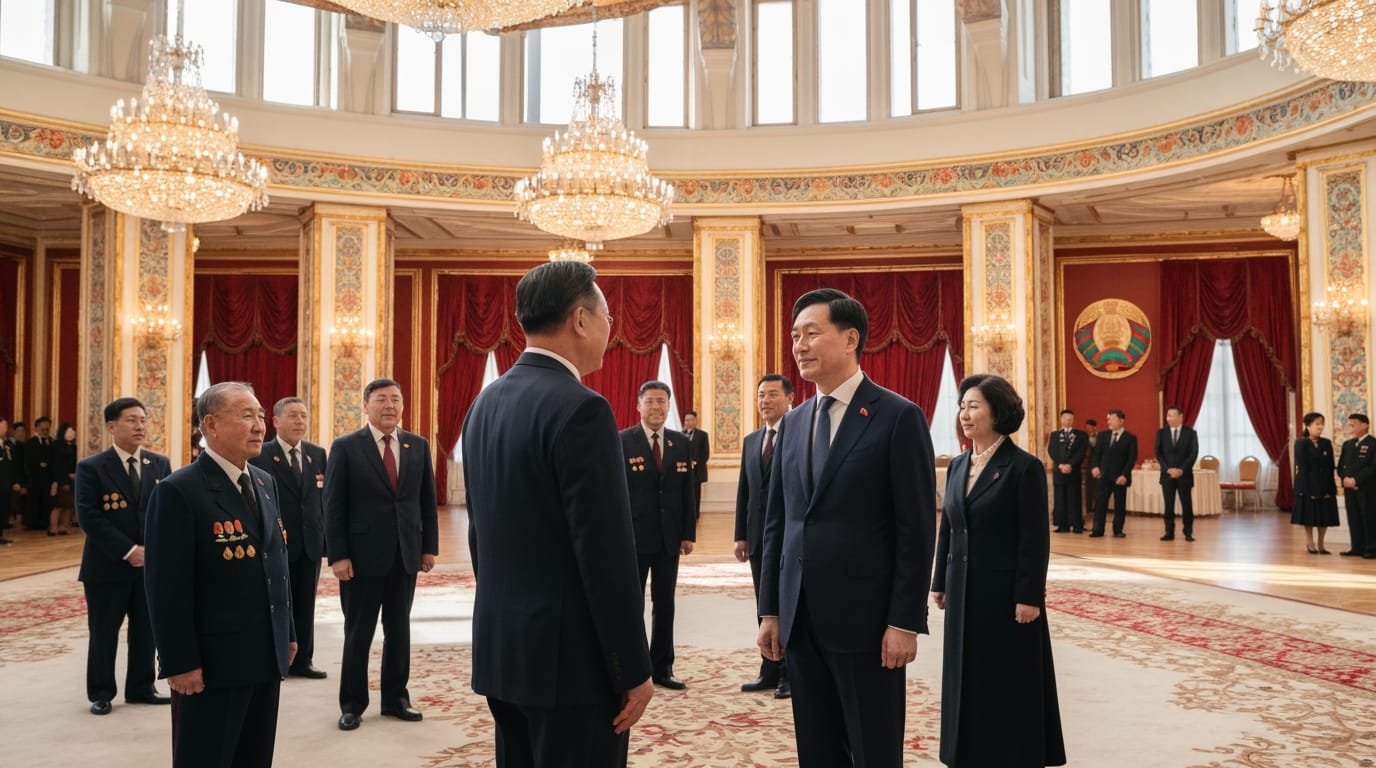
PYONGYANG, NORTH KOREA – In a display of elaborate statecraft and burgeoning solidarity, North Korea on Wednesday extended a lavish welcome to Belarusian President Alexander Lukashenko, marking his first official visit to the reclusive East Asian nation. The grand reception, featuring a white-horse cavalry, a 21-gun salute, and cheering crowds, underscored a deepening alignment between two nations increasingly isolated by Western sanctions and united by their staunch support for Russia amidst the ongoing conflict in Ukraine. The visit is poised to cement a strategic partnership, with both leaders seeking to bolster a united front against perceived Western dominance.
Pomp and Diplomacy in Pyongyang
President Lukashenko's arrival in Pyongyang was met with considerable fanfare, highlighting the significance both nations attach to this high-level engagement. North Korean leader Kim Jong Un personally greeted Lukashenko with an embrace, overseeing a meticulously orchestrated welcome ceremony at Pyongyang International Airport before proceeding to a pomp-filled event at Kim Il Sung Square. Flag-waving children lined the route, adding to the spectacle intended to project an image of robust diplomatic ties. The two-day visit, which commenced on March 25, 2026, is expected to culminate in the signing of a treaty of friendship and cooperation, alongside approximately 10 other agreements designed to expand bilateral collaboration across various sectors, including agriculture and information. Belarusian Foreign Minister Maxim Ryzhenkov emphasized the goal of strengthening "truly friendly, partnership relations," stating that both countries share a mutual interest in active expansion of political and economic ties.
A Growing Alliance Against the West
The convergence of North Korea and Belarus is underpinned by a shared geopolitical outlook and a common adversary in the form of Western nations. Both countries face extensive international sanctions, with North Korea sanctioned for its nuclear weapons program and human rights violations, and Belarus for its authoritarian governance and complicity in Russia's war against Ukraine. Their leaders, Kim Jong Un and Alexander Lukashenko, are long-standing allies of Russian President Vladimir Putin, and their respective nations have played crucial roles in supporting Moscow's war efforts. Belarus served as a crucial launchpad for Russia's invasion in February 2022 and has agreed to host Russian tactical nuclear missiles. Pyongyang, in turn, has reportedly supplied Russia with millions of rounds of ammunition and sent troops to aid in expelling Ukrainian forces. This reciprocal support underscores a clear intention to challenge the existing international order, promoting a "multipolar global order" as an alternative to what they view as U.S.-led dominance.
Historical Context and Recent Engagements
While Lukashenko's current visit marks a significant milestone as his first to North Korea, the diplomatic groundwork for this rapprochement has been laid over the past several years. North Korea and Belarus established diplomatic ties in 1992 following the dissolution of the Soviet Union. Although relations experienced fluctuations, with a period of low-level engagement, recent years have seen a notable intensification of diplomatic and economic exchanges. A pivotal moment occurred in September 2025 when Kim Jong Un and Lukashenko met in Beijing during a military parade. It was during this encounter that the North Korean leader extended an invitation for Lukashenko to visit Pyongyang. This meeting was followed by several high-level exchanges, including visits by Belarusian Foreign Minister Maxim Ryzhenkov to Pyongyang in July 2024 and May 2025, and a Belarusian government delegation led by Deputy Prime Minister Yuri Shuleyko for trade and economic cooperation discussions. The increased communication signals a deliberate strategy by both nations to strengthen their bond, a sentiment echoed in letters exchanged between Kim and Lukashenko earlier this month, where Kim expressed a desire to elevate traditional relations to a "new, higher stage".
Implications for Geopolitical Realignment
The consolidation of ties between North Korea and Belarus carries significant implications for regional and international dynamics. Analysts suggest that the visit is intended to "show solidarity" among nations opposed to the Western order, with North Korea aiming to "raise its diplomatic profile and strengthen solidarity among the so-called anti-Western bloc". This burgeoning alliance, often referred to as the "anti-Western bloc," seeks to counter the influence of Western democracies and is increasingly seen as a direct challenge to global stability. The cooperation extends beyond political rhetoric; North Korea is believed to be receiving financial aid, military technology, food, and energy supplies from Russia in exchange for its military support, lessening its dependence on China. Similarly, Belarus's deepening integration into Russia's orbit, coupled with its alignment with North Korea, reinforces a new geopolitical axis. The planned agreements, particularly those concerning economic and technical cooperation, suggest a pragmatic approach to circumventing international sanctions and fostering self-reliance among like-minded states. This emerging solidarity between Pyongyang, Minsk, and Moscow presents a complex challenge for international organizations and Western powers seeking to maintain global peace and security.
The lavish reception for President Lukashenko in Pyongyang signifies more than a ceremonial exchange; it represents a calculated move by North Korea and Belarus to solidify their positions within a recalibrating global order. Driven by shared anti-Western sentiments, a close partnership with Russia, and mutual strategic interests, the two nations are actively forging a united front. As agreements are signed and cooperation deepens, this burgeoning alliance signals a clear message to the international community about their resolve to pursue an independent path, reshaping geopolitical dynamics and presenting new challenges for global diplomacy.


