Radev's Landslide Victory Promises Stability Amidst Geopolitical Tightrope Walk for Bulgaria
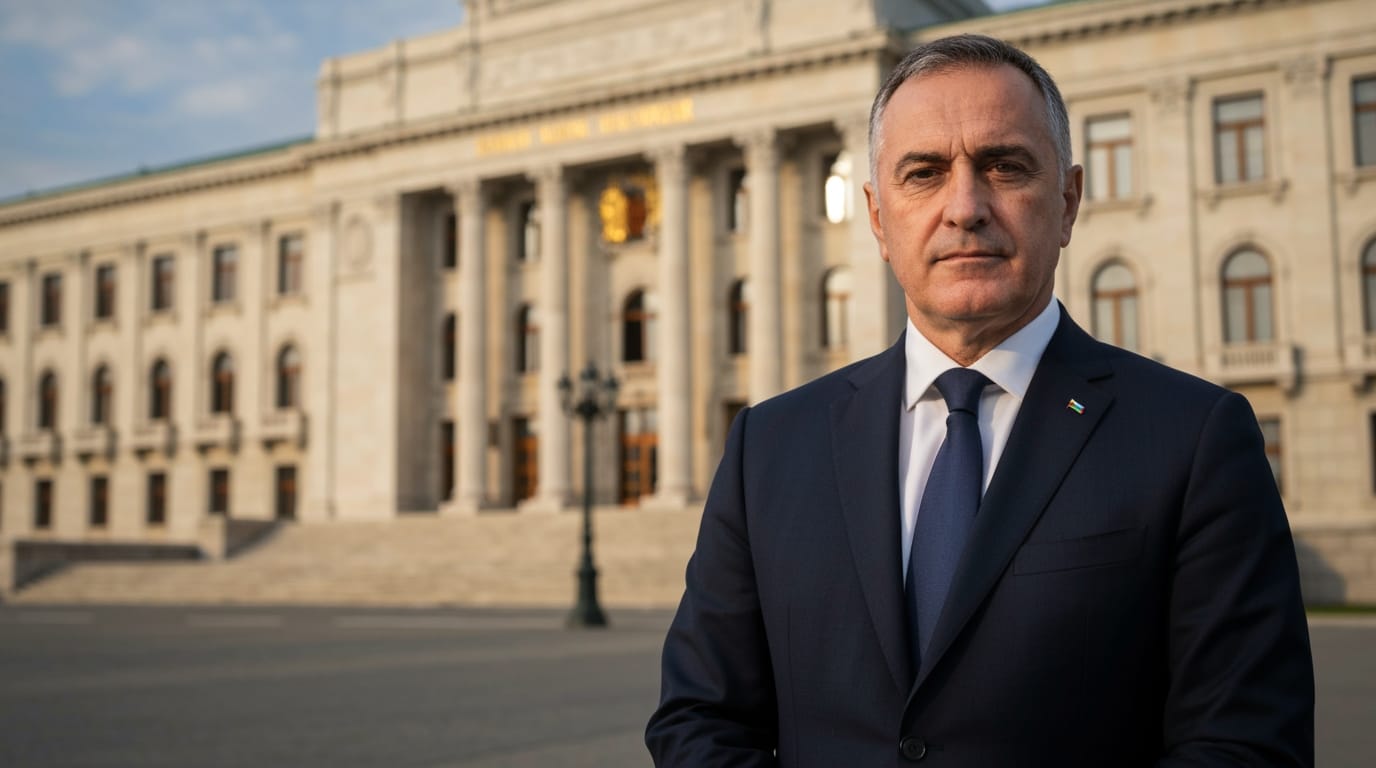
SOFIA, Bulgaria – Rumen Radev, a figure who transitioned from a ceremonial presidency to the helm of a political movement, has decisively steered Bulgaria into a new era of governance. His newly formed "Progressive Bulgaria" (PB) coalition secured a landmark victory in the early parliamentary elections held on April 19, 2026, achieving an absolute majority with 131 out of 240 seats and 44.7% of the popular vote. This outcome marks the end of a protracted period of political instability, characterized by eight general elections in just five years, and signals a potential shift in both Bulgaria's domestic priorities and its delicate foreign policy balance.
A Decisive Mandate for Change
Radev's ascent to power as Prime Minister-elect represents a significant consolidation of political authority, an unprecedented event in Bulgaria's post-communist history that sees the formation of a single-party government for the first time in decades. His decision to resign from the largely ceremonial presidential post in January 2026, just shy of completing his second term, paved the way for his direct engagement in parliamentary politics, driven by a clear ambition to wield real executive power. The landslide win reflects a widespread public yearning for an end to the systemic fragmentation and unstable coalitions that had eroded trust in political institutions. Voters, fatigued by perceived oligarchic influence and repeated electoral cycles, rallied behind Radev's promise to deliver stability and effective governance.
The Anti-Corruption Crusader
Central to Rumen Radev's broad appeal was his consistent and vigorous anti-corruption stance. His campaign successfully consolidated diverse voter groups—from anti-corruption protesters to socially conservative and sovereigntist constituencies—under a narrative opposing the "oligarchic model" that he argued plagued the country. As president, Radev had already cultivated an image as an anti-establishment figure, notably using his veto power against bills proposed by former Prime Minister Boyko Borisov, thereby enhancing his anti-corruption credentials. His participation in anti-corruption protests in 2020 further cemented his status as a leader against the perceived "mafia state."
However, the path to judicial reform, a core element of his "anti-oligarchic" platform, remains challenging. Fundamental changes to Bulgaria's judiciary typically require a two-thirds majority in parliament. Despite his party's absolute majority, Radev may still need to garner support from other political forces, particularly the pro-European "We Continue the Change-Democratic Bulgaria" (PPDB) movement, to push through these constitutional amendments. Analysts point out that while his alliance brings together a wide array of actors, it is a relatively young political entity, and the effectiveness of its anti-corruption efforts, particularly at the entrenched local level, remains to be seen. There is also the potential risk that existing corrupt practices could simply shift to new actors.
Navigating the Geopolitical Tightrope
Radev's foreign policy orientation introduces a complex dimension to Bulgaria's future. He is widely recognized for his pro-Russian leanings and his advocacy for a "sovereigntist" and "pragmatic" approach to international relations. Throughout his presidency, he consistently opposed military assistance to Ukraine, often attempting to block aid packages through vetoes, and voiced skepticism about the European Union's strategy toward Russia. He has criticized the defense agreement between Bulgaria and Ukraine and champions the resumption of dialogue and access to Russian energy resources.
Despite these positions, Radev has refrained from openly questioning Bulgaria's commitments to the EU and NATO. He maintains that Bulgaria will remain on its European path while calling for "critical thinking and pragmatism" within Brussels. Observers suggest that while he may "sound like [Hungary's Viktor] Orbán" in his criticisms of EU policies, he is likely to "act more like [Slovakia's Robert] Fico," voicing disagreement but ultimately unlikely to block consensus decisions on issues such as Russian sanctions or support for Ukraine. This nuanced stance is partly attributed to the need for parliamentary support for his domestic agenda and Bulgaria's reliance on European funds and its strategic position within NATO's Black Sea flank.
Economic Realities and Domestic Promises
Radev's campaign also tapped into significant public anxieties concerning economic stability. Bulgaria's accession to the Eurozone in January 2026 was met with widespread public anxiety over potential price manipulation and "hidden" inflation. Radev had previously called for a national referendum on the euro, arguing that the country was not adequately prepared for the single currency. Despite consistent economic growth, Bulgaria remains the poorest EU member, with up to 30% of its population at risk of poverty. His platform promises social policy expansion, aiming to address concerns over declining purchasing power and social inequality. His ability to deliver on these economic and social promises, alongside his anti-corruption drive, will be crucial in maintaining public confidence and preventing a resurgence of the instability that defined the preceding years.
Conclusion
Rumen Radev's commanding electoral victory ushers in a period of potential stability for Bulgaria after years of political turmoil. His mandate is primarily anchored in a strong domestic agenda focused on combating corruption and reforming governance, responding directly to widespread public discontent. Simultaneously, he is poised to navigate a complex foreign policy landscape, balancing Bulgaria's commitments to the European Union and NATO with his advocated "pragmatic" relations, particularly with Russia. The success of his administration will hinge on his ability to enact meaningful domestic reforms while skillfully managing international expectations and alliances, defining Bulgaria's trajectory for the foreseeable future.


