Rare Glimpse: Aung San Suu Kyi Meets Red Cross Official Amid Continued Detention in Myanmar
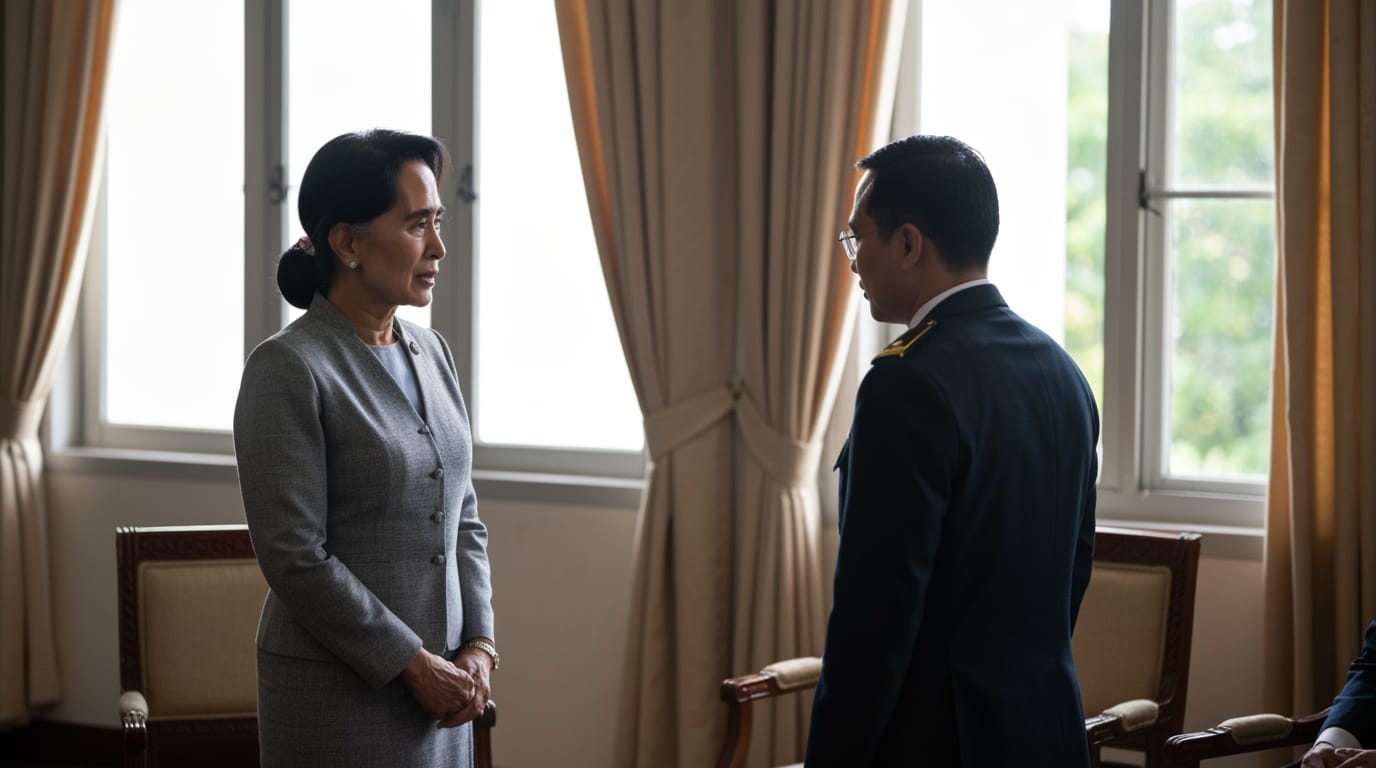
Naypyitaw, Myanmar – In a development signaling a rare moment of access and providing a first public glimpse of Myanmar's ousted leader in years, Aung San Suu Kyi met with a representative from the International Committee of the Red Cross (ICRC) on Monday. The meeting, confirmed by Myanmar's military-backed government, took place in the capital, Naypyitaw, amidst persistent international concerns over the 81-year-old Nobel laureate's health and prolonged detention since the 2021 military coup.
The encounter marks the first publicized meeting between Aung San Suu Kyi and a foreign official since the military seized power in February 2021, which plunged the Southeast Asian nation into widespread turmoil. While the junta released photographs of the meeting, the ICRC has yet to comment, and the specific purpose or outcomes of the discussion remain largely undisclosed.
The Encounter and Official Disclosure
The meeting involved Aung San Suu Kyi and Arnaud de Baecque, the Resident Representative of the ICRC to Myanmar. The government's spokeswoman, Khine Khine Soe, announced the interaction via Telegram, while the president's office also issued a statement confirming the event. Official photographs released by the Presidential Press and Information Bureau offered the first public view of Aung San Suu Kyi in years. In these images, she appeared relaxed and was seen shaking hands with de Baecque in a sparsely furnished, wood-paneled room. Other photographs showed her cutting a pink birthday cake inscribed with "Happy Birthday Aunty Suu, 19.6.2026," suggesting a celebration of her 81st birthday, which occurred in June. While these images presented no obvious signs of ill health, her physical condition could not be independently assessed from the photographs. The ICRC did not immediately respond to requests for comment regarding the meeting, and details about what was discussed were not provided by the authorities.
Aung San Suu Kyi's Prolonged Detention and Legal Battles
Aung San Suu Kyi's detention began with the military coup on February 1, 2021, which overthrew her elected civilian government, the National League for Democracy (NLD). Since then, her exact whereabouts and health conditions have been difficult to ascertain, with no foreign leader or envoy publicly meeting her until now. She faced a series of secret trials on numerous charges, which human rights groups and her supporters widely condemned as politically motivated attempts to legitimize the military takeover and prevent her return to politics.
Initially sentenced to 33 years in prison, her sentence was subsequently reduced. In late April 2026, she was moved from prison to house arrest in Naypyitaw as part of a broader prisoner amnesty marking a Buddhist holiday. This move occurred following a military-engineered election that led to former junta chief Min Aung Hlaing becoming the civilian president. Her sentence was further commuted by one-sixth during this amnesty, which also saw the release of her long-time political ally, former President Win Myint. However, rights groups maintain that she was arbitrarily detained and imprisoned on fabricated charges and continue to demand her unconditional release.
Humanitarian Access and International Scrutiny
The meeting between Aung San Suu Kyi and the ICRC representative underscores the intense international scrutiny surrounding her well-being and the broader humanitarian crisis in Myanmar. Since the 2021 coup, the country has been embroiled in an ongoing civil conflict, resulting in significant loss of life and a deteriorating human rights situation. International organizations and foreign governments have consistently called for access to Aung San Suu Kyi and other political prisoners. The ICRC's mandate is to protect the lives and dignity of victims of armed conflict and other situations of violence and to provide them with assistance. While the details of the discussion remain private, such a meeting is generally seen as a crucial step towards ensuring the welfare of detainees and maintaining a line of communication with the outside world. This rare contact allows for a limited, yet significant, check on her condition, which has been a major point of concern for international bodies and her supporters globally.
Political Implications and Junta's Motivations
The military-backed government's decision to allow and publicize this meeting, coupled with her transfer to house arrest and sentence reduction, is widely viewed by observers as a calculated move to manage its international image. The junta faces widespread criticism for its suppression of dissent, human rights abuses, and the ongoing civil war. Allowing a high-profile figure like Aung San Suu Kyi to meet with an international humanitarian official, and releasing photos of her appearing well, could be an attempt to project an image of transparency and responsiveness to international pressure.
However, critics quickly pointed out that these gestures do not alter the fundamental reality of her arbitrary detention. Nay Phone Latt, a spokesperson for the opposition National Unity Government, emphasized that such meetings should not be misconstrued as genuine efforts to address human rights or democracy issues. He reiterated the call for her unconditional release, stressing that her initial detention was based on fabricated charges. The political landscape in Myanmar remains deeply fractured, with the military still firmly in control despite the nominal shift to a civilian presidency following restricted elections.
Conclusion
Aung San Suu Kyi's meeting with the ICRC representative represents a modest, yet significant, moment in Myanmar's ongoing political crisis. It provides a rare official confirmation of her continued existence and offers a brief glimpse into her circumstances, addressing some international concerns about her health. However, this limited access does not diminish the gravity of her prolonged detention, which remains a symbol of the broader suppression of democracy in Myanmar. While the military government may seek to improve its global standing through such gestures, the international community and opposition groups continue to demand her unconditional freedom and a genuine commitment to democratic reform and human rights in the strife-torn nation. The path forward for Myanmar remains uncertain, with this isolated meeting serving as a reminder of both the resilience of its democratic figures and the persistent challenges posed by military rule.


