Renault's New EV Strategy Signals Pivotal Shift in Global Auto Industry

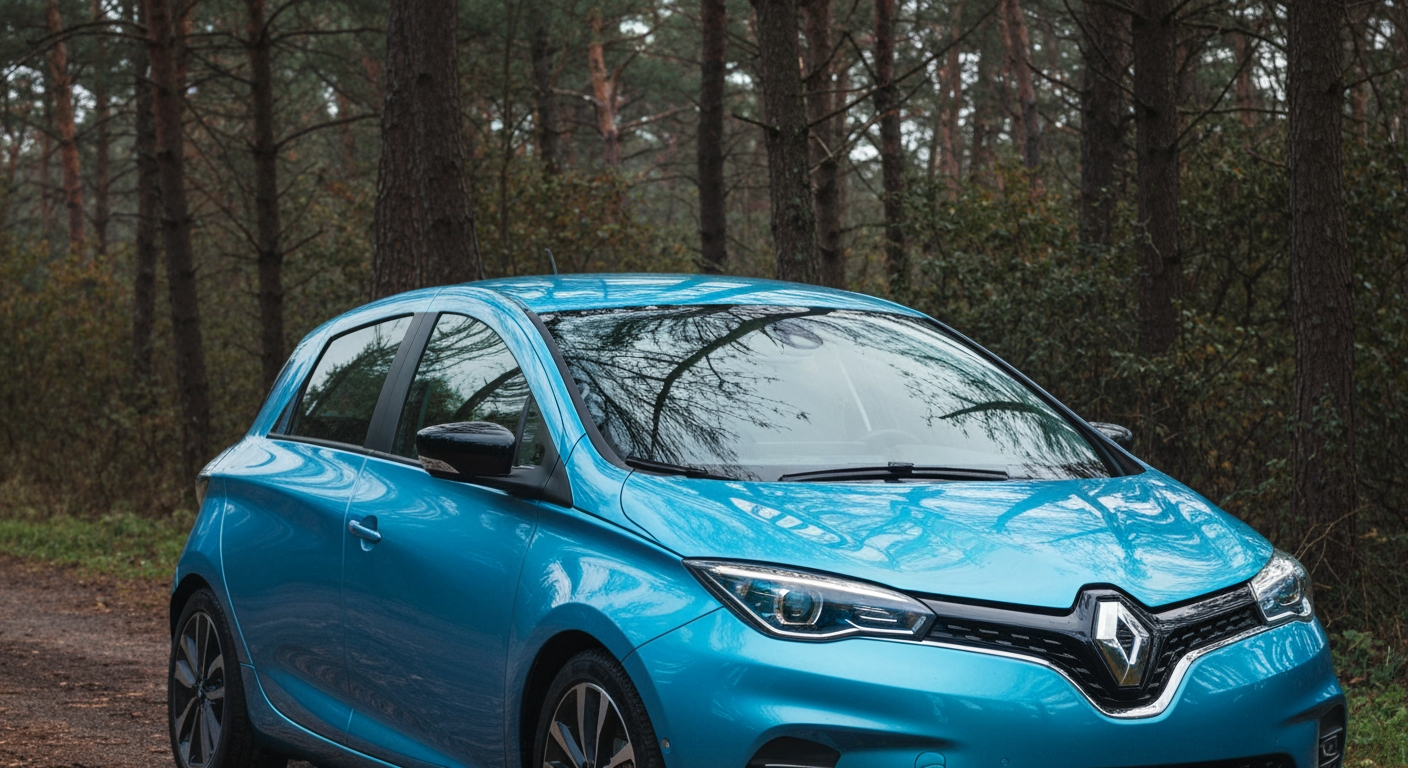
PARIS – In a rapidly electrifying automotive landscape, Renault's aggressive pivot towards affordable and technologically advanced electric vehicles (EVs) offers a stark reflection of the profound shifts reshaping the global industry. The French automaker's "futuREady" strategy, spearheaded by critically acclaimed models like the Renault 5 E-Tech Electric and the Scenic E-Tech Electric, underscores a renewed focus on cost efficiency, localized production, and cutting-edge software integration. This strategic redirection is not merely about launching new cars; it represents a comprehensive response to intensified competition, particularly from dominant Chinese manufacturers, and a global demand for more accessible EV options.
The "futuREady" Vision: A Bold Electrification Offensive
Renault's "futuREady" plan outlines an ambitious trajectory, committing to introducing 14 new all-electric, software-defined vehicles to the European market by 2030, with 12 under the Renault brand itself. This initiative positions the company to become a "benchmark European carmaker" in the EV era. The strategy aims for 100% electrified sales in Europe and 50% electrified sales globally by the end of the decade, targeting an annual sales volume exceeding 2 million vehicles.
Central to this vision are significant technological advancements. Renault is developing a new RGEV Medium 2.0 platform for its C and D segments, featuring 800V architecture designed to enable ultra-fast charging, with the goal of achieving a full charge in as little as 10 minutes by 2030. This platform is projected to offer an impressive range of up to 466 miles (750 km). Furthermore, the company is investing in two distinct battery types: high-energy density 800V units for longer-range models and more affordable 400V batteries for smaller vehicles like the Renault 5 and the upcoming Twingo Electric. The integration of software-defined vehicle (SDV) technology, with Renault aiming to be the first to launch a genuine SDV in Europe, marks a commitment to modern, updateable vehicle architecture. Artificial intelligence is also a key component, streamlining development and production processes.
Democratizing EVs: The Renault 5 and Scenic E-Tech Electric
The Renault 5 E-Tech Electric stands as a testament to Renault's renewed strategic direction, aiming to democratize electric mobility through a blend of competitive pricing, practical technology, and nostalgic design. Launched in late 2024, this B-segment EV starts from an accessible €24,990, a critical price point for wider adoption in Europe. Built on the innovative AmpR Small platform, previously known as CMF-B EV, the Renault 5 achieves a 33% reduction in production costs compared to its predecessor, the Zoe, by reusing components and optimizing design. It offers battery options providing ranges of 300km and 400km, coupled with an 11kW AC bidirectional charger.
The market response has been overwhelmingly positive. The Renault 5 E-Tech Electric quickly became a best-seller in France in 2025, even outperforming the Tesla Model Y in terms of sales, and has garnered numerous international automotive awards. Such high demand has, however, created production bottlenecks at Renault's Douai plant, necessitating night shifts and additional staffing to meet consumer interest. This success demonstrates a clear market appetite for well-designed, affordable electric vehicles.
Complementing this offering, the Renault Scenic E-Tech Electric has also made a significant impact, earning the "Best Family EV" award at the Topgear.com Awards 2024. Positioned as a practical and stylish family SUV, it boasts a spacious interior, advanced technology, and a substantial range of up to 379 miles (WLTP). With starting prices around £37,000, Renault has proactively adjusted its pricing for the Scenic to navigate changing tax regulations, further enhancing its market appeal.
Navigating the Global EV Tides and Chinese Ascent
Renault's emphasis on affordability and advanced technology is set against a backdrop of intense global competition and evolving consumer expectations within the EV market. The industry is witnessing a pronounced shift towards more budget-friendly electric models, with several manufacturers preparing to introduce EVs in the $29,000-$45,000 range. This trend is exemplified by automakers like Ford, which has openly recalibrated its EV strategy from premium offerings to more accessible vehicles.
A dominant force in this shift is the burgeoning influence of Chinese EV manufacturers. Brands such as BYD, Chery, Xpeng, and Xiaomi are rapidly expanding their global footprint, particularly in Europe. These companies benefit from highly integrated value chains, robust government support, and significant technological leadership in areas like battery innovation and AI integration. BYD, for instance, surpassed Tesla in global EV volume sales in 2025, a testament to its diversified lineup and competitive pricing. This aggressive entry into European markets is compelling traditional automakers like Kia to re-evaluate their pricing strategies to remain competitive.
Globally, EV sales continue to climb, with over 17 million electric cars sold worldwide in 2024, marking a 25% increase from the previous year. China remains the primary growth engine, accounting for nearly two-thirds of global electric car sales in 2024. While Europe experienced a stagnation in growth in 2024 due to reduced subsidies, the overall trajectory for EVs remains upward, with an increasing diversity of models available to consumers.
Production Innovation and Future Implications
To counter competitive pressures and achieve its ambitious goals, Renault is prioritizing localized production and streamlined manufacturing processes. The Renault 5 E-Tech Electric and its batteries are assembled in Douai, France, with motors produced in Cleon, leveraging a compact supply chain within a 300km radius. This localized approach helps control costs, ensures proximity to the European market, and minimizes environmental impact. The company aims to reduce the number of parts in its vehicles by 30% and significantly shorten development cycles, bringing new models to market in under two years through the adoption of new robotic processes and an "industrial metaverse."
Renault's strategy reveals a broader imperative for the global auto industry: adapt quickly to market demands for affordability and integrate advanced technology, or risk losing ground. The success of its latest EVs demonstrates that traditional automakers can still carve out significant market share by focusing on the right product at the right price point. While challenges such as high initial costs, evolving government incentives, and the need for robust charging infrastructure persist, the industry is unequivocally moving towards a more diversified, competitive, and ultimately, more consumer-friendly electric future. Manufacturers that successfully blend innovation with accessibility, much like Renault is attempting, are best positioned to thrive in this transformative era.
Sources
- evpowered.co.uk
- electriccarsreport.com
- wardsauto.com
- evinfocus.com
- go-electra.com
- 32cars.ru
- carsupermarket.com
- independent.co.uk
- businessinsider.com
- nrdc.org
- designnews.com
- theguardian.com
- coface.com
- automotivemanufacturingsolutions.com
- santander.com
- counterpointresearch.com
- recharged.com
- reddit.com
- iea.org
- virta.global
- renaultgroup.com
Related Articles


The Regulatory Maze: Why Taming Social Media Harms Remains an Elusive Quest
The digital public square, once heralded as a beacon of connection and information, has increasingly become a battleground rife with misinformation, hate speech, cyberbullying, and threats to mental health. Despite...


Gamescom 2026: Industry Thrives Amid Record Success, Grapples with AI's Transformative Power
COLOGNE, GERMANY – Gamescom 2026, the world's largest video game trade fair, concluded its latest edition with resounding success, demonstrating the enduring vitality and economic strength of the global gaming industry....

Volkswagen's Defining Moment: Restructuring Talks Poise to Reshape German Automotive Landscape
Wolfsburg, Germany – Europe's largest automaker, Volkswagen, stands at a critical juncture, facing what its CEO, Oliver Blume, has termed a "more than critical" situation. Intense internal discussions, dubbed "crunch...