Renewed Escalation in Tigray Threatens Regional Stability
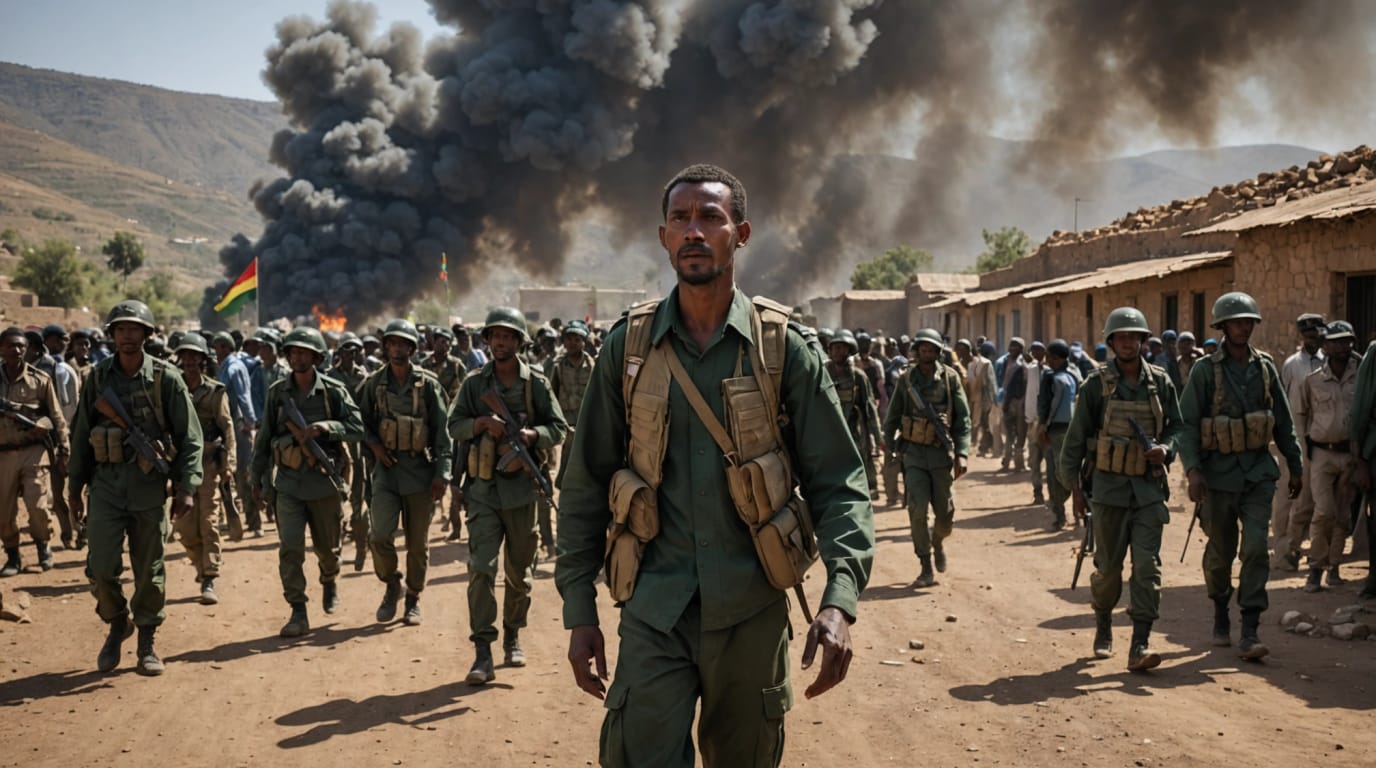
A fragile peace in Ethiopia's Tigray region is unraveling, raising fears of renewed conflict and broader instability across the Horn of Africa. Internal divisions within the Tigray People's Liberation Front (TPLF), coupled with external interference, are threatening to plunge the region back into war, reversing the limited progress made since the 2022 cessation of hostilities agreement.
Internal Power Struggles Fuel Instability
The current crisis stems from a power struggle between Debretsion Gebremichael, chairman of the TPLF, and Getachew Reda, the interim regional administrator. This conflict intensified in recent months, paralyzing the regional government and sparking concerns of a return to widespread violence. The Ethiopian election board issued an ultimatum to the TPLF in December 2024, urging the party to convene its general assembly meeting, a key step in the group's re-registration as a political party. This ultimatum exacerbated existing tensions between the two factions as they ramped up efforts to control the TPLF and the interim regional administration.
The power struggle is not merely a dispute over leadership; it represents a defining moment for the future of Tigray. The schism has crippled the bureaucracy, impacting aid delivery, health, education, infrastructure, and the overall well-being of Tigray society. The dismissal of several senior military officials by Getachew Reda further deepened the political turmoil, with the Tigray Peace and Security Bureau rejecting these suspensions, arguing they did not follow institutional procedures.
External Interference and Regional Implications
The internal crisis in Tigray is further complicated by the involvement of external actors, including Ethiopian Prime Minister Abiy Ahmed and Eritrean interests. Some analysts suggest that Abiy Ahmed's administration benefits from a weakened and divided Tigray, making it easier to maintain federal control without direct intervention. Eritrea, which played a key role in the war against Tigray, also stands to gain from a fragmented leadership, posing less of a challenge to Eritrean influence in the region.
The potential for renewed conflict between Ethiopia and Eritrea is a significant concern. Eritrea implemented a nationwide military mobilization in February, and Ethiopia deployed troops toward the Eritrean border in March. A wider war between Eritrea and Ethiopia could further destabilize the Red Sea region, imposing a global economic toll. External powers, such as Iran and Russia, have demonstrated interest in exploiting conflict in the region to consolidate their own influence around the Red Sea.
Humanitarian Crisis Deepens
The renewed escalation in Tigray threatens to exacerbate the already dire humanitarian situation in the region. Approximately 1 million internally displaced persons (IDPs) are living in dire conditions, with high levels of food insecurity and malnutrition. Girls and women, particularly survivors of sexual violence, require mental health and psychosocial support. The conflict has damaged health facilities, severely compromising basic health services, and has caused more than 1.1 million children to drop out of school.
The United Nations estimates that 21.4 million people in Ethiopia, including 16.7 million women and children, need humanitarian assistance. In Tigray, despite some improvements following the 2022 peace agreement, significant humanitarian needs persist. The ongoing instability and violence hinder humanitarian access and disrupt aid delivery, further endangering vulnerable populations.
International Response and the Path Forward
The escalating crisis in Tigray demands immediate international intervention. The African Union, United Nations, European Union, and Western powers must step in to mediate negotiations between rival factions as well as the military. Without external mediation, the risk of renewed large-scale conflict remains dangerously high.
To achieve stability, a new, truly inclusive interim government must be established, one that represents all parties, civil society, and marginalized voices within Tigray. Mediation efforts must also include mechanisms to prevent external actors, including Abiy Ahmed's administration and Eritrean interests, from exploiting the crisis for political gain or control over Tigray. Confidence-building measures, such as a mutual commitment to cease statements filled with hostilities, end political repression, and engage in constructive dialogue, are necessary for any long-term resolution.
A Region on the Brink
Tigray stands at a critical juncture. The decisions made in the coming weeks will determine whether the region moves toward reconciliation or falls back into war. Political and military leaders must recognize that their power struggles are devastating the very people they claim to represent. The international community must act swiftly to mediate a resolution, and Tigray's leadership must embrace inclusivity, accountability, and a commitment to peace. If Tigray is to have a future, it must be built on unity, not division. The alternative is a descent into further chaos, with potentially devastating consequences for the region and beyond.


