Renewed Strikes Rock Hormuz, Shattering Fragile Ceasefire Between US and Iran
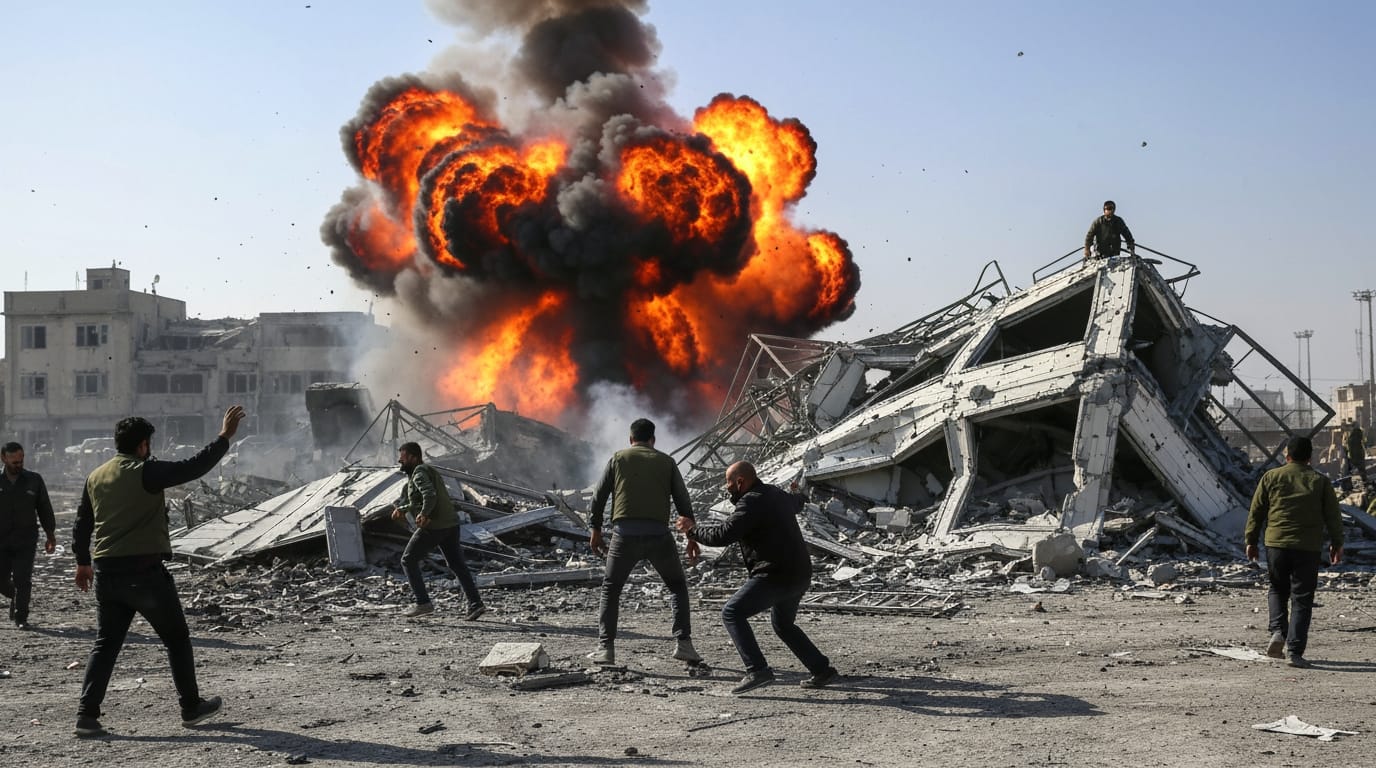
Strait of Hormuz, Persian Gulf – Tensions in the vital Strait of Hormuz have erupted once more, as the United States military launched a series of retaliatory strikes against Iranian targets early Wednesday. The fresh assaults come in response to recent Iranian attacks on commercial shipping in the strategic waterway, marking a significant breach of a fragile interim ceasefire agreement reached just last month between Washington and Tehran. The rapid escalation threatens to plunge the region into a deeper cycle of conflict, with profound implications for global commerce and energy markets.
The U.S. Central Command (CENTCOM) confirmed the strikes, asserting that American forces acted "to impose heavy costs for targeting and attacking commercial shipping crewed by innocent civilians in an international waterway." In a statement, CENTCOM unequivocally declared Iran's actions as "unwarranted, dangerous, and a clear violation of the ceasefire." Iranian state media, while not directly confirming the U.S. strikes, reported explosions near key military and strategic locations along Iran's southern coast, including Bandar Abbas, Qeshm Island, and the port of Sirik. This latest exchange follows a similar pattern of Iranian aggression and U.S. retaliation that unfolded late last month.
Escalation in the Vital Seaway
The immediate catalyst for the U.S. response was a spate of attacks on commercial vessels navigating the Strait of Hormuz. On Monday night, Iran reportedly fired at least two missiles at merchant ships, following up with an attack on a third vessel on Tuesday morning. Among the ships targeted was an unnamed tanker that suffered a fire after being hit by an unknown projectile approximately eight nautical miles east of Limah, off the coast of Oman. Reports indicate that the Qatari-owned LNG carrier Al Rekayyat and the Saudi-flagged crude oil tanker Wedyan were also among the vessels struck. While the ships sustained significant damage, initial reports suggest no casualties were incurred by the crews.
Iran, through its state broadcaster IRIB, presented a differing account, claiming that a Qatari oil tanker was targeted after it disregarded repeated warnings while transiting a U.S.-protected corridor. Iranian officials have previously asserted their right to control ship traffic within the Strait, citing the terms of the earlier ceasefire agreement. The Strait of Hormuz, a narrow choke point between the Persian Gulf and the open sea, remains an indispensable conduit for a substantial portion of the world's oil and liquefied natural gas exports. Maritime security sources continue to caution that the threat level in the region is "substantial," noting the presence of mines in the central section of the waterway.
A Ceasefire in Tatters
The current outbreak of hostilities serves as a stark reminder of the tenuous nature of the ceasefire agreement established on June 15, 2026. This Memorandum of Understanding (MOU), signed by U.S. President Donald Trump and Iranian President Masoud Pezeshkian, was intended to bring an end to the broader "2026 Iran war" and facilitate the reopening of the Strait of Hormuz. The deal outlined an immediate and permanent cessation of hostilities and a framework for subsequent negotiations aimed at a lasting peace.
However, the spirit of this agreement has been consistently undermined. Both Washington and Tehran have accused each other of violating its terms. The U.S. views Iran's recent attacks on shipping as a direct breach, while Iran has previously asserted that the presence of U.S. military vessels near the Strait constitutes a violation of the truce. This current crisis echoes earlier attempts at de-escalation, including a temporary two-week ceasefire in April 2026, which Iran also failed to fully honor regarding free passage through the Strait. The ongoing conflict, which officially commenced on February 28, 2026, with joint U.S.-Israeli airstrikes on Iran, has seen Iran respond with missile and drone attacks and an initial closure of the Strait of Hormuz.
Economic Lifeline Under Siege
The recurrent disruptions in the Strait of Hormuz have severe economic ramifications. The U.S. naval blockade, imposed following the failure of earlier peace talks in April 2026, cost Iran an estimated $500 million daily in lost oil revenue. The renewed attacks now threaten to choke off the flow of maritime traffic, jeopardizing efforts to restore normal shipping practices and alleviate the global economic strain caused by the war. Global crude inventory levels remain a significant concern, with the instability directly impacting international oil prices. In response to Iran's perceived ability to disrupt oil markets, the U.S. and its allies have been actively exploring and accelerating alternative pipelines, export terminals, and overland trade corridors to reduce global dependence on the Strait.
A Precarious Path Forward
The international community, which initially welcomed the June 15 peace deal, now faces the specter of renewed instability. While the United Nations Secretary-General praised the initial agreement, intelligence assessments suggest that Iran retains the capability to close the Strait "at will," a move that could send shockwaves through global energy markets. The recent indirect talks between the U.S. and Iran concluded without any public signs of progress toward a lasting resolution, despite the intended 60-day window for diplomacy.
The current tit-for-tat exchanges risk igniting a fresh and potentially uncontrollable cycle of retaliation, further imperiling the already fragile Memorandum of Understanding. Within Iran, hardline factions remain deeply critical of any dealings with the United States, viewing negotiations as merely an extension of the ongoing conflict. Some hardliners reportedly perceive the current deal as an opportunity for Iran to "rebuild its offensive and defensive capabilities" in preparation for future confrontations. As the world watches, the Strait of Hormuz continues to be a flashpoint where geopolitical tensions directly translate into global economic and security concerns, with no clear path to lasting peace in sight.


