Rhine Runs Dry: Europe's Industrial Lifeline Faces Critical Threat
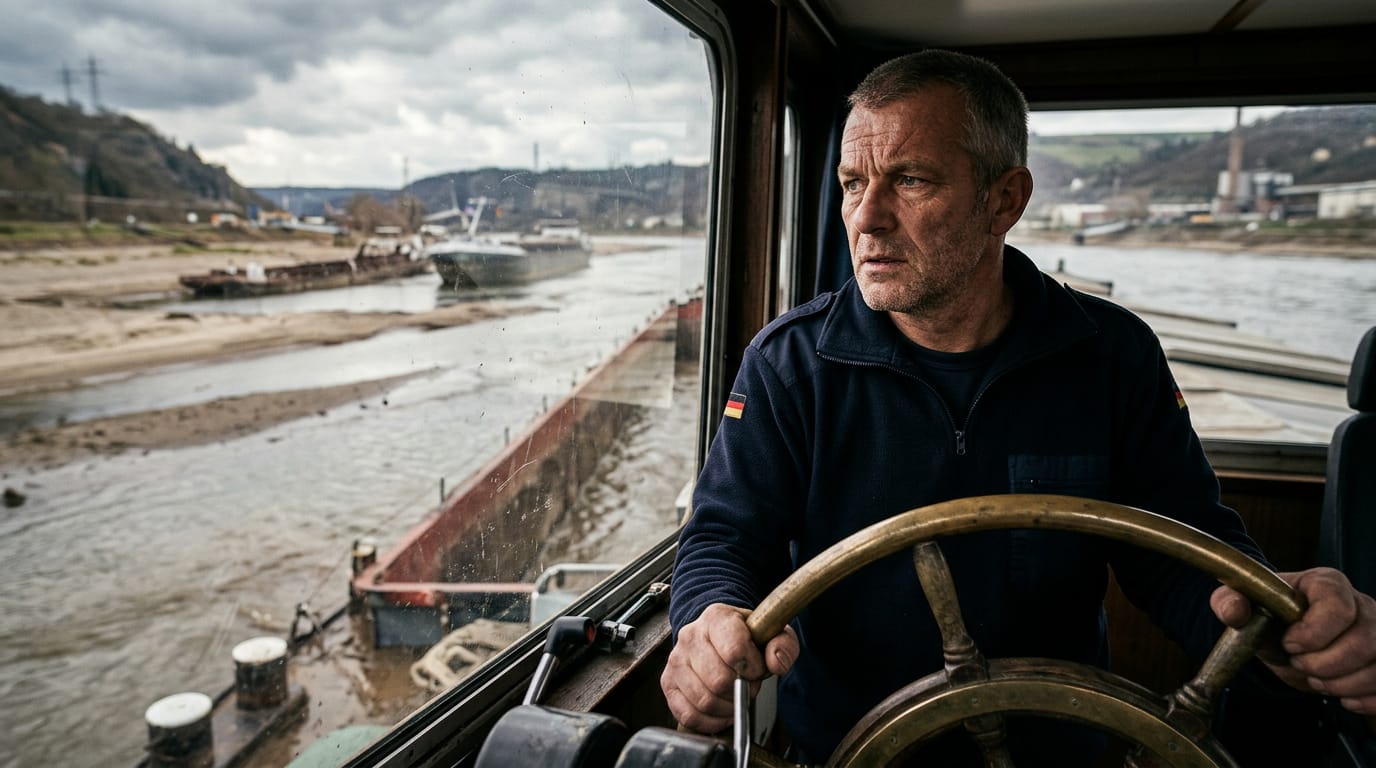
Frankfurt, Germany – Europe's vital industrial artery, the Rhine River, is grappling with unprecedented low water levels, threatening to sever critical freight routes and deliver a significant blow to Germany's already struggling economy. Weeks of relentless heatwaves and drought across Western Europe have reduced water depths to historic lows, with forecasters predicting conditions could worsen further, creating severe logistical bottlenecks for industries spanning steel to chemicals. The crisis underscores the growing vulnerability of essential infrastructure to climate change and raises urgent questions about the resilience of Europe's supply chains.
The Drying Artery: A Crisis Unfolding
The situation on the Rhine has escalated rapidly, with water levels at the crucial Kaub gauge, a key choke point for navigation, plummeting to just 24-25 centimeters in early August, matching the record lows of 2018. Forecasts indicate an even more dire outlook, with levels expected to drop to an unprecedented 18 centimeters, far below the typical 40-centimeter "base" level required for optimal navigation. This drastic reduction is forcing cargo vessels to operate with significantly reduced loads, in some cases carrying only one-third or even as little as 10-20 percent of their normal capacity. Jens Schwanen, managing director of the federal association of German inland shipping (BDB), warned that these conditions risk effectively splitting the critical waterway into two separate zones, rendering commercial shipping above Kaub all but impossible.
The immediate consequences for freight transport are stark. The port in Duisburg, a major industrial hub, reported vessel loading capacities have fallen to approximately one-third of their usual levels. To move the same volume of goods, significantly more barges and trips are now required, leading to soaring operational costs. Freight rates have doubled since June, with prices for petroleum products shipped between Karlsruhe and the coastal ports of Amsterdam, Rotterdam, and Antwerp hitting 200 euros per tonne. Additionally, low water surcharges exceeding $1,100 per container are being imposed by operators, further inflating costs and extending transit times across the region.
Economic Shockwaves: Industries Under Pressure
The Rhine's importance to the German and broader European economy cannot be overstated. Roughly 285 million tonnes of goods travel along the river annually, accounting for approximately 80% of all inland waterway traffic in Germany. It connects three of Germany's largest industrial clusters—Rhine-Ruhr steel, Rhine-Main, and the Ludwigshafen chemical complex—with the North Sea via the major ports of Rotterdam and Antwerp. When the Rhine's navigability is compromised, the ripple effects are felt throughout the continent's industrial heartland.
Economists are already revising growth forecasts downwards. ING economist Carsten Brzeski noted that the 2018 drought, while severe, shaved an estimated 0.3 percentage points off German GDP growth. He suggested the current crisis, with record lows occurring earlier in the season, could have an even more pronounced impact this year, potentially setting back Germany's modest economic recovery. Research from the Kiel Institute for the World Economy indicates that a month of low water on the Rhine can reduce inland shipping volumes by about 25% and industrial production by approximately 1%.
The industries most heavily reliant on the Rhine are bearing the brunt of the disruption. Steelmakers like Thyssenkrupp in Duisburg are directly impacted, with parts of the riverbed near its blast furnaces already exposed. Chemical plants, car factories, and companies dealing in oil products, coal, iron ore, and grains face significant challenges in securing raw materials and shipping finished goods. The logistical strain is leading to pressure on raw material supplies and decreased availability of container equipment, threatening production stability. Beyond Germany, the crisis extends to other European waterways, with the Danube also experiencing severe low water levels, disrupting power systems and, notably, forcing the unprecedented shutdown of Hungary's Paks nuclear power station due to insufficient cooling water.
A Recurring Nightmare: Climate Change at Play
While low water levels during summer are a recurring challenge for Rhine navigation, the severity and early onset of the current crisis are particularly alarming. Scientists and policymakers increasingly point to climate change as a fundamental driver behind these extreme weather events. Persistent heatwaves and prolonged drought are directly contributing to the dwindling water levels.
Projections from institutions like the Copernicus Climate Change Service (C3S) and the International Commission for the Protection of the Rhine (ICPR) highlight a clear trend: climate change will lead to more frequent and distinct periods of low flow and floods on the Rhine. The river is warming significantly, with predictions suggesting an average temperature increase of 2.9 to 4.2 °C by 2100, potentially leading to 50 days per year with temperatures reaching 25-28°C in the main current. These higher water temperatures, coupled with reduced flow, exacerbate ecological and chemical changes within the river system. Updated discharge scenarios for the Rhine basin, released in July 2024, consistently forecast increased winter flows but critically decreased summer flows in the coming decades, making events like the current one more probable and intense.
Seeking Solutions: Short-Term Measures and Long-Term Resilience
In response to the immediate crisis, industries and authorities are scrambling for solutions. The most common immediate recourse involves shifting cargo to smaller vessels, and to road and rail transport. In an effort to ease logistical bottlenecks, German states such as North Rhine-Westphalia, Lower Saxony, Rhineland-Palatinate, and Saarland have relaxed trucking curbs. The Port of Hamburg is actively promoting regular rail links to major logistics hubs like Cologne and Duisburg as an alternative for container shipments, emphasizing rail's independence from water levels and more predictable transit times.
However, these alternative transport methods are not without their limitations. Germany faces a chronic shortage of truck drivers, and its rail network is already stretched, with significant renovation work currently underway on key freight corridors, further restricting capacity. Experts warn that rail and road simply cannot fully compensate for the massive capacity of the Rhine; a single barge can replace up to 100 trucks or an entire freight train. This bottleneck means that even with alternatives, transportation costs remain elevated, and delays are inevitable.
Looking ahead, longer-term strategies are imperative to build resilience against recurring low water events. One proposed measure is the deepening of navigable sections of the Rhine, particularly in its lower and middle reaches. However, major dredging projects, such as for the critical Kaub bottleneck, are not anticipated until 2033. Industry experts are advocating for changes in vessel design, the composition of shipping fleets, and broader river infrastructure improvements. There is also a call for companies to build higher buffer stocks, diversify suppliers, and enhance end-to-end supply chain visibility to better anticipate and mitigate risks. Innovation also plays a role, with projects underway since 2024 to convert salt transport fleets on the Rhine to hydrogen-powered barges, aiming for climate-neutral transport.
A Future Defined by Adaptation
The unfolding crisis on the Rhine serves as a stark reminder of the interconnectedness of natural systems and economic stability. The river, a historical backbone of European industry, is increasingly demonstrating its vulnerability to the intensifying effects of climate change. As record-low water levels persist and threaten to cleave this vital waterway, the immediate challenge lies in maintaining the flow of essential goods. The long-term imperative, however, is to adapt and invest in resilient infrastructure and sustainable practices, ensuring that Europe's industrial heartland can withstand the growing pressures of a changing climate and prevent future supply chain catastrophes. The future economic health of Germany and its neighbors may well depend on how effectively they navigate these turbulent, or rather, dry waters.


