Rhine's Record Low Levels Threaten German Industrial Production, Spark Economic Fears
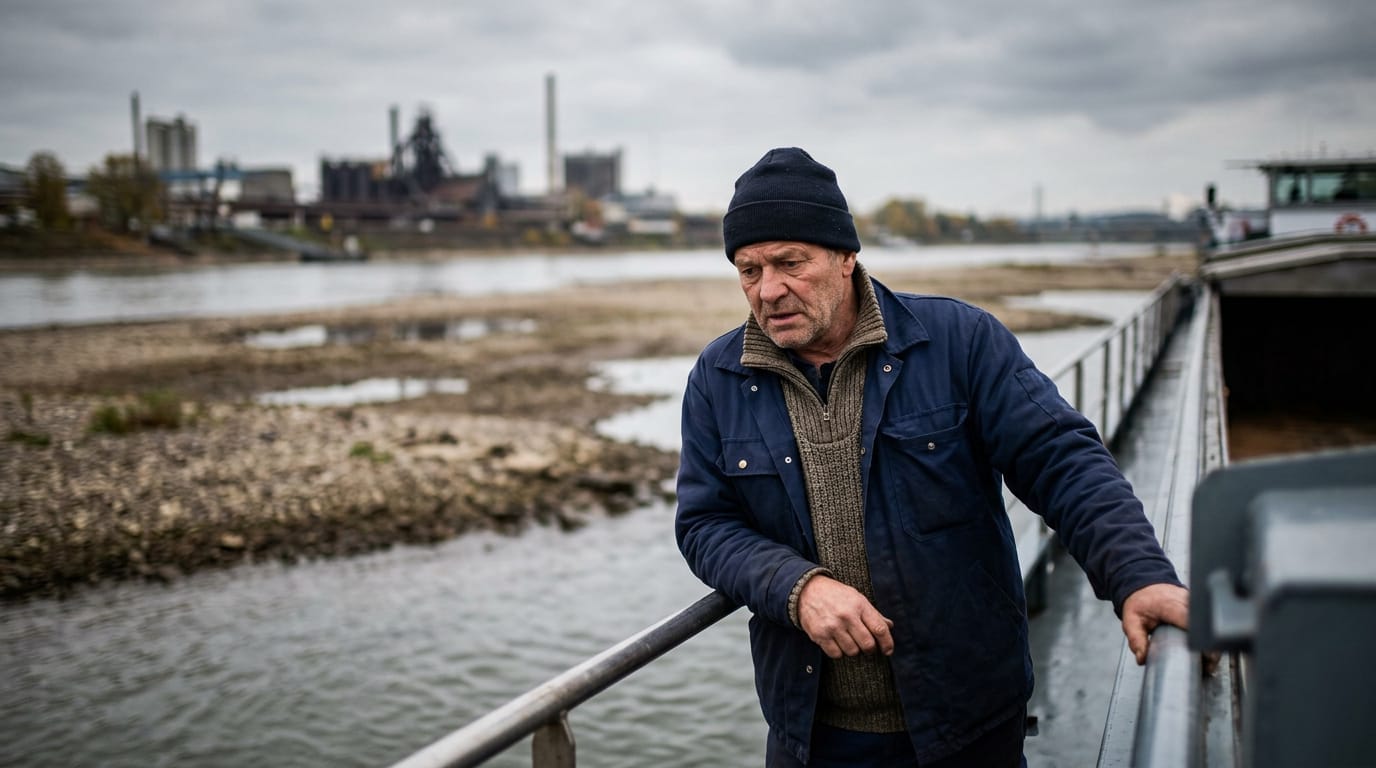
Frankfurt, Germany – Germany's economic backbone faces an unprecedented challenge as water levels on the Rhine River, Europe's most vital inland waterway, have plummeted to historic lows, threatening to choke off supply chains and force significant production cuts across key industries. A prolonged period of drought and persistent heatwaves, exacerbated by climate change, has turned sections of the river into navigable bottlenecks, severely restricting cargo traffic and raising alarm bells for the stability of Europe's largest economy.
The critical situation at the Kaub gauge, a crucial choke point in the Middle Rhine, epitomizes the crisis. Water levels there dropped to a mere 15-16 centimeters on August 10, 2026, with forecasts predicting a further descent to as low as 4 centimeters by August 14, rendering the passage practically impassable for many vessels. This stark reality means that ships, which typically transport thousands of tons of goods, are now limited to carrying only a fraction of their usual capacity, leading to soaring freight rates and extensive delivery delays.
Europe's Drying Artery: A Bottleneck for Commerce
The Rhine is not merely a river; it is a central piece of industrial infrastructure, linking the major port of Rotterdam with Germany's industrial heartlands, including the Rhine-Ruhr steel region, Rhine-Main, and the Ludwigshafen chemical complex. Approximately 285 million tons of freight traverse the river annually, accounting for roughly 80% of all goods moved on Germany's inland waterways. When the Rhine's depth falls below its critical navigability threshold, the economic implications are immediate and far-reaching.
The current water levels are a severe impediment to efficient transport. For instance, a vessel with a maximum capacity of 1,200 tons could recently carry only about 180 tons through the shallowest sections, extending a journey from two days to five days. In some cases, to transport the same volume of goods, up to four barges are now required where one sufficed previously. This reduction in loading capacity has seen barge freight rates more than triple, passing on significant cost increases to industries and, ultimately, consumers. The Federal Association of German Inland Navigation has warned that if water levels remain critically low, the Rhine could become effectively "split in two" for freight, disrupting continuous navigability south of Cologne.
Industry on the Brink: Supply Chain Gridlock
The direct impact on Germany's diverse industrial landscape is profound. Companies heavily reliant on the Rhine for their supply chains are facing critical logistical challenges. The chemicals sector, for instance, is particularly exposed. Giants like BASF, Covestro, and Lanxess depend on the river for both inbound raw materials and outbound finished products. Reduced transport capacity means these companies struggle to receive feedstocks, potentially forcing production curtailments. Covestro has already reported that shipping disruptions are affecting supply and production at some of its sites.
The steel and heavy industry also feels the pinch, with raw materials such as ores and coal facing transportation hurdles. Steelmaker Thyssenkrupp, located in Duisburg, has seen the Rhine riverbed partially dry up near its blast furnaces, necessitating a shift to shallow-draft vessels to maintain operations.
Energy generation is another critical area under threat. Low Rhine levels restrict coal deliveries to power plants, raising concerns about potential reductions in output and higher summer power prices if drought conditions persist. While healthy coal inventories might cushion the immediate shock, prolonged disruption could deplete these stocks, leading to increased short-run marginal costs for plants and potentially higher electricity bids. The oil product sector is also grappling with disruptions, particularly in western Germany, as barge traffic comes to a standstill, impacting supply and tightening product availability. Some loading terminals are at risk of becoming inaccessible.
Broader Economic Repercussions
The ripple effect of the Rhine crisis extends across the entire German economy. Economists are sounding alarms about a measurable impact on national output. Commerzbank economists project that if critical water levels persist through mid-September, Germany's Gross Domestic Product (GDP) in the third quarter could be depressed by approximately 0.35%, potentially leading to a slight decline in overall economic output.
Research from the Kiel Institute for the World Economy indicates that a month with 30 days of critically low water levels on the Rhine could reduce overall inland water transportation by about 25% and industrial production by roughly 1%. This estimate draws comparisons to the 2018 drought, which shaved an estimated 0.3 percentage points off Germany's GDP growth. Experts warn that the economic impact this year could be even more significant, given the unprecedented early occurrence and severity of the low water levels.
This comes at a particularly challenging time for German industrial producers, already contending with high energy costs, stiff global competition, and other external pressures. The increased logistics costs, passed on through higher freight rates and the need for alternative transport, threaten to fuel inflation and burden businesses and consumers alike.
Adapting to a New Reality
In response to the escalating crisis, both businesses and authorities are scrambling to adapt. Companies like BASF had already begun investing in and utilizing specialized shallow-draft vessels following the severe low-water events of 2018, an investment now proving crucial in enhancing resilience. Other firms, such as Thyssenkrupp, have similarly adapted their shipping strategies.
However, the alternatives to Rhine transport are limited and costly. Replacing a single fully loaded barge can require up to 100 trucks or an entire freight train. Germany's rail network is already overstretched, and the country faces a chronic shortage of truck drivers, making a full shift to land-based transport challenging. Nevertheless, German states are temporarily lifting restrictions on truck traffic on Sundays and public holidays to alleviate some logistical pressure.
Discussions are also underway regarding long-term solutions. Transport Minister Steffen Bilger acknowledged the "very challenging situation" and stressed the need for adaptation, noting that the government had initiated a low-water information system and worked to minimize road and rail challenges since previous droughts. Calls have intensified to deepen navigable sections of the Rhine, particularly in critical areas like Kaub, to ensure year-round operability. Asset managers are actively engaging with portfolio companies to assess and enhance their climate resilience strategies in light of these recurring events.
A Climate Wake-Up Call
The recurring and intensifying low water events on the Rhine serve as a stark reminder of the escalating consequences of climate change. Experts note that what was once considered a "once-in-a-century event" is now revisited within a few years, with persistent high-pressure systems and extreme temperatures amplifying drought conditions across Europe. As soils dry out, their natural cooling capacity diminishes, leading to a reinforcing cycle of heat and drought.
The current Rhine crisis underscores a fundamental shift in environmental conditions that demands sustained and proactive responses. While short-term mitigations are essential to avert immediate economic disruption, the long-term resilience of Germany's industrial heartland, and indeed the broader European economy, hinges on comprehensive strategies to address climate change and adapt critical infrastructure to an increasingly unpredictable climate future. The economic health of Germany now depends on both immediate rainfall and long-term strategic foresight to navigate the changing dynamics of its most vital waterway.


