Robert Mueller, Architect of Modern FBI and Special Counsel in Trump Probe, Dies at 81
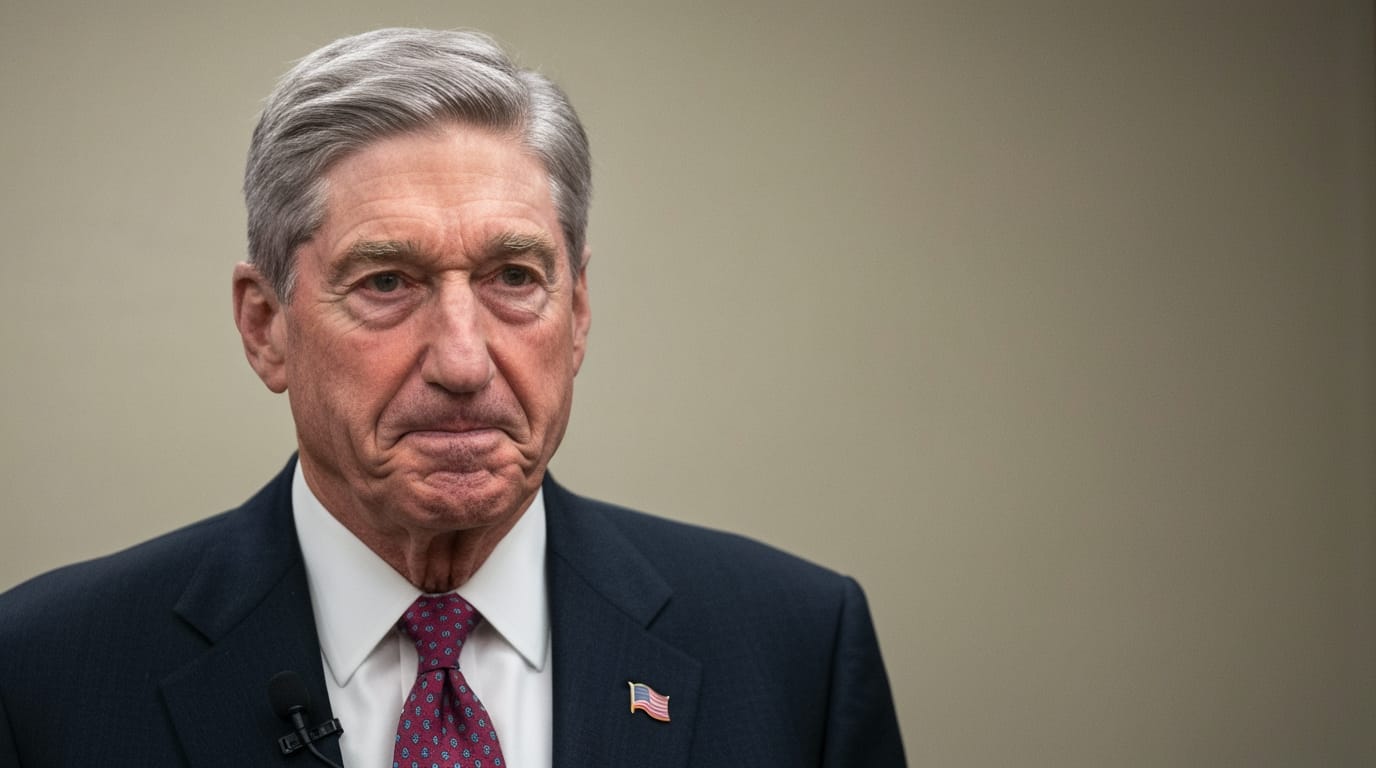
Robert S. Mueller III, the stoic former FBI director who reshaped the bureau into a counterterrorism force after the Sept. 11 attacks and later led the investigation into Russian interference in the 2016 presidential election, died Friday in Charlottesville, Virginia. He was 81. Mueller's passing marks the end of a distinguished career spanning decades of public service, characterized by a steadfast commitment to the rule of law and an unwavering dedication to duty that saw him navigate some of the nation's most turbulent periods. His family confirmed his death in a statement Saturday, requesting privacy. Mueller had been diagnosed with Parkinson's disease in 2021 and had moved to a senior living facility.
A Formative Path: From Marine to Prosecutor
Born in New York in 1944 and raised in New Jersey, Robert Mueller's early life laid the foundation for a career marked by discipline and public service. After graduating from Princeton University in 1966 and earning a master's degree from New York University, Mueller volunteered for the U.S. Marine Corps, a decision influenced by the combat death of a college lacrosse teammate in Vietnam. He served as a rifle platoon leader with the 3rd Marine Division in Vietnam, earning a Bronze Star for heroism, two Navy Commendation Medals, and a Purple Heart.
Following his decorated military service, Mueller pursued a legal career, earning his law degree from the University of Virginia School of Law in 1973. He then worked as a litigator in San Francisco before transitioning to public law enforcement, a path he would consistently choose over lucrative private sector opportunities throughout his life. He spent 12 years in U.S. Attorney's Offices, serving in the Northern District of California and the District of Massachusetts, where he handled cases involving financial fraud, terrorism, and public corruption. Mueller's reputation for meticulous investigation and quiet rectitude began to solidify during these years, leading to his appointment as Assistant Attorney General for the Criminal Division in 1990, where he oversaw significant prosecutions, including the investigation into the bombing of Pan Am Flight 103.
Leading the FBI Through a New Era of Threats
Mueller's most extensive tenure in public service began on Sept. 4, 2001, when he was sworn in as the sixth director of the Federal Bureau of Investigation. This appointment came just one week before the Sept. 11 terrorist attacks, an event that would irrevocably define his leadership and transform the FBI's mission. Under his guidance, the FBI shifted its primary focus from domestic crime fighting to preventing terrorism, a monumental undertaking that involved reorganizing the agency and enhancing its intelligence capabilities.
He served as FBI director for 12 years, making him the longest-serving leader of the bureau since J. Edgar Hoover. Initially nominated by President George W. Bush, Mueller received bipartisan support throughout his tenure, with President Barack Obama extending his term by two years in 2011 to ensure continuity and stability during a critical period of national security transitions. During his directorship, Mueller was credited with modernizing the FBI and adapting it to meet the challenges of the 21st century's evolving threat landscape, earning praise for his integrity and leadership.
The Special Counsel Investigation and Its Aftermath
Four years after retiring from the FBI, Mueller was once again called to public service in May 2017, this time as Special Counsel by then-Deputy Attorney General Rod Rosenstein. His mandate was to investigate Russian interference in the 2016 presidential election and any potential links or coordination between the Russian government and Donald Trump's presidential campaign, as well as allegations of obstruction of justice. The 22-month investigation became a central and polarizing feature of American political discourse.
The Special Counsel's team issued 37 indictments, secured seven guilty pleas or convictions, and referred 14 criminal investigations to other components of the Justice Department. This included charges against 34 individuals and three companies, among them six former Trump associates, 26 Russian nationals, and three Russian companies. The investigation concluded that the Russian government interfered in the 2016 election in a "sweeping and systematic fashion" and that the Trump campaign "showed interest in WikiLeaks's releases of documents and welcomed their potential to damage candidate Clinton."
The 448-page Mueller Report, delivered in March 2019, explicitly stated that it "did not establish that members of the Trump campaign conspired or coordinated with the Russian government in its election interference activities." However, it also detailed multiple efforts by President Trump to control the investigation and declined to exonerate him on the question of obstruction of justice, citing a Justice Department policy against indicting a sitting president. Mueller's report notably concluded, "if we had confidence after a thorough investigation of the facts that the President clearly did not commit obstruction of justice, we would so state. Based on the facts and the applicable legal standards, we are unable to reach that judgment."
A Legacy of Integrity and Enduring Debate
Robert Mueller's career was defined by a quiet, disciplined approach to public service, earning him a reputation as an impartial and highly respected figure across political lines for much of his career. His commitment to the legal process and his reluctance to engage in public commentary during the Special Counsel investigation underscored his adherence to professional norms.
His death evoked a range of reactions, reflecting the contentious nature of his final, high-profile investigation. While many figures in Washington honored him as a dedicated public servant, former President Trump posted on Truth Social, "Robert Mueller just died. Good, I'm glad he's dead. He can no longer hurt innocent people!" These contrasting responses highlight the complex and often divided perceptions of his legacy, particularly concerning the Special Counsel investigation's impact on American politics and institutions.
Mueller's life exemplified a rare blend of military valor and legal rigor. He served his country across multiple critical junctures, from the battlefields of Vietnam to the highest echelons of federal law enforcement. His leadership at the FBI fundamentally altered its course, and his special counsel investigation, while controversial, brought to light extensive details about foreign interference in American democracy. Despite the political tempest surrounding his final assignment, Mueller consistently maintained a focus on facts and the meticulous pursuit of justice, leaving behind a legacy that will continue to be debated and analyzed for its profound implications for the rule of law and American governance.


