Rohingya's Long Road Home: A Crisis of Citizenship, Safety, and Stalled Repatriation
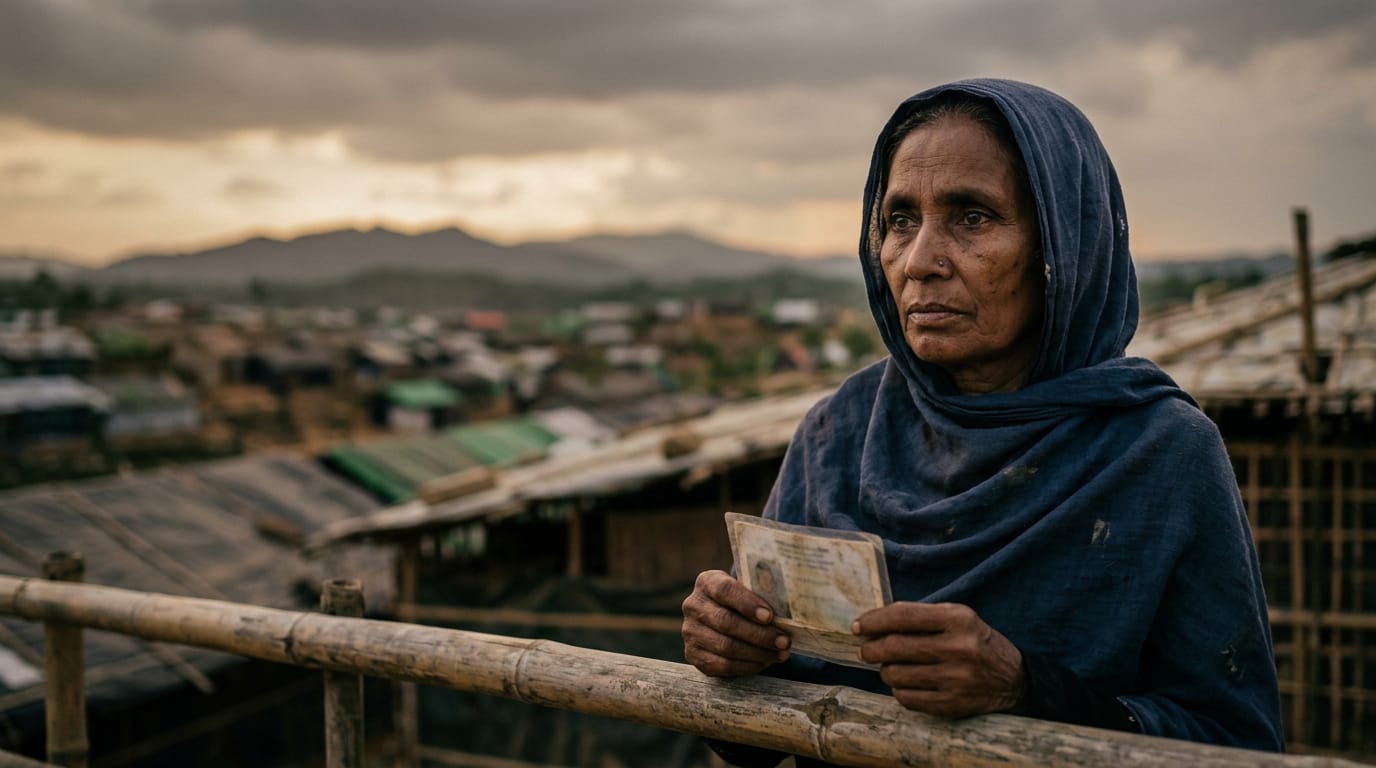
COX'S BAZAR, BANGLADESH – Nearly a decade after the most significant exodus of Rohingya Muslims from Myanmar, over one million refugees remain stranded in sprawling, overcrowded camps in Bangladesh, their hopes for a safe return home consistently thwarted by a complex web of persecution, statelessness, and ongoing violence in their native Rakhine State. International calls for dignified repatriation echo against a backdrop of unaddressed grievances, leaving the world's most persecuted minority in a protracted state of limbo.
The Genesis of Displacement: A History of Persecution and Flight
The Rohingya, an ethnic Muslim minority, have endured systematic discrimination and violence in Buddhist-majority Myanmar for decades, with persecution dating back to at least the 1970s. A pivotal moment arrived in 1982 when Myanmar's citizenship law effectively rendered the Rohingya stateless, denying them fundamental rights and leading to widespread marginalization. This legal disenfranchisement laid the groundwork for future atrocities, classifying them as foreign to their homeland.
The crisis escalated dramatically on August 25, 2017, following attacks by the Arakan Rohingya Salvation Army (ARSA) on Myanmar border posts. In response, the Myanmar military, known as the Tatmadaw, launched a brutal "clearance operation" in Rakhine State. This military campaign was characterized by mass killings, widespread rape, and the burning of entire villages, triggering an unprecedented wave of displacement. Over 700,000 Rohingya fled across the border into Bangladesh, joining hundreds of thousands who had sought refuge in previous waves of violence. The United Nations later described these events as a "textbook example of ethnic cleansing," with various international bodies and governments labeling them as ethnic cleansing or genocide.
Persistent Peril: Unsafe Conditions in Rakhine State
The primary impediment to the Rohingya's return is the continued lack of safety and the absence of guarantees for their basic rights in Myanmar. An estimated 500,000 to 600,000 Rohingya who remain in Rakhine State face ongoing persecution and violence, confined to camps and villages with severe restrictions on their freedom of movement. They are largely cut off from adequate food, healthcare, education, and livelihood opportunities.
Recent reports from 2024 to 2026 highlight a worsening security landscape. Rohingya civilians are caught in the escalating conflict between the Myanmar military and the ethnic Arakan Army (AA), which now controls most of Rakhine State. Disturbingly, both armed groups have forcibly conscripted Rohingya, reportedly using them as "human shields" in the conflict. Amnesty International and Human Rights Watch have documented severe restrictions on movement, discriminatory bans on livelihoods, forced labor, and inadequate access to essential services imposed by the Arakan Army in areas under its control. The threat of arbitrary detention, harassment, and violence at checkpoints remains pervasive, particularly for those unable to produce identification documents, which many stateless Rohingya lack. Human Rights Watch explicitly states that the conditions for safe returns do not currently exist, warning that forcing Rohingya back would place their lives at risk and violate their fundamental rights.
Stalled Repatriation Efforts and International Impasse
Despite bilateral agreements between Bangladesh and Myanmar, efforts to facilitate the return of Rohingya refugees have repeatedly failed. In November 2017, the two nations signed a Memorandum of Understanding (MoU) for repatriation, with Myanmar agreeing to accept "verified displaced persons." However, the process has been plagued by Myanmar's slow and insufficient verification of refugees. While Bangladesh has provided details for hundreds of thousands, Myanmar has verified only a fraction. As of July 2026, Myanmar claimed to have verified over 300,000 refugees but also stated that over 113,000 could not be verified and nearly 4,200 were deemed involved in "terrorist activities."
A critical barrier to any successful repatriation is the unanimous refusal of Rohingya refugees to return without concrete guarantees for their safety, citizenship rights, and the restitution of their ancestral lands. They fear being placed in "open-air prisons" or transit camps, as their original villages were largely destroyed. The United Council of Rohingya (UCR), an elected representative body, has firmly rejected Myanmar's narrative of the crisis, accusing the government of attempting to rewrite history and evade accountability for state-sponsored crimes. They insist that any return must be voluntary, safe, dignified, supervised by the United Nations, and accompanied by a binding roadmap to full citizenship. The international community, including the UN, consistently advocates for voluntary, safe, dignified, and sustainable returns, emphasizing the need for justice and accountability.
Life in Limbo: The Squalor of Refugee Camps
For those who fled Myanmar, life in the refugee camps of Cox's Bazar, Bangladesh, presents its own set of formidable challenges. Home to over one million Rohingya, these camps constitute the largest refugee settlement in the world. Conditions are severely overcrowded and woefully inadequate. Refugees face limited access to clean water, proper sanitation, and healthcare, contributing to high rates of malnutrition and vulnerability to disease outbreaks.
Approximately 95% of the refugee population in Bangladesh remains highly vulnerable, entirely dependent on humanitarian aid for survival. The security situation within the camps has also deteriorated, with increased incidents of violence and organized crime posing heightened protection risks, especially for women, girls, and children. Furthermore, the camps are vulnerable to natural disasters like floods, landslides, and cyclones, given Bangladesh's high susceptibility to such events. Refugees also face significant restrictions on their freedom of movement and limited opportunities for livelihoods, leaving them with little autonomy. Children born in these camps know no other life, deprived of peace, safety, or opportunity. Compounding these difficulties, humanitarian funding has been under strain, threatening essential services for this vast population.
A Call for Lasting Solutions
The plight of the Rohingya refugees underscores a humanitarian crisis rooted in profound issues of identity, citizenship, and human rights. Despite the passage of years, the core reasons preventing their return—ongoing violence, lack of legal protection, and a deep-seated fear for their lives—remain unaddressed. The international community continues to stress that a durable solution hinges on Myanmar creating conditions that guarantee safety, full citizenship, freedom of movement, and access to basic services for the Rohingya. Without such fundamental changes, the prospects for a voluntary, dignified, and sustainable return remain distant, leaving over a million people indefinitely displaced and dependent on external aid. The crisis demands a concerted, sustained international effort to hold Myanmar accountable and to ensure justice and human dignity for the Rohingya people.