Roman Mass Grave Unearthed in Vienna Rewrites City's Early History
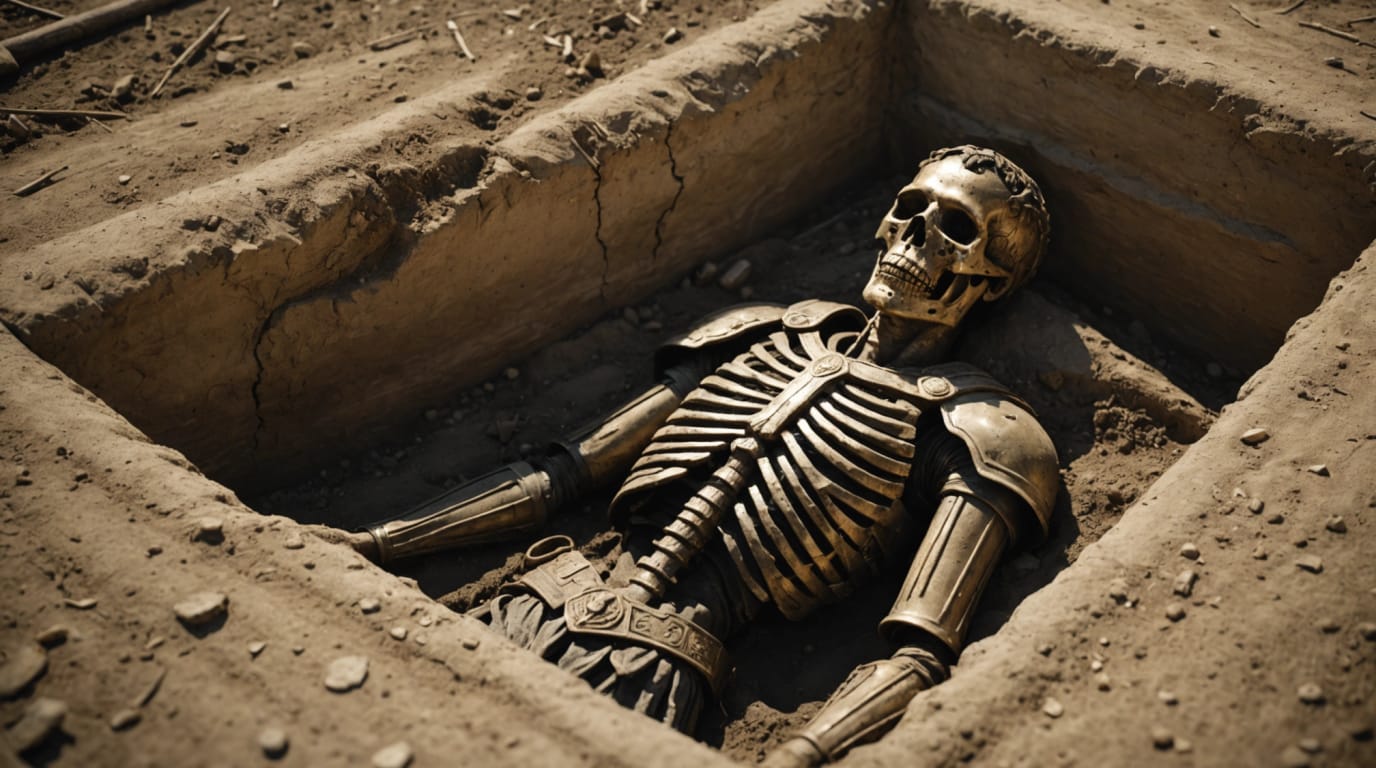
Construction workers renovating a sports field in Vienna stumbled upon a startling discovery last October: a mass grave dating back to the 1st century AD. The find, located in the Simmering district, has been hailed by archaeologists as unprecedented in Central Europe and is forcing a re-evaluation of Vienna's origins and its role in the Roman Empire. The hastily buried remains of more than 150 individuals, bearing gruesome battle wounds, suggest a catastrophic military event and offer a chilling glimpse into the violent conflicts that shaped the region.
A Battlefield Revealed
The mass grave contained the skeletal remains of at least 129 individuals, with estimates suggesting the total number of victims could exceed 150. The bodies were interred in a pit, indicating a hurried and disorganized disposal, unlike the typical Roman practice of cremation during that period. Examination of the skeletons revealed extensive injuries, including wounds to the head, torso, and pelvis, inflicted by swords, lances, and blunt force trauma. The nature of these injuries led archaeologists to conclude that the site was indeed a battlefield, dismissing the possibility of a mass execution.
"They have various different battle wounds, which rules out execution. It is truly a battlefield," said Kristina Adler-Wölfl, head of Vienna city archaeological department.
The victims were primarily young men, aged between 20 and 30, who appeared to be in good health prior to their violent deaths. This demographic profile further supports the theory that the individuals were combatants involved in a significant military engagement.
Unprecedented Discovery
The discovery is unique in the context of Roman military history. While battlefields with scattered weapons are known in other regions, the recovery of a mass grave containing the remains of so many fighters is unprecedented.
"Within the context of Roman acts of war, there are no comparable finds of fighters," said Michaela Binder, who led the archaeological dig. "There are huge battlefields in Germany where weapons were found. But finding the dead, that is unique for the entire Roman history."
The find challenges existing assumptions about Roman burial practices and provides a rare opportunity to study the physical trauma inflicted during ancient warfare.
Dating the Carnage
Carbon-14 dating and analysis of artifacts found within the grave, including armor fragments, helmet cheek protectors, and nails from Roman military boots (caligae), have helped to narrow down the timeline to between 80 and 130 AD. The most compelling evidence comes from a rusty dagger discovered among the remains.
Historical context points to the "Danube Wars" during the reign of Emperor Domitian (81-96 AD) as the most likely period for the battle. A single sentence in a historical source mentions the loss of an entire legion around 92 AD. Experts suggest the mass grave is likely related to this event.
Rewriting Vienna's History
At the time of the battle, the Roman military camp of Vindobona, which forms the core of Vienna's First District today, was not yet the sprawling urban center it would become. The discovery of the mass grave far beyond the camp's gates suggests that the area witnessed intense fighting that played a crucial role in the city's development.
The catastrophic event evidenced by the mass grave may have prompted the Roman Empire to significantly expand Vindobona under Emperor Trajan, transforming it into a major military and administrative hub. This expansion laid the foundation for the Vienna that exists today.
"Such dramatic incidents could ultimately have led to the previously rather subordinate camp Vindobona being massively expanded under Emperor Trajan and becoming the seed for today's metropolis," experts said.
Identifying the Combatants
While the archaeological evidence paints a vivid picture of the battle, the identities of the combatants remain a subject of ongoing research. Only one victim has been confirmed as a Roman warrior. Archaeologists are conducting DNA and strontium isotope analysis to determine the origins of the other individuals and ascertain which side they fought for.
One theory suggests that the battle involved Roman forces and Germanic tribes who were in constant conflict along the Danube frontier. The location of the grave supports this hypothesis, as it lies outside the established Roman settlement and closer to the territories inhabited by Germanic peoples.
A Somber Reminder
The discovery of the mass grave serves as a somber reminder of the human cost of conflict and the violent origins of one of Europe's great cities. The remains of these young men, "slaughtered in the most gruesome way," offer a tangible connection to the past and a powerful testament to the enduring impact of war.
The ongoing research promises to shed further light on this pivotal moment in Vienna's history and provide valuable insights into the dynamics of the Roman Empire and its interactions with neighboring cultures. The find underscores the importance of archaeological investigation in uncovering hidden narratives and challenging established historical accounts. As the analysis continues, the secrets buried beneath the sports field in Simmering may yet reveal more about the battle that shaped Vienna's destiny.


