Romania Destroys Explosives-Laden Drone Near Key Gas Project, Points Finger at Russia Amid Rising Black Sea Tensions
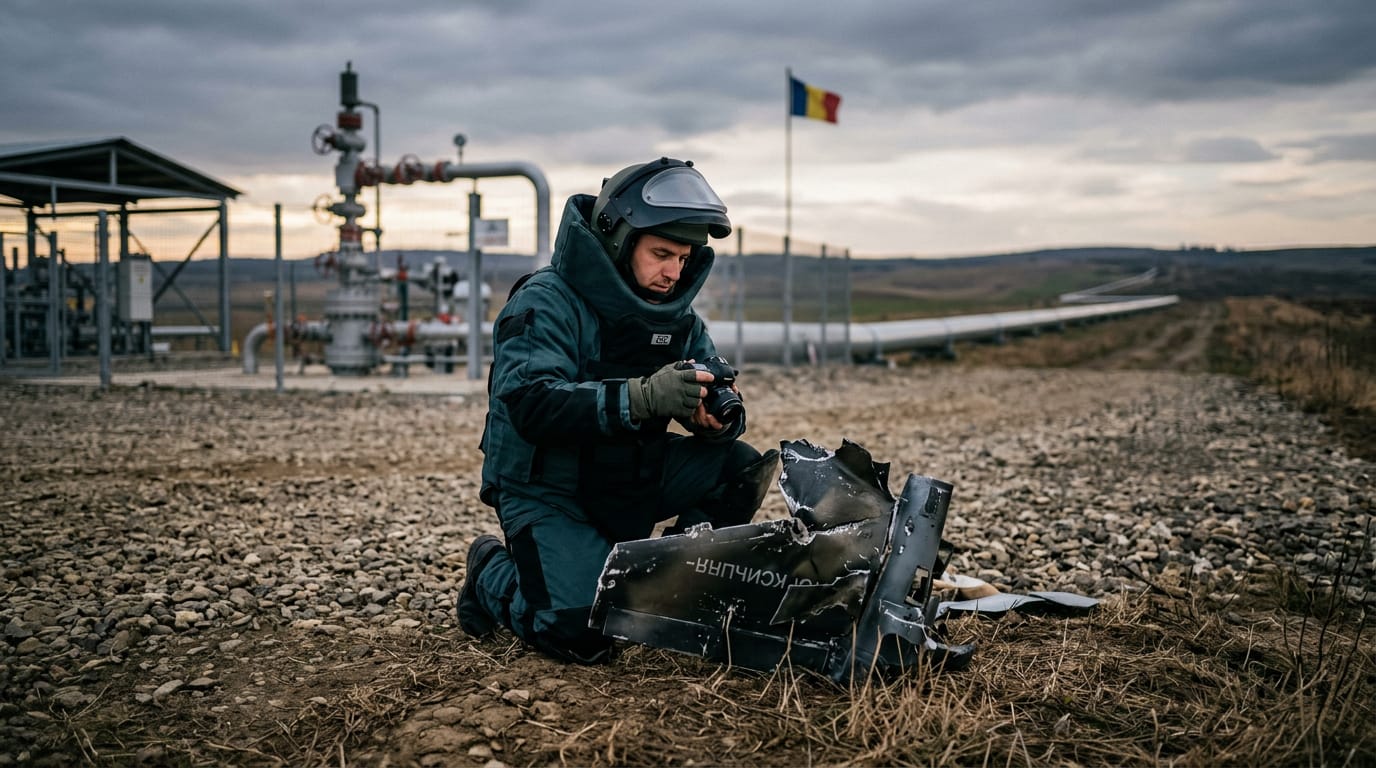
BUCHAREST, Romania – A Romanian F-16 fighter jet on Thursday successfully intercepted and destroyed an explosives-laden marine drone operating perilously close to the strategic Neptun Deep offshore gas project in the Black Sea. The incident, which Romanian officials swiftly attributed to Russia, marks a significant escalation in regional tensions, underscoring the growing threat to critical energy infrastructure in the Black Sea amidst Moscow’s ongoing conflict in Ukraine. The drone's presence near the vital energy hub prompted a rapid military response and drew sharp condemnations from Bucharest and European Union leaders, highlighting the precarious security environment along NATO's eastern flank.
Close Call for Energy Security
The alarm was raised early Thursday morning when a commercial vessel reported sighting an unmanned marine drone at approximately 6:28 a.m. local time. The suspicious craft was observed just several hundred meters from the Neptun Deep platform, situated about 80 nautical miles east of the Romanian port city of Constanta. Responding swiftly, Romanian authorities scrambled two F-16 fighter jets. One of the aircraft engaged the target, neutralizing the threat with its onboard cannon. Defense Minister Radu Miruță confirmed the drone was carrying explosives, posing a direct danger to the hundreds of personnel working on the platform and the critical infrastructure itself. Ukraine has officially confirmed to Romanian authorities that the drone was not of Ukrainian origin, further narrowing the potential source of the provocative act.
The Neptun Deep project is a cornerstone of Romania's and Europe's energy future. Co-owned by OMV Petrom and Romgaz, it is poised to become the European Union's largest offshore gas producer by 2027. Located approximately 160 kilometers off the Romanian coast, the project spans an area of 7,500 square kilometers in water depths ranging from 100 to 1,000 meters. Its successful operation is crucial for enhancing European energy independence and reducing reliance on Russian energy supplies, making it a high-value target in the current geopolitical climate. The incident underscores vulnerabilities in critical maritime infrastructure, particularly in regions adjacent to active conflict zones.
Bucharest Points to Moscow Amid Pattern of Incursions
Romanian officials wasted little time in attributing responsibility for the drone incident to the Russian Federation. President Nicușor Dan explicitly condemned the "intensification of these types of irresponsible incidents on the part of the Russian Federation." Defense Minister Radu Miruță echoed these sentiments, labeling the event a "dangerous escalation" and previously noting that the increasing frequency of drone-related incidents in Romania is a direct consequence of Russia's intensified attacks on Ukrainian ports along the Danube River. He highlighted that Romanian Defense Ministry radars have detected over 100 drones operating near Romanian airspace, albeit still over Ukraine, in recent days.
This latest incident is not an isolated event but part of a discernible pattern of incursions into Romanian territory and airspace. Over the past four years, Romania, a NATO member sharing a 614-kilometer land border with Ukraine, has reported numerous instances of Russian drones breaching its airspace and even crashing on its soil. Just earlier this month, Romanian army divers were dispatched to destroy two Russian-made Gerbera-type drones, typically used for reconnaissance or as decoys, found drifting near the very same Neptun Deep project. Additionally, a Spanish F-18 fighter jet, operating under NATO command, intercepted and shot down a suspected Russian drone over Romanian airspace on August 16. On the same day as the marine drone incident, another aerial drone crashed in an unpopulated area of Tulcea County, near the Ukrainian border, following large-scale Russian strikes on Ukraine. This persistent activity suggests a deliberate strategy by Russia that tests Romanian and NATO defenses and generates instability.
NATO's Eastern Flank Under Scrutiny
The drone incident in the Black Sea carries significant implications for regional security and for the North Atlantic Treaty Organization (NATO). European Commission President Ursula von der Leyen publicly criticized what she termed "an escalating campaign of threats" against the European Union, linking the event to broader Russian actions. Ukraine's Foreign Minister Andrii Sybiha warned that Russia's actions are increasingly testing NATO's resolve and violating the sovereignty of neighboring states, extending the risks of the war far beyond Ukraine's borders.
While Romania remains vigilant alongside its NATO allies, the specific location of the Neptun Deep infrastructure, within Romania's Exclusive Economic Zone, presents a nuanced security challenge. This maritime area, while under Romanian jurisdiction, is not directly covered by Article 5 of the NATO Treaty, which guarantees collective defense for member states in the event of an armed attack on their territory. However, NATO is actively responding to the heightened threat environment on its eastern flank. The alliance is reportedly developing a sophisticated network of thousands of drones, sensors, and satellites, linked by artificial intelligence, under its Eastern Flank Deterrence Initiative (EFDI). This system aims to monitor and detect threats along NATO's borders with Russia and Belarus, stretching from Finland to the Black Sea, enhancing the alliance's ability to respond to airspace violations and other hostile activities.
Conclusion: A Volatile Black Sea
The destruction of the explosives-laden marine drone near the Neptun Deep gas project serves as a stark reminder of the volatile security situation in the Black Sea region. Romania's swift and decisive action prevented a potential catastrophe for its critical energy infrastructure and its workforce. Yet, the incident, coupled with a consistent pattern of drone incursions, reinforces the view that Russia is engaged in a sustained campaign of harassment and destabilization against its NATO neighbors. The strategic importance of the Neptun Deep project for European energy security ensures that any future threats will be met with heightened vigilance. As the conflict in Ukraine continues, the Black Sea remains a critical frontier where geopolitical tensions play out, demanding constant readiness and robust collective defense from NATO and its allies.