Romania Rocked by Revelations of Judicial Corruption, Public Outcry Mounts
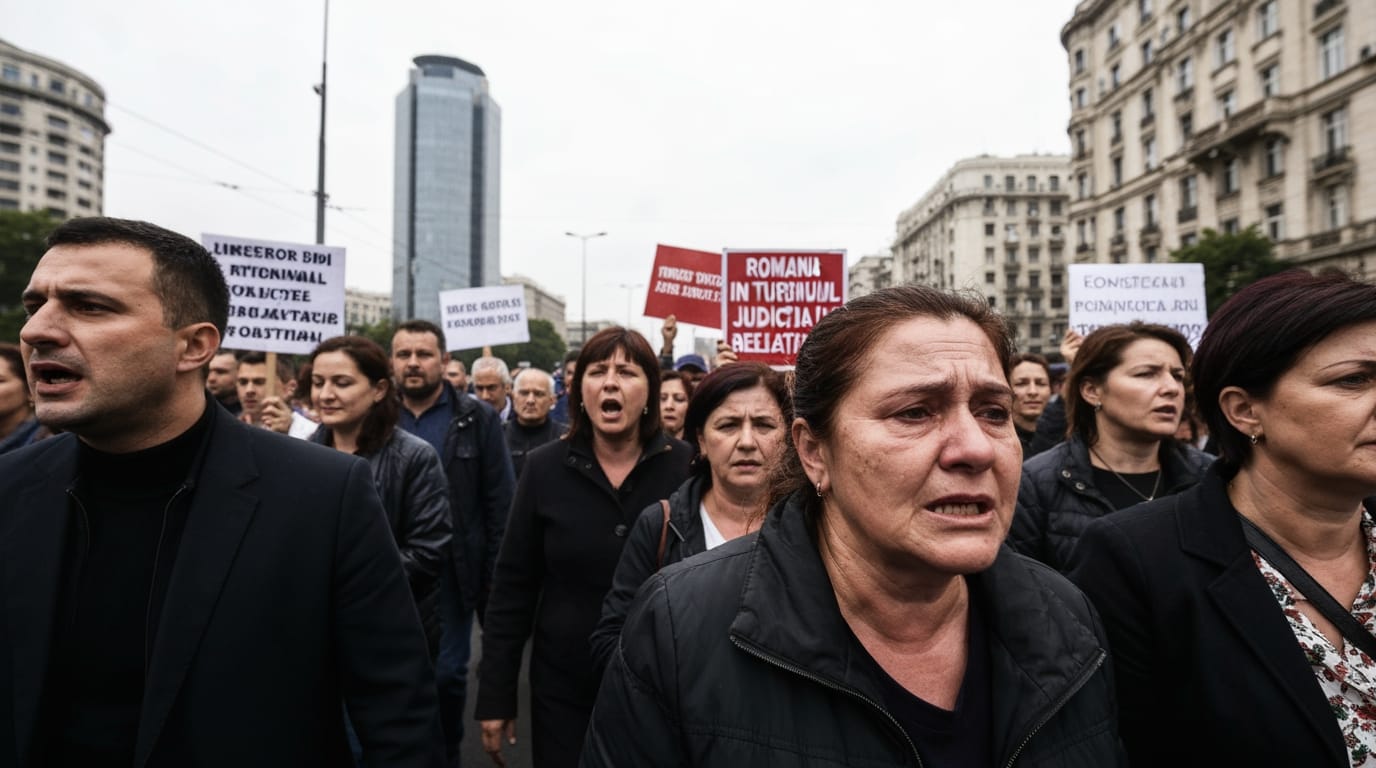
Romania's fragile trust in its judicial system has been severely shaken by a groundbreaking investigative documentary, "Captured Justice," which alleges systemic corruption and manipulation at the highest levels of the judiciary. The revelations, spanning a two-hour film released in early December 2025, have sparked a wave of widespread public protests across the nation and ignited a fierce debate among legal professionals and political leaders. The unfolding crisis underscores enduring concerns about the rule of law in Romania and raises critical questions about the effectiveness of past anti-corruption efforts.
The Exposé: A Judiciary Under Siege
The independent investigative platform Recorder’s documentary, "Captured Justice," debuted on December 9, 2025, and quickly garnered millions of views online, depicting a judicial system allegedly compromised by a "pyramidal power structure" designed to protect influential figures. The investigation points to High Court president Lia Savonea as a central figure in this alleged scheme. According to testimonies from current and former magistrates, some speaking anonymously, the system facilitated the deliberate delay of high-profile corruption cases until statutes of limitations expired, or orchestrated questionable acquittals for powerful politicians and businessmen, some of whom had already faced final convictions. Mechanisms described in the film include the arbitrary reassignment of judges and undue pressure on independent magistrates, with those failing to align with "informal recommendations" allegedly being stripped of their cases. Justice Minister Radu Marinescu, whose past legal work involved accused politicians, has maintained the judiciary's independence and denied responsibility for the alleged practices.
Public Outcry and Calls for Reform
The documentary immediately triggered a strong public reaction, with protests erupting across Romanian cities starting December 10, 2025. Hundreds initially gathered in front of the Superior Council of Magistracy (CSM) headquarters in Bucharest, with numbers swelling to thousands in subsequent days, including rallies in Cluj-Napoca, Iasi, Craiova, and Satu Mare. Demonstrators voiced profound frustration with slogans such as "Justice, not mafia," "We want justice, not immunity," "Independent magistrates, not obedient," and "No Statute of Limitations for Corruption," reflecting deep-seated public anger over perceived impunity for the powerful. Protesters explicitly called for the resignations of High Court president Lia Savonea, Justice Minister Radu Marinescu, and Marius Voineag, the head of the National Anti-corruption Directorate (DNA). The widespread protests highlight a national weariness with corruption scandals and a collective demand for a justice system that serves all citizens impartially.
Internal Judicial Dissent and Political Responses
The revelations have also fractured the judiciary itself, prompting an unprecedented level of internal dissent. More than 500 Romanian judges and prosecutors have signed an open letter condemning "profound and systemic dysfunction" within the justice system and expressing solidarity with their colleagues who spoke out in the documentary. Notably, Laura Codruța Kövesi, the chief prosecutor of the European Public Prosecutor's Office, was among the signatories, adding significant weight to the magistrates' concerns. A dramatic moment unfolded when Judge Raluca Moroșanu publicly corroborated the documentary's claims during a press conference convened by the Bucharest Court of Appeal, stating that honest magistrates face "terror through disciplinary actions."
Initial reactions from official bodies within the judiciary were mixed. The Bucharest Court of Appeal leadership initially refuted the allegations, characterizing them as a "campaign to destabilize" the system. Similarly, the Superior Council of Magistracy (CSM) initially dismissed the documentary as part of a "coordinated attack" aimed at undermining judicial authority. However, facing mounting pressure, both the Judges' Section and the Prosecutors' Section of the CSM later announced they would conduct checks into the allegations.
Politically, President Nicușor Dan, who assumed office earlier in 2025 with a commitment to judicial reform, acknowledged the gravity of the situation. He described the revelations as "very serious" and initiated open-ended consultations with magistrates scheduled for December 22, while also compiling a report on systemic issues within the justice system. Prime Minister Ilie Bolojan also supported calls for investigations. Meanwhile, USR leader Dominic Fritz demanded the dismissal of the DNA chief and advocated for amendments to existing Justice Laws to dismantle the alleged "pyramidal control system" over magistrates.
A History of Struggle: Context of Corruption and Reform
Romania's journey to establish a robust and independent judiciary has been long and arduous, marked by continuous efforts to combat corruption, particularly since its accession to the European Union in 2007. The European Commission implemented the Cooperation and Verification Mechanism (CVM) from 2007 until 2023 to monitor Romania's progress in judicial reform and anti-corruption. In November 2022, the Commission concluded that Romania had made sufficient progress to meet its CVM commitments, subsequently integrating monitoring into the annual rule of law cycle.
However, critics now suggest that the lifting of the CVM in 2023 may have inadvertently led to a slowdown in high-level anti-graft investigations and an increase in acquittals, rekindling concerns about political interference. A 2021 ruling by the European Court of Justice had already cast doubt on controversial judicial reforms enacted between 2017 and 2019, which were perceived by many as attempts to weaken judicial independence. Transparency International consistently ranks Romania among the most corrupt countries within the EU, reflecting persistent challenges related to legislative shortcomings, heavy caseloads, and inconsistent judicial practices. The National Anti-corruption Directorate (DNA), once a symbol of effective anti-graft efforts, has also seen its leadership and overall effectiveness come under renewed scrutiny. Cases such as the indictment of a former mayor for fraud involving EU funds by the European Public Prosecutor's Office highlight the ongoing nature of corruption challenges in Romania.
Uncertain Future: The Path to Judicial Integrity
The recent judicial corruption revelations have plunged Romania into a critical period, challenging the very foundations of its rule of law and testing the resilience of its democratic institutions. The widespread public and internal judicial protests underscore a profound demand for accountability and a justice system free from manipulation. The credibility of the judiciary, already fragile, faces a severe test.
The coming months will be crucial as President Dan engages in consultations and political leaders navigate the calls for legislative and institutional reforms. The crisis highlights that even with external monitoring mechanisms like the CVM having concluded, the internal battle for judicial integrity in Romania remains far from over. The global community and the European Union will undoubtedly watch closely as Romania confronts these deep-seated issues, with the hope that this moment of turmoil can ultimately pave the way for genuine and lasting reform, restoring public trust in the country's commitment to justice and the rule of law.


