Romanian Court Upholds Ban on Far-Right Presidential Hopeful
BUCHAREST, Romania – Romania's Constitutional Court has rejected an appeal from far-right politician Calin Georgescu, upholding a ban that prevents him from running in the upcoming presidential election rerun scheduled for May. The decision, delivered Tuesday, throws the country's already turbulent political landscape into further uncertainty and forces his supporters to scramble for a replacement candidate.
The unanimous ruling by the Constitutional Court in Bucharest comes just days after the Central Election Bureau initially rejected Georgescu's candidacy. The bureau cited the court's previous decision to annul the original election due to widespread electoral violations and allegations of Russian interference as the basis for their decision. The initial election was canceled just two days before the scheduled runoff in December.
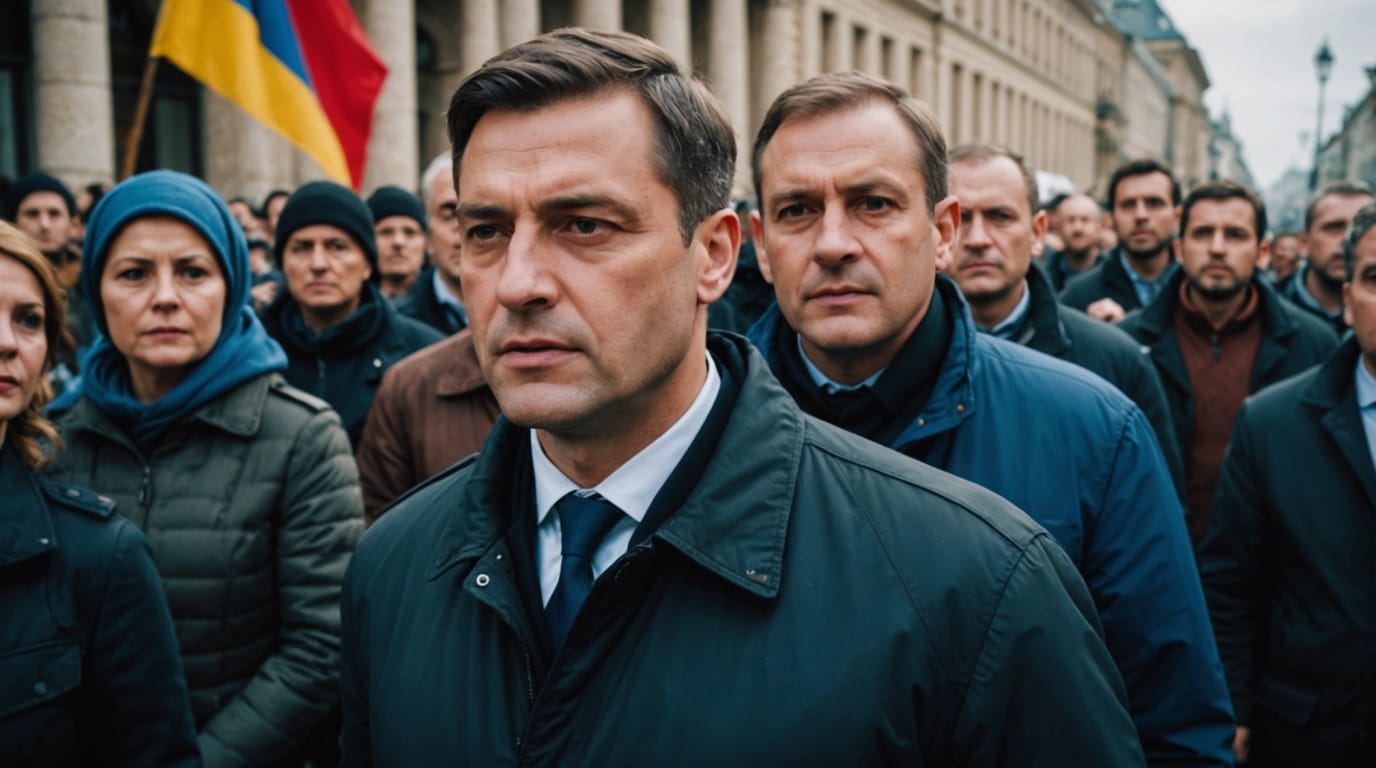
Georgescu, who ran as an independent, had surprisingly won the first round of the presidential race last year. However, the subsequent annulment and now the ban on his participation in the rerun have sparked outrage among his supporters, who view the actions as politically motivated. Hundreds of protestors gathered near the court Tuesday, waving Romanian flags and chanting "Thieves!" in response to the ruling.
Grounds for the Ban
While the specific grounds for Tuesday's court decision were not immediately clear, the Central Election Bureau's initial rejection highlighted the Constitutional Court's earlier findings regarding the annulled election. These findings pointed to significant electoral violations and a coordinated online campaign, allegedly orchestrated by Russia, to promote Georgescu's candidacy. The court's initial decision to cancel the election underscored the severity of the alleged irregularities and the potential impact of foreign interference on the democratic process.
The allegations of Russian interference have added another layer of complexity to the situation. Romania, a member of both the European Union and NATO, has been a vocal critic of Russian aggression in the region. The suggestion that Russia attempted to influence the presidential election has raised serious concerns about the country's vulnerability to foreign meddling and the integrity of its democratic institutions.
Political Fallout and the Search for a Replacement
The court's decision is likely to exacerbate the existing political tensions within Romania. The country has been grappling with political instability since the annulled election, and the ban on Georgescu's candidacy is expected to further polarize the electorate. The far-right, which holds approximately a third of the seats in the Romanian legislature, now faces a race against time to find a suitable replacement for Georgescu. The deadline for registering candidates is midnight on March 15, leaving them with only a few days to identify and nominate an alternative.
The inability of the far-right to field a strong candidate could significantly alter the dynamics of the upcoming election. It remains to be seen whether they can unite behind a single candidate or whether internal divisions will further weaken their position. The selection process is likely to be fraught with challenges, as potential candidates weigh the risks and rewards of entering a race already marred by controversy.
Georgescu's Response and the Future of Romanian Politics
Georgescu has vehemently denounced the ban as "a direct blow to the heart of democracy worldwide," further claiming that "Europe is now a dictatorship, Romania is under tyranny!" His strong rhetoric reflects the deep sense of injustice felt by his supporters and underscores the potential for further unrest.
The first round of the presidential rerun is scheduled for May 4, with a runoff to follow on May 18 if no candidate secures more than 50% of the vote. The upcoming election will be a crucial test for Romanian democracy, as the country seeks to overcome the challenges of political instability, allegations of foreign interference, and deep divisions within its society. The court's decision to uphold the ban on Georgescu has undoubtedly raised the stakes and added another layer of complexity to an already fraught political landscape. The next few weeks will be critical as political parties maneuver to position themselves for the upcoming election and as the country grapples with the implications of this landmark ruling.


