Rome Divided: Thousands Converge in Demonstrations Over Italy's Migration Future
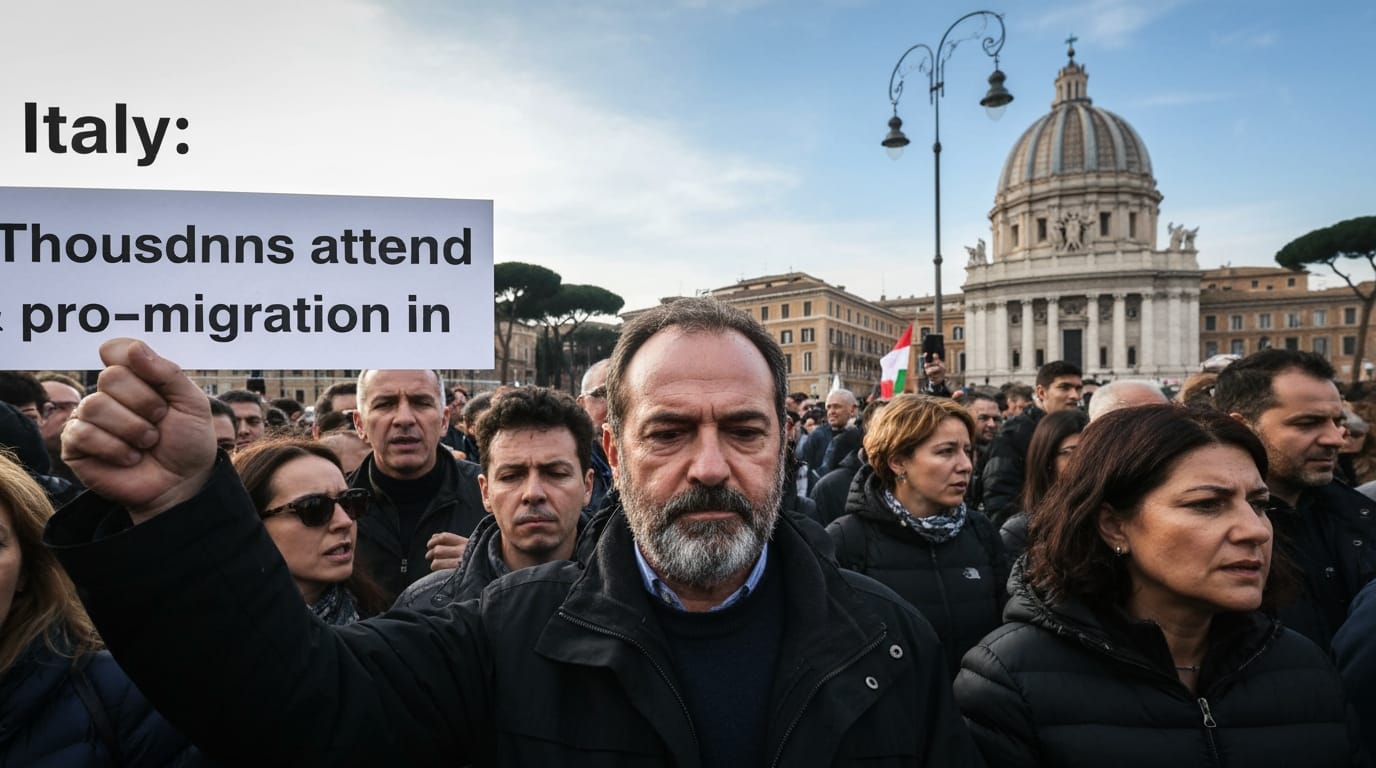
Rome's historic streets became a stage for clashing ideologies Saturday as tens of thousands of citizens participated in rival demonstrations, underscoring the profound and escalating divisions within Italy over migration policy. The highly anticipated anti-migration rally, fueled by a far-right initiative, confronted a significant counter-demonstration championing migrant rights and inclusivity, revealing a nation grappling with its identity amidst complex demographic and political shifts. The parallel gatherings, held under tight security, unfolded without incident, yet illuminated the deep societal fault lines that continue to shape Italy's political landscape.
The demonstrations followed closely on the heels of a far-right citizens' initiative, "Remigration and Reconquest," which successfully garnered the 50,000 signatures required to compel a parliamentary discussion on sweeping anti-migration measures. This development has thrust the once-fringe concept of "remigration" into the mainstream political discourse, prompting both fervent support and fierce opposition across the country. The simultaneous rallies in the capital city served as a potent public display of these contrasting viewpoints, placing Italy's approach to immigration firmly at the center of national debate.
A Call for "Remigration" Rings Through the Capital
Several thousand participants from various parts of Italy converged for the anti-migration march, an event organized by right-wing groups advocating for stricter controls and the "remigration" of foreigners. The initiative, "Remigration and Reconquest," proposes a series of stringent measures targeting non-citizens, including coercive returns and incentives for individuals to leave Italy. Critics of the proposal warn that its broad language could potentially extend to legal residents and even naturalized citizens, raising concerns about constitutional and international anti-discrimination principles.
The atmosphere at the anti-migration rally was charged, with demonstrators singing the national anthem. On multiple occasions, some participants were observed raising their arms in the fascist salute, alongside shouts of "Duce! Duce!" – a direct reference to former Italian dictator Benito Mussolini. These gestures highlight the historical undercurrents that sometimes surface within contemporary right-wing movements in Italy, further polarizing the debate. The successful petition for parliamentary discussion on "remigration" represents a significant victory for these groups, although no date has yet been scheduled for a vote on the controversial proposal.
Pro-Migration Advocates Champion Inclusivity and Rights
In stark contrast, a significantly larger pro-migration demonstration saw tens of thousands of individuals take to the streets in another part of Rome. This counter-rally brought together a diverse coalition of left-wing groups and trade unions, unified by their opposition to what they perceive as discriminatory and unconstitutional government policies. Many carried banners and signs, with one prominent message in Italian declaring, "Skin and sweat have the same color, no deportation," encapsulating the demonstrators' call for equality and an end to forced removals. Some participants also waved Palestinian flags, indicating the intersectionality of various social and political concerns within the movement.
The pro-migration advocates specifically protested Italy's recently introduced security and migration package. A key point of contention within this package is a "migrant repatriation bonus" scheme, which has drawn sharp criticism from opposition parties and legal organizations. These critics argue that the bonus scheme, designed to incentivize migrants to leave Italy, is both ethically problematic and potentially unconstitutional. The demonstration served as a powerful rebuke against policies they believe erode human rights and foster an environment of exclusion.
A Delicate Political Balance for Meloni's Government
The dual rallies underscore the complex and often contradictory pressures facing Premier Giorgia Meloni's right-wing coalition government. While the anti-migration League party within the coalition has openly supported parliamentary discussion on the "Remigration and Reconquest" initiative, Meloni's own Brothers of Italy party and its centrist allies have adopted a more cautious stance. This hesitancy stems from concerns over the legal risks associated with a proposal linked to extremist circles, as well as potential internal divisions within the government.
The controversy surrounding these policies and proposals comes at a time when Meloni's government is simultaneously pursuing a seemingly paradoxical strategy: expanding legal migration. Italy has approved a multi-year plan aimed at admitting hundreds of thousands of non-EU workers to address significant labor shortages in various key economic sectors. This dual approach highlights the inherent tension between nationalist sentiments advocating for stricter border controls and the practical economic realities that necessitate a foreign workforce.
Furthermore, the demonstrations in Rome occurred just one day after a new set of European Union rules came into effect, governing how each of the bloc's 27 member states will manage irregular migration and asylum seekers. This broader European context adds another layer of complexity to Italy's domestic debate, as national policies must now navigate both internal pressures and new regional frameworks.
A Nation at a Crossroads
The events of Saturday in Rome reflect a nation at a crossroads, grappling with fundamental questions about its future and its place in a globalized world. The fervent expressions of both anti- and pro-migration sentiments in the capital city indicate a society deeply divided, where calls for national sovereignty and cultural preservation contend with demands for human rights, diversity, and economic pragmatism. The migration debate in Italy is not merely a political issue; it is a deeply personal and often emotional one that touches upon identity, justice, and the very fabric of society. As parliamentary discussions loom and EU regulations take hold, the trajectory of Italy's migration policies will undoubtedly continue to be a defining feature of its political and social landscape for the foreseeable future.


