Rubio Reaffirms US Readiness for Further Military Action in Venezuela Amidst Evolving Geopolitical Landscape
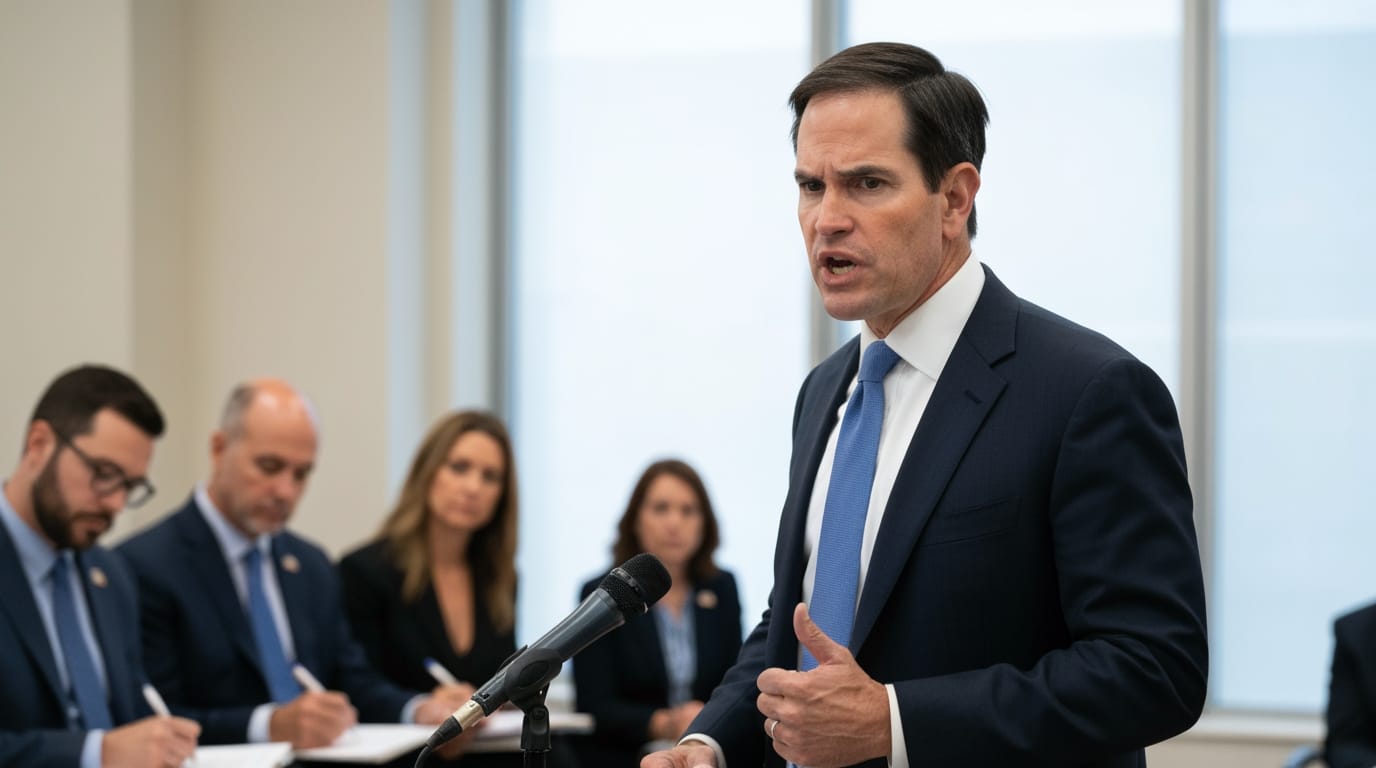
Washington D.C. – U.S. Secretary of State Marco Rubio declared Wednesday that the United States remains prepared to undertake additional military action in Venezuela should the nation's interim leadership deviate from Washington's expectations. This assertion comes weeks after a U.S. operation resulted in the capture of former Venezuelan President Nicolás Maduro, fundamentally altering the political landscape of the South American nation. Rubio's remarks, delivered in prepared testimony before the Senate Foreign Relations Committee, underscore a persistent, assertive U.S. foreign policy stance in the Western Hemisphere, emphasizing a willingness to deploy force to secure strategic objectives.
Post-Maduro Era: Conditional Engagement and Enduring Threats
The capture of Nicolás Maduro and his wife, Cilia Flores, on January 3, 2026, marked a significant turning point in the protracted Venezuelan crisis, with U.S. forces transferring them to New York to face drug trafficking charges. While this operation removed a central figure of contention, Secretary Rubio's testimony indicates that the Trump administration's engagement with Venezuela is far from concluded. He stated unequivocally that the U.S. is "prepared to use force to ensure maximum cooperation if other methods fail," signaling that military options remain a live component of U.S. policy.
Rubio, a former Florida senator, has been a prominent voice on Venezuela policy for years, consistently advocating for a firm approach against what he described in 2019 as an unstable presence of drug cartels, Marxist terrorist organizations, and foreign military advisers. His recent statements before the Senate Committee serve to clarify the administration's intentions for the post-Maduro transitional period. The U.S. aims for concrete changes on issues deemed direct security threats, including the eradication of drug trafficking, the removal of organized criminal gangs, and the expulsion of groups like FARC and ELN operating from Venezuelan territory. Furthermore, Rubio articulated concerns regarding foreign actors gaining influence in the Western Hemisphere, specifically citing Venezuela's ties to Hezbollah and Iran, which he deemed unacceptable to Washington.
Economic Levers and Strategic Demands
Beyond military considerations, the U.S. policy toward Venezuela involves significant economic pressure, particularly concerning the nation's vast oil reserves. Secretary Rubio outlined an ongoing "oil quarantine," backed by sanctions and naval deployments, designed to restrict revenue flows to the previous regime and now to shape the actions of the interim leadership. This strategy includes seizing sanctioned oil shipments through court orders.
Crucially, Rubio's prepared remarks to the Senate indicated specific expectations for Delcy Rodríguez, identified as Venezuela's interim president. These include granting American companies "preferential access" to oil production, utilizing oil revenues to purchase American goods, and ceasing oil shipments to Cuba. Rubio suggested that Rodríguez, acutely aware of Maduro's fate, has a self-interest in aligning with key U.S. objectives. This approach highlights a clear linkage between political cooperation and economic benefits, aiming to reorient Venezuela's resource management and geopolitical alliances in line with U.S. interests.
Congressional Scrutiny and War Powers Debate
The January 3 military operation to capture Maduro generated significant discussion within the U.S. Congress, particularly concerning the extent of presidential war powers. Several Republican senators, including Josh Hawley of Missouri and Todd Young of Indiana, initially expressed alarm and helped advance a resolution to rein in President Trump's authority for further military strikes.
However, these concerns were reportedly assuaged after Secretary Rubio provided assurances. He confirmed that the U.S. has no ground troops currently in Venezuela and pledged that any future plans to deploy troops would adhere to the War Powers Act, requiring congressional authorization. Rubio's defense of the administration's actions characterized the Maduro operation not as an act of war or occupation, but as an operation to aid law enforcement, stressing the absence of U.S. troops on the ground. This nuanced explanation aimed to navigate constitutional questions while maintaining the administration's prerogative for targeted actions.
International Reactions and Historical Echoes
The U.S. military intervention leading to Maduro's capture elicited a mixed international response. While many countries in Europe and North America, particularly NATO members, expressed support for the actions, several governments, particularly across Africa, Asia, and much of Latin America, condemned the intervention as a violation of international law. Countries such as Brazil, Spain, Chile, Colombia, and Mexico issued a joint statement expressing "profound concern and firm rejection" of the unilateral military actions. The European Union, while recognizing Maduro's lack of democratic legitimacy, called for calm and restraint, emphasizing the importance of upholding international law and the UN Charter.
Critics argued that the intervention created a dangerous precedent, undermining international law and the principle of sovereignty. This reaction underscores a long and complex history of U.S. involvement in Latin American affairs, a historical context frequently invoked by those critical of U.S. interventions in the region. Venezuela's former leadership, including Maduro, often blamed the country's woes on U.S. economic sabotage and attempts at regime change, echoing sentiments rooted in decades of American interventions, including tacit approval of a coup attempt against Hugo Chávez in 2002.
Conclusion: A Path Forward Paved with Conditions
As Venezuela navigates its post-Maduro phase, the U.S. has made it clear that its engagement will be conditional and robust. Secretary Rubio's recent testimony outlines a policy that blends diplomatic pressure, economic leverage through sanctions and naval presence, and the explicit threat of further military action. The objective is to ensure that Venezuela's interim leadership aligns with U.S. priorities on counternarcotics, regional security, and economic cooperation.
The current administration, while defending its recent military operation as lawful and limited, has sought to reassure Congress regarding the deployment of ground troops, indicating a desire to maintain a delicate balance between assertive foreign policy and domestic constitutional checks. However, the international community remains divided, reflecting ongoing debates about sovereignty, intervention, and the future of international law in a volatile geopolitical landscape. The path ahead for U.S.-Venezuela relations remains intricate, characterized by a conditional approach and the constant undercurrent of potential military escalation should diplomatic efforts falter.


