Russia and North Korea Cement Strategic Alliance Amid Global Realignments
In a significant realignment of geopolitical forces, Russia and North Korea have dramatically strengthened their strategic partnership, moving beyond transactional exchanges to forge a comprehensive alliance. This deepening bond, solidified by a mutual defense treaty signed in June 2024, is primarily driven by Russia's ongoing war in Ukraine and North Korea's pursuit of advanced military technology and economic lifelines. The burgeoning cooperation has profound implications for international security, challenging existing sanctions regimes and raising concerns across Europe and the Indo-Pacific.
A New Alliance Forged in Conflict
The relationship between Moscow and Pyongyang has undergone a dramatic transformation since Russia's full-scale invasion of Ukraine in 2022. Historically, Russia, as a permanent member of the UN Security Council, had at times supported international sanctions against North Korea's nuclear program. However, facing isolation from the West and in need of military supplies, Russia turned to Pyongyang, initiating a rapid rapprochement that has brought their ties to an unprecedented level.
The most prominent manifestation of this strengthened bond was the signing of a "Comprehensive Strategic Partnership" treaty between Russian President Vladimir Putin and North Korean leader Kim Jong Un in June 2024. This landmark agreement includes a mutual defense clause, committing each nation to provide military and other assistance "without delay" if the other "falls into a state of war due to armed invasion from an individual or multiple states." This provision formalizes what had previously been a series of arms-for-aid transactions into a full security alliance. Russia's motives extend beyond immediate wartime needs, aiming to counter perceived Western expansionism in the Indo-Pacific by propping up North Korea's military capabilities. For North Korea, the alliance offers vital support, including food, energy, and sophisticated military technology, while also providing a strategic counter-balance to its traditional reliance on China.
Pyongyang's Military Lifeline to Moscow
North Korea has emerged as a crucial supplier for Russia's war machine in Ukraine, providing vast quantities of artillery shells, rockets, and ballistic missiles. Estimates suggest these arms transfers have generated billions of dollars for Pyongyang, with one report indicating North Korean munitions exports netted between $7.05 billion and $13.78 billion from August 2023 to December 2025. Beyond materiel, North Korea has also deployed troops to support Russian forces, particularly in the Kursk region. Ukrainian intelligence, corroborated by the United States and South Korea, reported that thousands of North Korean soldiers began training in Russia in October 2024, with estimated deployments reaching between 14,000 and 15,000 personnel. Ukrainian President Volodymyr Zelenskyy has warned that Russia is preparing to receive an additional 30,000 North Korean soldiers.
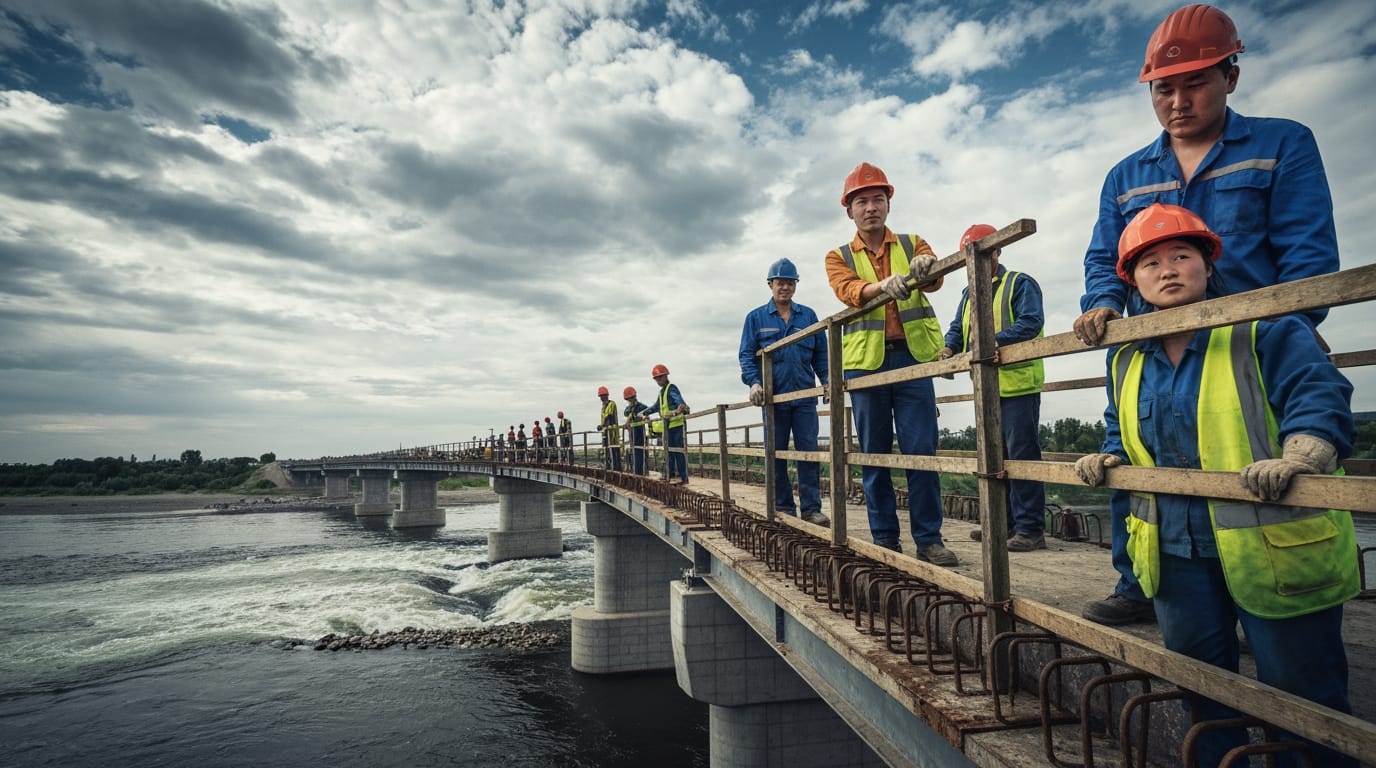
These deployments offer North Korean soldiers invaluable combat experience in modern warfare, something rare for the isolated nation. Many of these returning troops are expected to serve as instructors, integrating Russian tactics and technologies, such as first-person-view (FPV) drones, into North Korea's military doctrine. The increasing scale of military cooperation has necessitated new infrastructure, including the near-completion of the first-ever road bridge between Russia and North Korea over the Tumen River. While officially presented as a means to boost trade and tourism, analysts suggest the bridge serves as a strategic military logistics corridor, enabling less transparent movement of troops and supplies away from satellite surveillance.
Russia's Technology Transfers and North Korea's Ambitions
In exchange for military aid, Russia is suspected of providing North Korea with critical advanced military technology. South Korean intelligence agencies have speculated that Russian support has significantly advanced North Korea's missile development, particularly its precision and guidance systems. Areas of potential technological transfer include military satellites, nuclear submarine technology, and intercontinental ballistic missile (ICBM) programs. Russian President Putin himself did not rule out helping North Korea launch its own satellites during the September 2023 summit at the Vostochny Cosmodrome, where Kim Jong Un reportedly showed great interest in space and rocketry. This technological assistance could drastically enhance Pyongyang's military capabilities, posing a more significant threat to regional and global security.
Further underscoring its commitment to Pyongyang, Russia vetoed a United Nations Security Council resolution in March 2024 that would have extended the mandate of the expert panel monitoring sanctions against North Korea. This move effectively abolished the independent oversight of UN sanctions, with Russia's ambassador arguing the sanctions regime was losing its relevance and was "detached from reality." Critics, including the United States, viewed this veto as a deliberate attempt to silence independent investigations into blatant sanctions violations, particularly those occurring within Russia's jurisdiction.
Beyond Military: Expanding Economic and Diplomatic Ties
The burgeoning alliance extends beyond military exchanges into economic and diplomatic spheres. Over 30,000 North Korean workers have reportedly been deployed to Russia, providing a much-needed labor force for Moscow while generating foreign currency for Pyongyang. Joint tourism programs are also being developed, with plans for direct rail and air routes between the two countries. However, the economic rationale for some of these initiatives, such as the new road bridge, has been questioned. While Russian officials tout the bridge as a means to expand trade and tourism, bilateral trade was a mere $34 million in 2024, and tourism remains highly restricted. Analysts suggest the true value of such infrastructure lies in its strategic potential for military and personnel movement.
Diplomatically, North Korea has provided unwavering support for Russia's actions in Ukraine, recognizing Russian-backed separatist regions and consistently aligning with Moscow in international forums. This diplomatic backing, coupled with economic cooperation, demonstrates a concerted effort to deepen ties across multiple fronts. Russia, in turn, supplies North Korea with strategic goods such as petroleum products and power generation equipment.
A Shifting Geopolitical Landscape
The deepening alliance between Russia and North Korea represents a significant shift in the global geopolitical landscape. What began as a seemingly transactional relationship driven by wartime exigencies has evolved into a long-term strategic partnership that challenges existing international norms and security structures. This alignment has far-reaching implications, not only for the trajectory of the Ukraine conflict but also for stability in the Indo-Pacific region.
For Europe, North Korea's sustained military aid enables Russia to prolong its aggression, complicating efforts by the United States and its allies to support Ukraine. In Asia, the transfer of advanced military technology to Pyongyang risks further destabilizing the Korean Peninsula, empowering North Korea to escalate its rhetoric and actions against South Korea, and potentially leading to a nuclear standoff involving the United States, China, and now Russia. This alliance effectively undermines the international sanctions regime against North Korea, weakening a key tool for denuclearization efforts. The collaboration is increasingly seen as part of a broader "Axis of Aggressors" that includes China and Iran, posing a formidable challenge to international security. As Russia and North Korea continue to solidify their "bridge-building" efforts, the international community faces the complex task of navigating a more interconnected and volatile security environment.


