Russia Escalates Crackdown on Independent Media, Declares Deutsche Welle 'Undesirable'
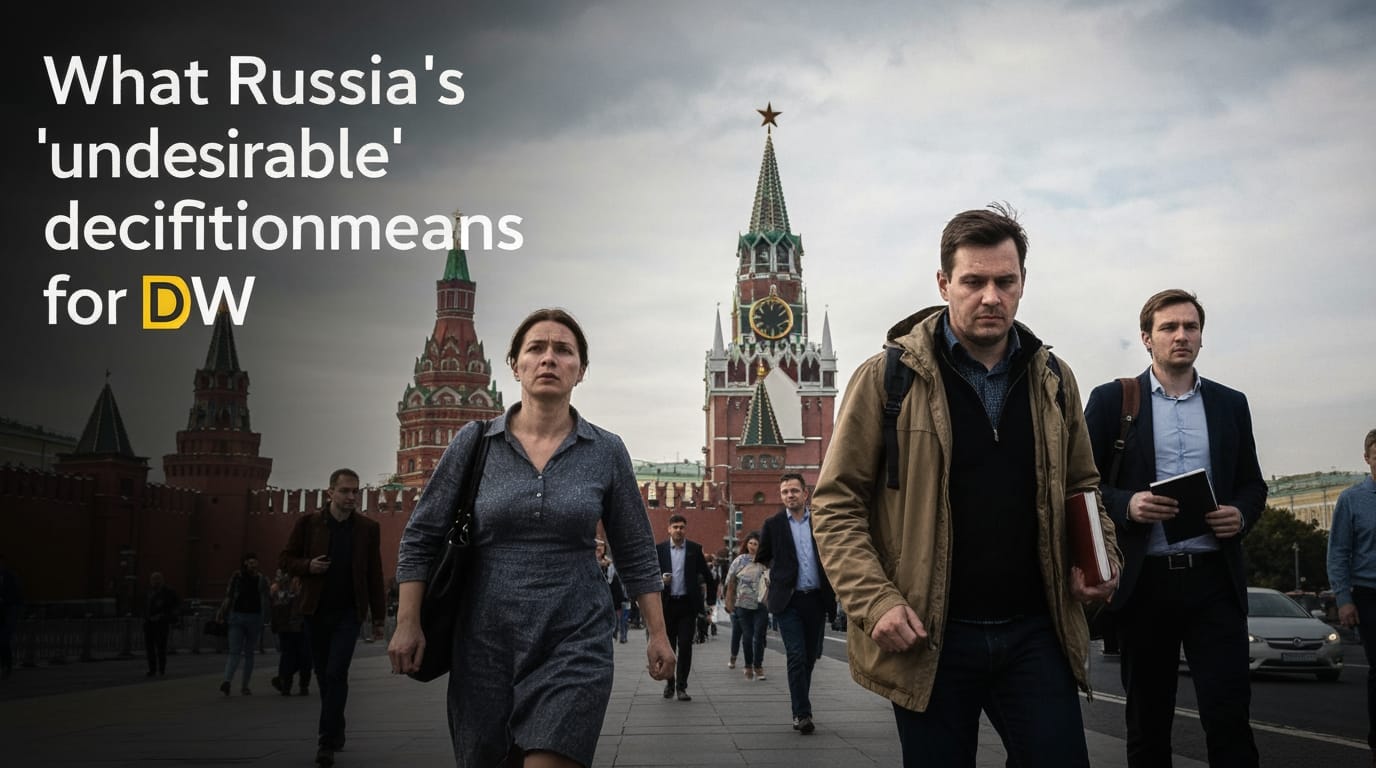
Moscow, Russia – In a significant escalation of its campaign against independent media, Russia has officially designated the German state broadcaster Deutsche Welle (DW) as an "undesirable organization." This move, proposed by lawmakers in the State Duma in August 2024 and subsequently enacted, effectively outlaws DW's operations within the Russian Federation and imposes severe legal repercussions for anyone found to be collaborating with the media outlet. The decision has drawn sharp criticism internationally, with many viewing it as a direct assault on press freedom and an intensified effort to control the information landscape within Russia.
The "undesirable organization" designation represents the most stringent measure under Russia's restrictive media laws, going beyond the "foreign agent" label previously applied to DW and numerous other entities. This legal framework, initially introduced in 2015 and significantly expanded since, grants the Prosecutor General's Office the authority to blacklist foreign and international organizations deemed a "threat to the foundation of the constitutional order of the Russian Federation, the defense capability of the country or the security of the state."
A Progressive Squeeze on Press Freedom
The journey to DW's "undesirable" status has been a gradual but relentless process of increasing pressure from Russian authorities. The German broadcaster had already faced considerable obstacles to its operations in Russia. In February 2022, DW was banned from broadcasting within the country, a decision that its Director General, Peter Limbourg, condemned as an "arbitrary decision by the Russian authorities" and "a further attack on press freedom." Just a month later, in March 2022, DW was officially labeled a "foreign agent," a designation that requires organizations to affix disclaimers to all published content and submit to burdensome financial reporting and audits. This label also led to the forced relocation of DW's Moscow studio and the blocking of its website across all languages within Russia.
However, the "undesirable" designation goes a step further, effectively mandating the complete cessation of all activities by the organization within Russia. It prohibits the creation of new legal entities, blocks bank accounts and financial transactions, and bans the distribution of any informational materials, including online content. For DW, whose Russian-language service had reportedly reached more people than ever despite previous censorship and blocking efforts, this represents a significant challenge to its mission of providing independent information to audiences in Russia.
Draconian Consequences for Cooperation
The implications of being declared "undesirable" extend far beyond the organization itself, casting a wide net of potential criminal liability over individuals in Russia who interact with such entities. Under the law, anyone found cooperating with an "undesirable" organization faces severe penalties. This can range from administrative fines for a first offense to substantial prison sentences for continued involvement. Individuals can face up to six years in prison for participating in the organization's activities, while those organizing or financing such activities could face up to eight years.
Critically, even seemingly innocuous actions, such as sharing content from an "undesirable" organization on social media or providing news tips, can be considered criminal offenses. Russian citizens are even advised by lawyers to scour their social media histories and delete any links to materials from "undesirable" organizations, regardless of when the posts were made, to avoid potential administrative and criminal responsibility. This creates a chilling effect, forcing individuals who wish to engage with independent journalism to do so anonymously, if at all. The law's expanded scope, allowing any organization with foreign government agency founders or participants to be designated "undesirable," directly impacts state-funded broadcasters like DW.
A Broader Pattern of Repression
The designation of Deutsche Welle is not an isolated incident but part of a wider, systematic crackdown on independent voices within Russia. Since the enactment of the "undesirable organizations" law in 2015, hundreds of entities have been blacklisted. These include not only media outlets but also a vast array of human rights groups, environmental organizations like Greenpeace, educational institutions, and other non-governmental organizations. As of August 2024, nearly 200 organizations had been classified as "undesirable," a number that grew to over 280 by December 2025.
Critics, including press freedom experts and human rights advocates, consistently argue that these laws are deliberately vague and are instrumentalized by the Kremlin to silence dissent and control narratives that do not align with state interests. The law has been particularly intensified since the start of the conflict in Ukraine in February 2022, with a dramatic increase in its application to media and civil society groups. This legislative onslaught is seen as a concerted effort to isolate Russian citizens from independent sources of information, legal assistance, and peaceful activism.
Upholding Journalistic Integrity Amidst Obstacles
Despite the formidable challenges and the explicit threats posed by Russia's "undesirable" designation, Deutsche Welle has affirmed its commitment to independent reporting. DW Director General Barbara Massing stated that while Russia may label them "undesirable," it will not deter their mission to continue reporting independently on critical issues, including the conflict in Ukraine and other topics where information is scarce in Russia. This resolve underscores the enduring belief in the importance of free and unbiased information, even in environments where it is actively suppressed.
The implications for journalism and information access in Russia are profound. The "undesirable" designation creates an environment of fear, making it increasingly difficult for journalists to gather information and for citizens to access diverse perspectives without facing potential legal repercussions. As the list of banned organizations continues to grow, the space for independent reporting and critical discourse within Russia dwindles, further entrenching the state's control over information and isolating its populace from global conversations.


