Russia Intensifies Clampdown on German Academia, Designates Bremen Research Center 'Undesirable'
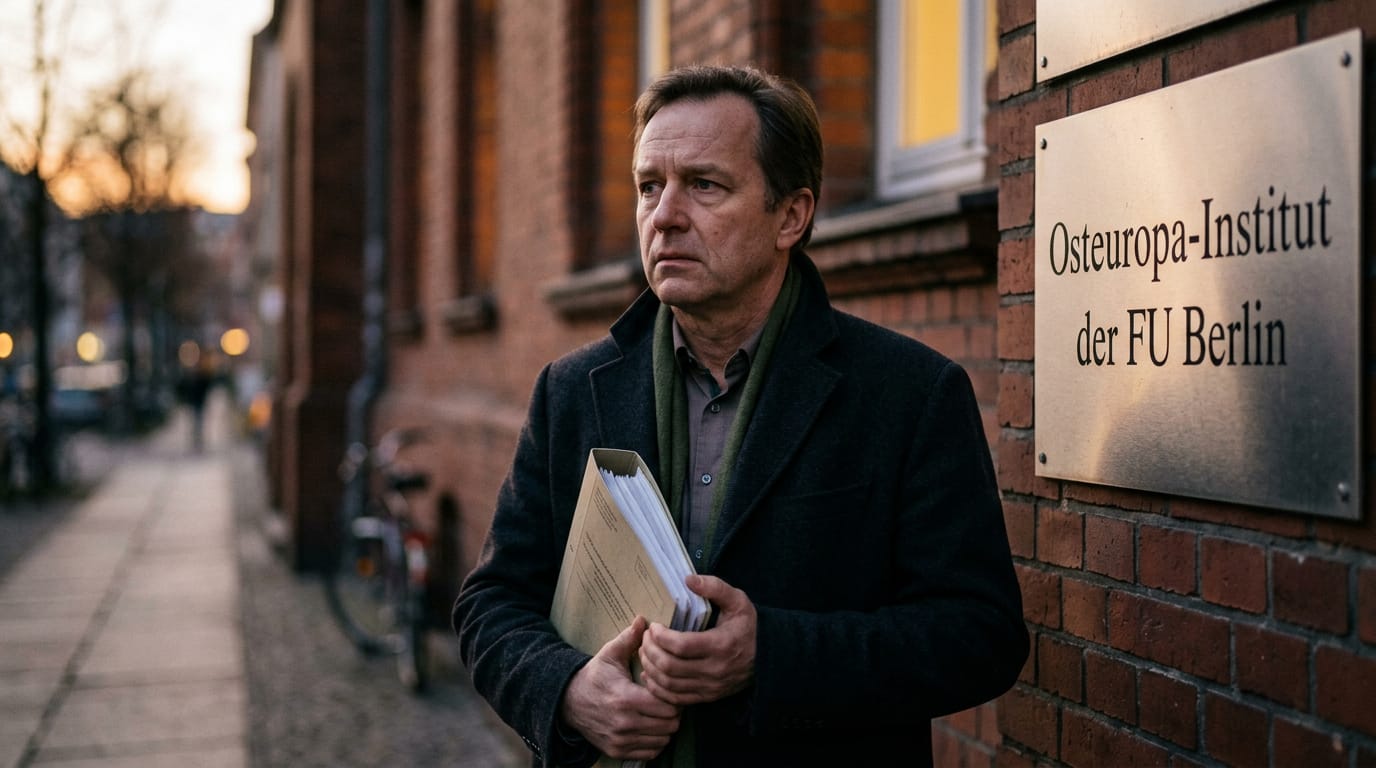
MOSCOW, Russia – In a move that further strains academic and diplomatic ties, Russia has declared the Research Centre for East European Studies (FSO) at the University of Bremen an "undesirable organization," effectively banning its operations and any cooperation within the Russian Federation. This latest designation, announced on Friday, August 14, 2026, marks an escalation in Moscow's systematic targeting of German research and educational institutions under a controversial 2015 law, raising significant concerns about academic freedom and international collaboration. The decision follows a pattern of increasingly restrictive measures imposed by Russian authorities on foreign entities deemed critical of the Kremlin or perceived as a threat to national security.
Broadening the Scope of "Undesirable" Designations
The inclusion of the Research Centre for East European Studies on Russia's burgeoning list is not an isolated incident but rather the continuation of a concerted effort to sever academic and civil society links with Germany. Just months prior, on February 10, 2026, the prominent German Academic Exchange Service (DAAD), a century-old institution fostering global academic mobility, was similarly designated "undesirable." This led to the immediate closure of DAAD's Moscow office and the German Centre for Research and Innovation, which it managed, marking the end of the last German scientific institution directly operating in Russia. DAAD President Joybrato Mukherjee expressed regret over the decision, noting that despite the ongoing conflict in Ukraine, Russians continued to show interest in studying in Germany. Although direct operations have ceased, DAAD maintains that Russian citizens can still apply for its scholarships from third countries.
The list of affected German organizations has steadily grown, encompassing a wide array of institutions dedicated to research, political dialogue, and cultural exchange. In March 2025, the German Council on Foreign Relations (DGAP), a leading think tank providing expertise on Eastern Europe, was added to the list. The German Association for East European Studies (DGO), the largest network for East European studies in German-speaking countries, faced the same fate in March 2024. Other entities like the Friedrich Ebert Foundation, Hanns-Seidel-Stiftung, Rosa-Luxemburg-Stiftung, and the Centre for East European and International Studies (ZOiS) have also been targeted since October 2023. These designations signify a dramatic reduction in the once robust academic and intellectual exchange between Germany and Russia.
The Mechanisms of the "Undesirable Organizations" Law
The legal framework underpinning these actions is Russia's "undesirable organizations" law, officially Federal Law of 23 May 2015 N 129-FZ. Signed by President Vladimir Putin, this legislation empowers Russian prosecutors to declare any foreign or international organization "undesirable" if it is deemed to pose "a threat to the foundation of the constitutional order of the Russian Federation, the defense capability of the country or the security of the state." Critics widely argue that the law's broad and often vague criteria allow for its arbitrary application to stifle dissent and suppress independent voices.
The consequences for organizations placed on this list are severe and far-reaching. They are effectively banned from operating within Russia, prohibited from maintaining offices, conducting projects, or distributing any materials, including online content. Russian banks and financial institutions are explicitly forbidden from cooperating with these designated entities. Furthermore, the law extends its punitive reach to individuals. Those found to be affiliated with or cooperating with an "undesirable" organization face substantial fines, and, for repeated offenses or for organizational leaders, can incur lengthy prison sentences, potentially up to six years. This risk extends even to cooperation conducted outside Russia and to Russian citizens who merely share or repost content from these organizations, regardless of when the material was originally published.
The "undesirable" label is distinct from, and more severe than, the "foreign agent" designation, which imposes burdensome restrictions but allows organizations to continue operating. Being declared "undesirable" is, in practical terms, a complete ban on all activities within Russia.
Germany's Response and Broader Implications
The German government has vocally condemned Russia's actions, with German Foreign Minister Johann Wadephul describing the decision against DAAD as "completely unfounded" and calling for its immediate rescission. Berlin views these escalating measures with deep concern, interpreting them as increasing restrictions on academic freedom and a deliberate attempt by Moscow to foster an atmosphere of fear and isolation. Officials highlight that contacts with foreign countries are increasingly being criminalized in Russia, undermining international understanding and cooperation.
The long-term implications of these designations are profound. They dismantle decades of scientific and academic collaboration, significantly reducing opportunities for Russian students and researchers to study or work abroad, and pushing Russian science further into isolation. DAAD alone previously awarded approximately 170 scholarships annually to Russian individuals for stays in Germany. The affected German institutions, like the DGAP, view these classifications as an attempt to discredit their work, suppress independent research, and influence public opinion in Germany by framing German organizations as adversaries. This strategy, they contend, aims to spread disinformation and sow division within German society.
Domestically, the continued blacklisting of foreign organizations has also fueled a debate within Germany regarding potential reciprocal actions. There is growing pressure for the German government to consider closing institutions like the Russian House of Science and Culture in Berlin, a facility that some German politicians and intelligence assessments suggest may be used for purposes beyond cultural exchange. The unfolding situation underscores a deepening chasm between Russia and Western academic and civil society spheres, with profound consequences for international dialogue and the future of cross-border intellectual engagement.
Conclusion: A Widening Chasm
The recent designation of the Research Centre for East European Studies as "undesirable" by Russia is a stark reminder of Moscow's expanding efforts to control information and curtail foreign influence within its borders. This move, part of a broader pattern targeting German academic and research institutions, effectively severs critical avenues for knowledge exchange and international collaboration that have existed for decades. While Germany condemns these actions as an attack on academic freedom and an unfounded measure, the practical consequences are the enforced closure of vital institutions and the criminalization of cooperation for Russian citizens. The escalating use of the "undesirable organizations" law signals a further entrenchment of Russia's self-isolation from Western academic and civil society networks, creating a widening chasm that threatens to leave lasting scars on international intellectual engagement.


