Russia Intensifies Drone Assaults on Ukrainian Railways, Escalating "Logistical Terrorism"
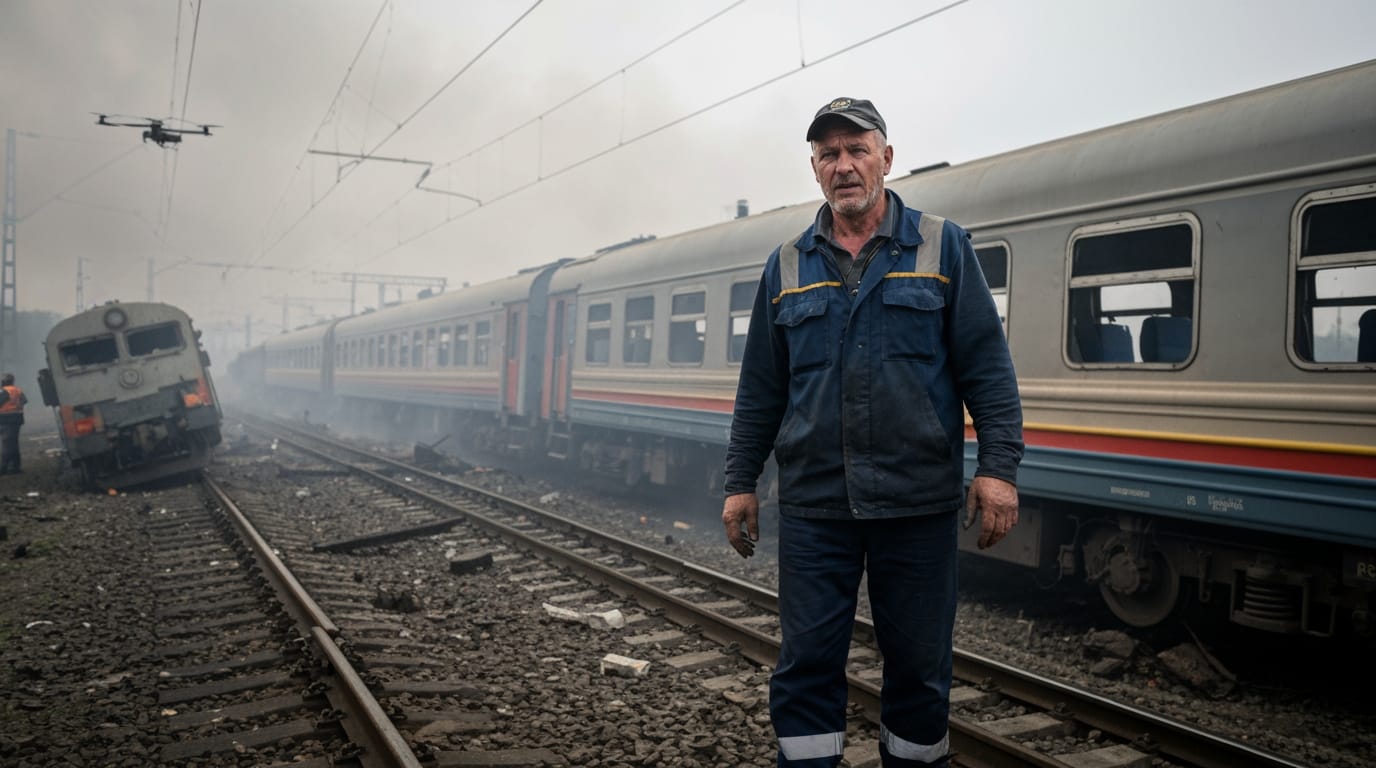
Ukraine's vital railway network is facing an intensified and evolving wave of Russian drone attacks, a strategic shift that aims to cripple critical logistics, undermine the nation's economy, and sow panic among the civilian population. This escalation, particularly pronounced since mid-2025 and accelerating in early 2026, marks a concerted effort by Moscow to disrupt the arteries sustaining Ukraine's defense and daily life, leading to casualties, significant infrastructure damage, and widespread disruption to both passenger and freight services.
Escalation and Recent Incidents Uncover Broadening Targets
The past several months have witnessed a dramatic increase in the frequency and scope of Russian drone strikes targeting Ukrainian railway infrastructure, shifting from intermittent attacks to a sustained campaign. National train operator Ukrzaliznytsia reported a significant surge, noting 18 strikes and damage to 41 facilities in the first four days of March alone, averaging six attacks per day. These assaults have not spared civilian targets, as evidenced by a March 8th drone strike on a passenger train in Sumy Oblast carrying approximately 200 people. While initial reports indicated no injuries to passengers, the diesel locomotive sustained substantial damage, temporarily halting movement. This incident followed a series of overnight aerial campaigns across western Ukraine, impacting junctions in Rivne, Zhytomyr, and Vinnytsia Oblasts.
Further incidents underscore the mounting human cost and widespread disruption. On March 2nd, a drone attack near Kryvyi Rih in Dnipropetrovsk Oblast struck a suburban train car, resulting in one fatality and nine injuries. Early March also saw an empty train hit in Mykolaiv, injuring a railway worker, and a freight train in Dnipropetrovsk region where the driver and assistant were wounded. These recent events build on a pattern established earlier, including a January attack in Kharkiv Oblast that killed five and injured two others when three Russian Geran-2 drones struck a passenger train. Another deadly strike in October 2025 at the Shostka train station in northeastern Ukraine killed a 71-year-old man and injured at least eight, leaving train carriages heavily damaged.
The Evolving Strategy: Targeting Ukraine's Lifeline
Military and political analysts suggest Russia's intensified targeting of railway infrastructure represents a deliberate strategic shift, moving beyond its previous focus on energy facilities. This campaign is increasingly characterized as "logistical terrorism," aimed at achieving a "battlefield air interdiction (BAI) effect" to degrade Ukraine's defense capabilities. The primary objectives appear to be multifaceted: disrupting the flow of military supplies to the front lines, paralyzing Ukraine's economy by impeding freight transport, and sowing panic and demoralization among civilians.
A significant aspect of this evolving strategy is the advanced deployment of drones, particularly Russia's Lancet and Shahed variants. Ukrainian officials and analysts note that Russia has dramatically increased its production of long-range drones, enabling them to target individual locomotives and moving trains with greater precision, a capability they previously lacked. The Institute for the Study of War (ISW) highlighted that Shahed drones are favored for attacks near the front lines due to their larger payload capacity, allowing them to inflict more significant damage on fortified structures. This capability allows Russia to systematically attack not only strategic railway junctions but also the trains themselves, effectively threatening the backbone of Ukraine's transportation system.
Profound Impact on Civilians and Critical Infrastructure
The consequences of Russia's sustained drone campaign extend far beyond immediate physical damage. The attacks inflict a heavy human toll, resulting in deaths and injuries among innocent passengers and dedicated railway workers. These incidents underscore the indiscriminate nature of the targeting, which deliberately places civilians at risk. Ukrainian Railways officials report that 221 railway workers have been injured and 37 killed in the line of duty since the full-scale invasion began.
Economically, the strikes aim to choke Ukraine's logistical capabilities. Railways are paramount for transporting both military equipment and essential civilian goods, as well as enabling internal displacement and evacuations. With all civilian flights grounded, the rail network has served as Ukraine's primary means of mass transit for both people and freight. Disruptions to these vital routes, even temporary ones, impede the movement of humanitarian aid, medical supplies, and food, creating broader societal challenges. The World Bank estimates that the Russian attacks have caused an astonishing $5.8 billion in damages to Ukraine's rail network since the start of the invasion. Damaged infrastructure includes junctions, locomotives, passenger and freight cars, repair facilities, and administrative buildings, further complicating repair efforts and maintaining operational capacity.
Ukrainian Resilience Amidst Relentless Assaults
Despite the relentless and escalating attacks, Ukrainian Railways (Ukrzaliznytsia) has demonstrated remarkable resilience and adaptability. The national rail operator has implemented robust safety protocols and rapid response mechanisms to minimize disruption and protect passengers. When a threat is detected, railway workers swiftly change train routes, evacuate passengers, and undertake other safety measures, often stopping trains and evacuating passengers as a precautionary measure to mitigate potential harm.
Ukrainian repair crews are lauded for their speed and efficiency, frequently restoring damaged infrastructure within hours of an attack, often resuming operations the same day. This commitment to continuity ensures that despite Russia's attempts to paralyze the network, trains continue to run, albeit with increased vigilance and occasional delays. This unwavering dedication allows Ukraine to maintain critical military logistics and civilian transportation, embodying a defiant spirit in the face of persistent aggression.
In conclusion, Russia's intensified drone attacks on Ukraine's railway system represent a significant escalation in the ongoing conflict, highlighting a strategic shift towards undermining Ukraine's logistical and economic backbone. While these calculated assaults inflict human casualties and substantial infrastructure damage, Ukrainian Railways continues to demonstrate remarkable resilience through rapid repairs, adaptive safety protocols, and an unyielding commitment to maintaining vital services. The persistent targeting underscores the critical role of rail in Ukraine's wartime operations and the civilian population's daily life, making it a key battleground in the broader conflict.


