Russia Replaces Gulag Museum with Nazi Crimes Memorial, Signaling Shift in Historical Narrative

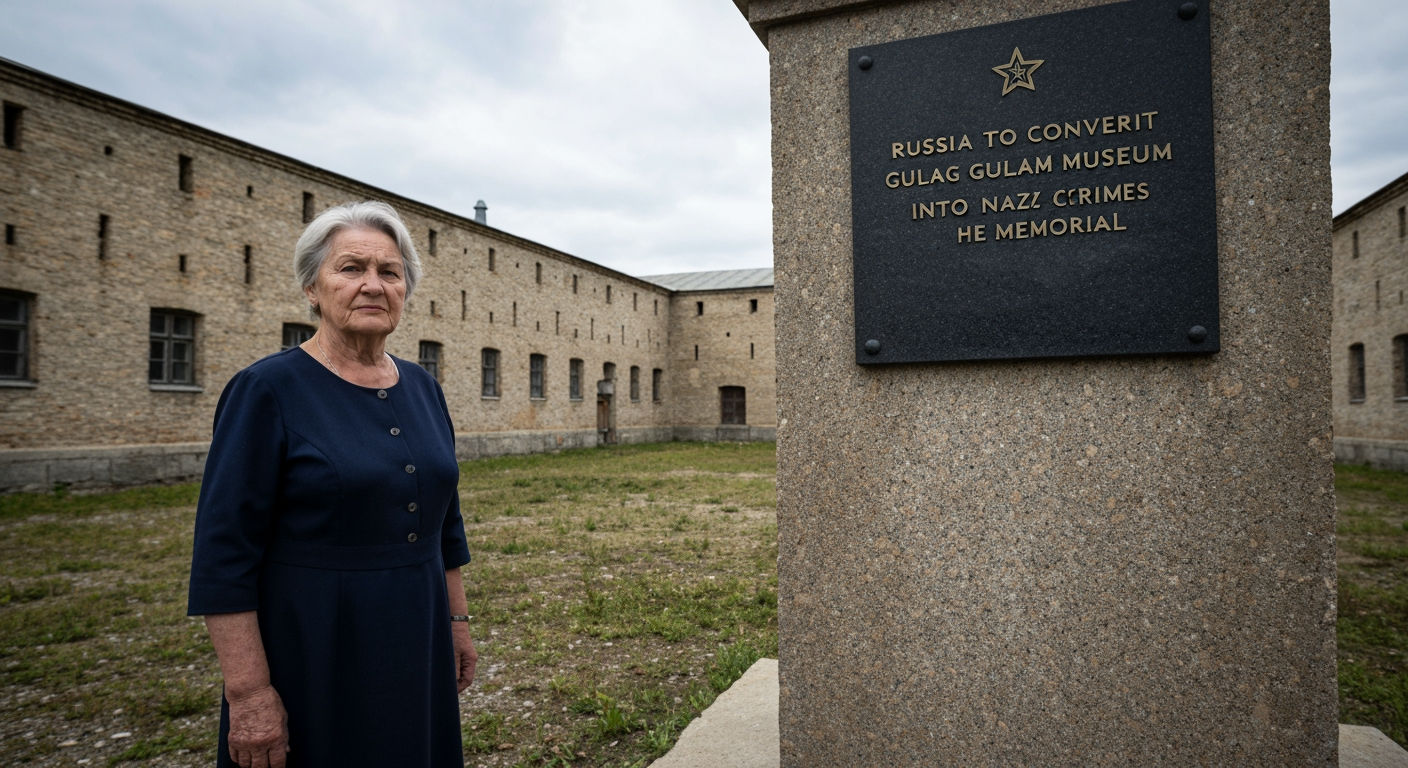
MOSCOW – Russia has moved to replace Moscow’s acclaimed Gulag History Museum with a new institution dedicated to documenting Nazi war crimes against the Soviet people, a decision that critics contend is the latest step in a concerted effort to reshape the nation's historical memory. The Gulag museum, which chronicled the brutal Soviet-era system of forced labor camps, was closed in November 2024, officially due to "fire safety violations," but widely seen by observers as a pretext to suppress narratives of Soviet political repression. The planned "Museum of Memory," expected to open in 2026, will instead highlight the "genocide of the Soviet people" during World War II, further cementing a state-backed narrative that emphasizes wartime heroism and victimhood.
The Transformation of Memory
The closure of the Gulag History Museum in late 2024 marked a significant turning point in Russia's approach to its past. The institution, which had earned international recognition, including a Council of Europe award in 2021, served as a poignant reminder of the millions who suffered under the Soviet regime. Its exhibits housed thousands of artifacts, letters, and personal belongings of Gulag victims, offering an unvarnished look at a dark chapter of Russian history. However, sources close to the museum indicate that its entire exhibition is being dismantled, paving the way for a new focus.
The Moscow city government announced that the new museum will feature an exhibition covering "all stages of Nazi war crimes during the Great Patriotic War," the official Russian term for World War II. Beyond detailing Nazi atrocities, the new museum is also slated to document "biological weapons testing on Soviet citizens by the Japanese" and celebrate the victories of the Red Army. This pivot underscores a broader trend within Russia to reframe its historical narrative, prioritizing the nation's role as a victor over Nazism while downplaying internal repressions.
The Gulag's Fading Shadow
The Gulag, an acronym for the Main Camp Administration, was a vast network of forced labor camps established in the Soviet Union, primarily under Joseph Stalin's rule from 1929 to 1953, though its origins trace back to the early years of the Soviet state in 1918-1919. This system incarcerated an estimated 18 to 20 million people, including political dissidents, alleged enemies of the state, and ordinary criminals. Conditions in these camps were notoriously brutal, characterized by extreme weather, forced labor up to 14 hours a day, starvation, disease, and exhaustion. Historians estimate that between 1.6 million and 15 million individuals perished within the Gulag system.
For decades, the memory of the Gulag remained a sensitive and often suppressed topic in Russia. The Gulag History Museum in Moscow played a crucial role in bringing these historical truths to light, providing a space for remembrance and education about the immense human cost of totalitarian rule. Its closure and replacement signify a deliberate shift away from this critical self-reflection toward a more selective interpretation of history.
Forging a New Narrative
The decision to establish a Nazi crimes memorial in place of the Gulag museum aligns with Russia's intensified focus on commemorating the "genocide of the Soviet people" during World War II. This emphasis has gained significant traction in recent years, culminating in legislative action. On January 1, 2026, a new law came into effect designating April 19 as the "Day of Remembrance of Victims of the Genocide of the Soviet People by the Nazis during the Great Patriotic War." This date commemorates an order issued by the Presidium of the USSR's Supreme Soviet in 1943, which marked the first official acknowledgment of targeted extermination of civilians in occupied territories.
Official statements, such as those from State Duma Speaker Vyacheslav Volodin, stress the importance of preserving the memory of the Soviet people's heroism and preventing the world from forgetting "Nazi atrocities." This narrative positions Russia as the primary victim and liberator, a stance frequently articulated by President Vladimir Putin, who has consistently highlighted the Soviet Union's pivotal role in defeating Nazism and liberating Auschwitz. In January 2024, a memorial dedicated to USSR civilians who fell victim to Nazi genocide was unveiled, further cementing this commemorative thrust.
This renewed focus serves to galvanize national pride and underscore Russia's historical sacrifices, particularly in the context of what it views as attempts to "falsify history" or diminish the Soviet contribution to World War II victory.
A Broader Historical Recalibration
The replacement of the Gulag museum is not an isolated incident but rather part of a broader, years-long recalibration of Russia's historical policy under President Putin. Critics argue that the Kremlin is actively attempting to rehabilitate the Soviet Union's legacy, downplaying its human rights abuses while championing its World War II role to foster patriotism and national unity.
This trend has been evident in several other actions. In 2021, authorities ordered the liquidation of Memorial, the Nobel Prize-winning human rights organization that meticulously documented victims of Soviet-era repression. Annual commemorations for victims of Soviet state repression, such as "The Returning of the Names," have also been effectively banned since 2020. Furthermore, Russia has enacted "memory laws" that punish the "rehabilitation of Nazism" and prohibit comparisons between the actions of the Soviet Union and Nazi Germany, effectively tightening control over historical discourse. These legislative measures and institutional shifts are widely interpreted as an attempt to "erase the memory of Stalinist repressions" and present a sanitized version of Soviet history, focusing on strength and victory rather than internal suffering and oppression.
Conclusion
The impending conversion of the Gulag History Museum into a memorial for Nazi crimes against the Soviet people represents a profound reorientation of Russia's official historical narrative. While commemorating the immense sacrifices and suffering during World War II is undoubtedly important, the decision to do so by displacing an institution dedicated to the victims of Soviet repression has sparked significant concern. This move reinforces a state-sponsored narrative that prioritizes national glory and external victimhood, potentially at the expense of confronting uncomfortable truths about internal historical injustices. For many, it signifies a deliberate attempt to shape collective memory, underscoring a complex and often contentious relationship with the past that continues to evolve under official guidance.
Related Articles

Ratko Mladić, "Butcher of Bosnia" and Convicted War Criminal, Dies at 84
THE HAGUE, Netherlands – Ratko Mladić, the former Bosnian Serb military commander known as the "Butcher of Bosnia" and convicted of genocide, war crimes, and crimes against humanity, has died at the age of 84. Serbian...

Long-Awaited 9/11 Mastermind Trial Set for 2028, Decades After Attacks
GUANTANAMO BAY, Cuba – Nearly a quarter-century after the devastating terror attacks of September 11, 2001, a military judge has finally set a trial date for Khalid Sheikh Mohammed, the alleged mastermind behind the...