Russian Ballistic Missile Incident Rattles Poland, Prompts NATO Response
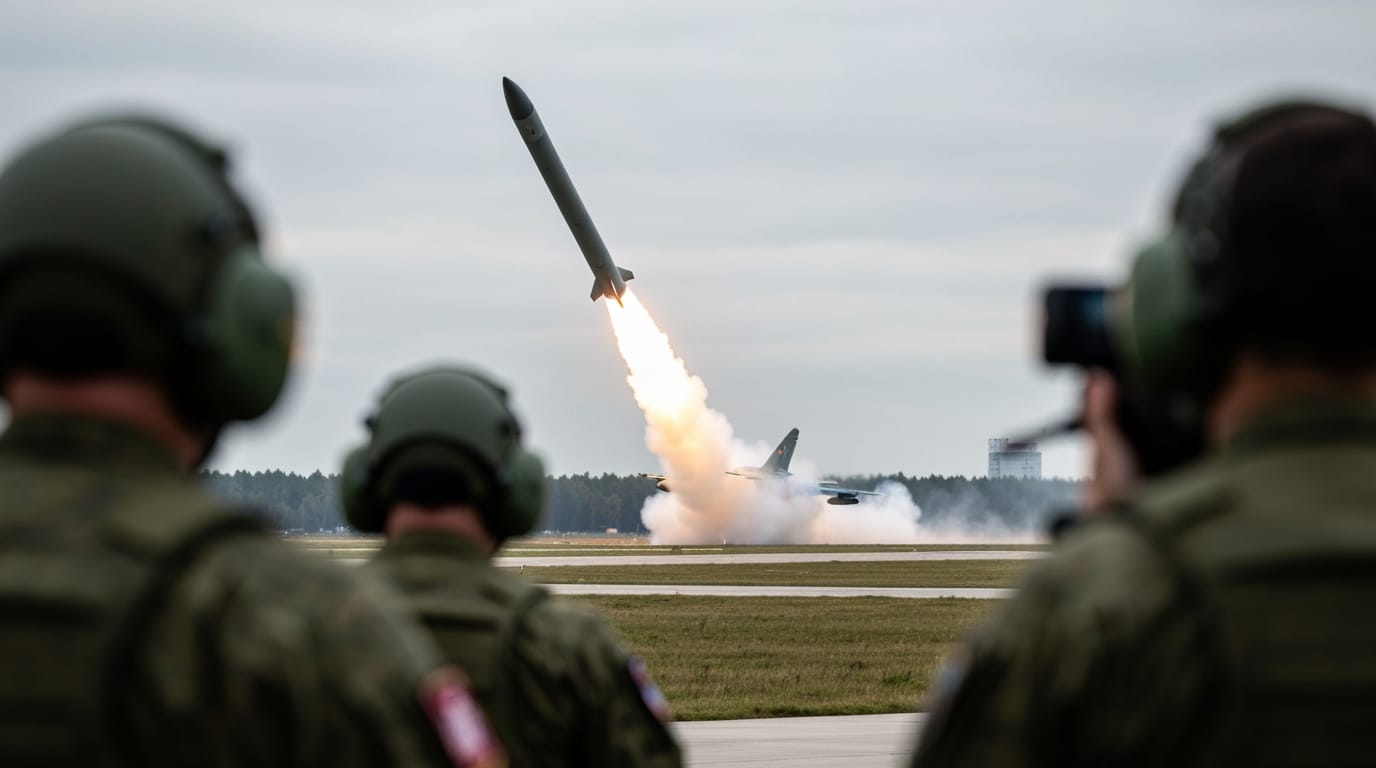
A Russian ballistic missile violated Polish airspace and subsequently crashed within its territory on Thursday, July 30, 2026, marking a significant escalation in the ongoing regional security crisis stemming from the conflict in Ukraine. The incident, which occurred during a large-scale Russian missile barrage against Ukrainian cities, prompted an immediate investigation by Polish authorities, strong condemnation from Warsaw, and a swift activation of air defenses by NATO. While initial assessments suggest Poland was not the intended target, the event underscores the precarious security landscape on NATO's eastern flank and highlights the persistent threat of spillover from the protracted hostilities.
The incident unfolded in the early hours of Thursday morning as Russia unleashed a "massive combined strike" across Ukraine, targeting cities such as Lviv, Kyiv, and the Dnipropetrovsk region. Amidst this barrage, a Russian Kh-101 cruise missile veered into Polish airspace, ultimately crashing near the eastern village of Tarnawa-Kolonia, approximately 80 kilometers (50 miles) from the Ukrainian border. The impact created a substantial crater, estimated at 10 meters (30 feet) wide, in an uninhabited area. Fortunately, there were no immediate reports of casualties or significant damage, a detail underscored by Polish Prime Minister Donald Tusk, who stated there was "no reason to think Poland was the intended target for this missile". Despite this assessment, the incursion triggered immediate and robust responses, with Poland's air defense forces placed on alert and military aircraft scrambled to monitor the situation.
Polish officials moved quickly to ascertain the facts and respond diplomatically. Prime Minister Tusk confirmed that fragments recovered from the crash site strongly indicated a Russian Kh-101 missile. This identification was echoed by Polish Defense Minister Władysław Kosiniak-Kamysz, who also pointed to the Kh-101 as the "most likely" type. Ukrainian Foreign Minister Andrii Sybiha further corroborated these claims, noting that the Kh-101 missile, exclusively used by Russia's strategic aviation forces, had crossed into Poland as part of Moscow's broader assault on Ukraine. Warsaw promptly launched a formal investigation into the incident, with Polish officials diligently working at the crash site. In a significant diplomatic move, Ukraine requested that its specialists be permitted to assist Poland with its ongoing investigation, highlighting the close cooperation between the two nations in monitoring Russian aggression. The Russian embassy in Warsaw, however, did not immediately provide a response to inquiries regarding the incident.
This latest airspace violation is not an isolated event but rather the most recent in a series of similar occurrences that have periodically tested the vigilance of NATO members bordering Ukraine. Previous incidents include a Ukrainian S-300 air defense missile accidentally striking Polish territory in November 2022, resulting in two fatalities. In December 2022, an unarmed Russian Kh-55 air-launched cruise missile was discovered in Poland months after having entered its airspace. More recently, September 2025 saw approximately 20 Russian drones violate Polish airspace, prompting significant concerns and a declaration from Polish authorities that the country was "closer to military conflict than at any time since WW2". Additionally, in March 2024, a Russian missile spent 39 seconds traversing Polish airspace before returning to Ukraine. These recurring incursions, alongside similar incidents reported in Romania involving drones, paint a picture of heightened and sustained regional tension, consistently challenging the air defense capabilities and sovereign integrity of NATO member states.
The gravity of Thursday's incident reverberated across the NATO alliance. NATO swiftly confirmed the origin of the object and activated its air and ground defenses in response to the incursion, signaling a unified front against potential threats to alliance territory. The activation of these defenses underscores the alliance's commitment to collective security, even as Prime Minister Tusk sought to reassure the public that Poland was not the missile's intended target. The repeated nature of these incidents, however, keeps the principle of Article 5—which considers an attack on one member an attack on all—at the forefront of strategic discussions, even when direct military engagement is not immediately triggered. The European Union also registered its alarm, with António Costa, President of the EU Council, emphasizing that the airspace violation "underline[s] once again that Russia's aggression is a threat to the security of Europe as a whole". The ongoing scrutiny and collaborative response among NATO members highlight the shared understanding of the inherent risks posed by the proximity of the conflict to the alliance's borders.
The violation of Polish airspace by a Russian ballistic missile on July 30, 2026, serves as a stark reminder of the volatile security environment in Eastern Europe. While Polish and NATO authorities have indicated that the incident was likely unintentional, an unfortunate byproduct of Russia's attacks on Ukraine, it nonetheless represents a serious breach of sovereignty and a test of the alliance's preparedness. The rapid response from Poland and NATO, coupled with the ongoing investigation, demonstrates the resolve to protect allied territory. As the conflict in Ukraine continues, such incidents underscore the persistent need for vigilance, robust air defenses, and concerted diplomatic efforts to de-escalate tensions and prevent unintended escalation across the region.


