Russian Disinformation Campaigns Intensify Ahead of German Elections, Threatening Democratic Integrity
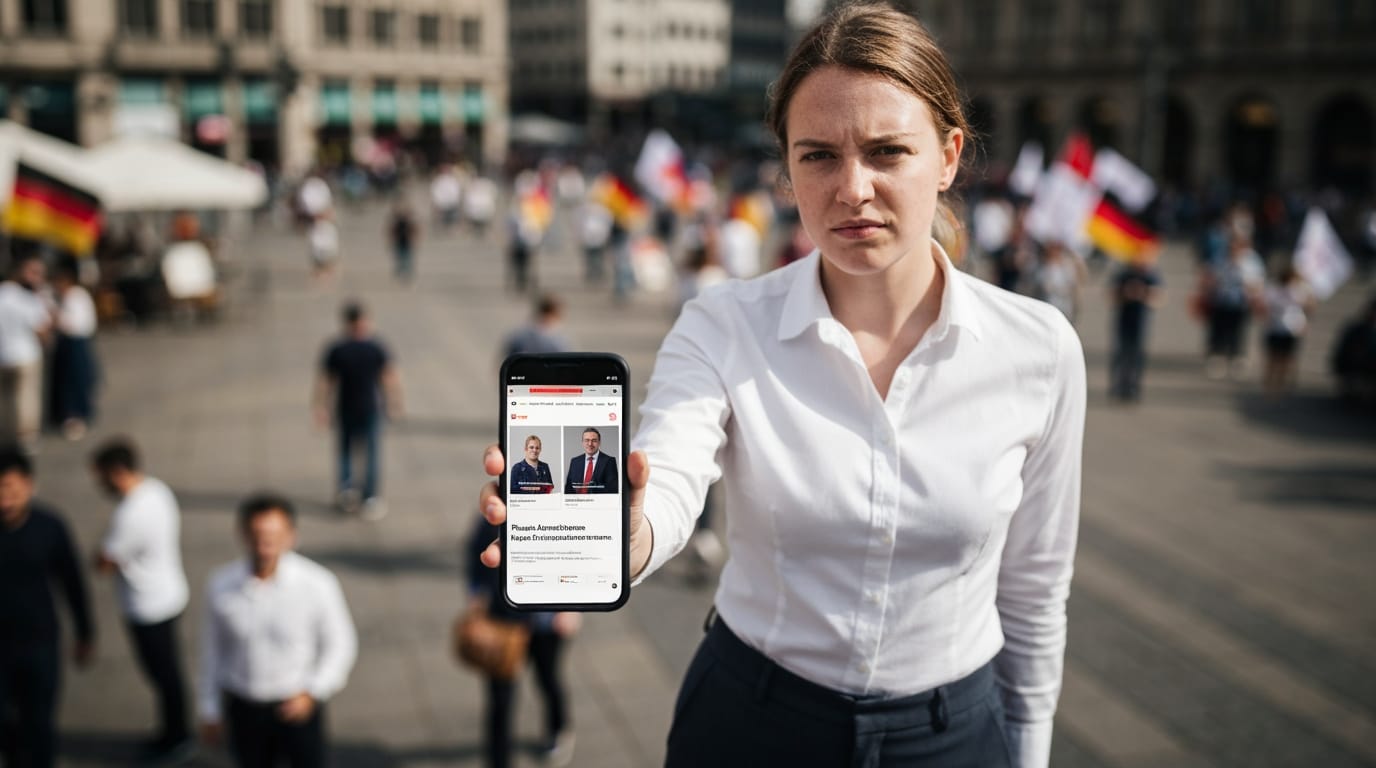
BERLIN – German security agencies and investigative bodies have uncovered extensive and increasingly sophisticated Russian disinformation campaigns aimed at influencing upcoming German elections and undermining the nation's democratic processes. These operations, leveraging advanced technologies like artificial intelligence and deepfakes, seek to sow discord, amplify extremist narratives, and erode public trust in government institutions, presenting a significant and evolving challenge to Germany's political landscape.
The ongoing interference is not a new phenomenon, with Russian influence operations targeting Germany for decades, but the scale and technological advancement of recent efforts mark a critical escalation. As Germany prepares for federal and regional polls, including hotly contested regional elections in states like Saxony-Anhalt and Mecklenburg-Western Pomerania, authorities are confronting a multifaceted threat designed to destabilize the country and weaken its commitment to Western alliances.
A Persistent and Evolving Threat to German Democracy
For years, Germany has been a prime target for Russian influence operations, a legacy dating back to the Cold War. However, the nature of these campaigns has transformed dramatically, moving beyond traditional propaganda to encompass a complex ecosystem of digital deception. Recent investigations by organizations like CORRECTIV and NewsGuard, along with assessments from German security services, highlight a concentrated effort to interfere with the 2025 general election and subsequent regional votes.
A prominent operation identified as "Storm-1516" has been linked to the creation of over 100 fake websites designed to mimic legitimate news outlets. These sites, reportedly established with the aid of artificial intelligence, have been used to disseminate fabricated stories and manipulate public discourse. The campaign, which intensified its focus on Germany following the announcement of snap elections in November 2024, is believed to be connected to the notorious Internet Research Agency (IRA) and Russia's military intelligence agency, the GRU. Other significant operations, such as "Doppelgänger" and "Operation Overload," have also been actively targeting Germany, expanding their reach to platforms like Bluesky Social and using AI-enabled voice cloning to create audio deepfakes.
These campaigns represent a concerted strategy to exploit existing societal divides, particularly around issues like migration, economic concerns, and Germany's support for Ukraine. The ultimate goal appears to be the erosion of trust in democratic institutions and the amplification of narratives that align with Kremlin strategic interests.
The Arsenal of Deception: Tactics and Narratives
The tactics employed by these Russian-aligned influence operations are varied and increasingly sophisticated. One of the primary methods involves the creation of numerous fake news websites and social media accounts that impersonate established media brands or appear as independent local news sources. For instance, operations have mocked up versions of well-known outlets like AFP, ARD, and Deutsche Welle to lend credibility to their fabricated content. NewsGuard identified 102 such websites operated by a Russian disinformation operative, designed to look like local German news sites.
These platforms then become conduits for a range of false claims and defamatory content targeting specific politicians and parties. In the lead-up to the 2025 general election, Green Party candidates Robert Habeck and Annalena Baerbock, as well as CDU candidate Friedrich Merz, were subjected to elaborate smears. Fabricated articles and videos falsely accused Habeck of past misconduct and Baerbock of inappropriate encounters during official trips. Marcus Faber, head of Germany's parliamentary defense committee, was baselessly labeled a Russian agent. Other narratives included false claims about the German military mobilizing for operations in Eastern Europe or a fictitious migration agreement bringing 1.9 million Kenyans to Germany.
A consistent pattern in these disinformation efforts is the clear bias towards the far-right Alternative for Germany (AfD) party and, in some cases, the pro-Russian, far-left BSW party. While mainstream parties and their leaders are often the targets of negative campaigns, the AfD and BSW are conspicuously left untouched, or even positively framed. Campaigns like "Operation Overload" have used AI-generated images to depict a dystopian Germany under the CDU versus a prosperous one under an AfD coalition, directly promoting the far-right party. This suggests a deliberate attempt to bolster anti-establishment and pro-Russian political forces within Germany.
Beyond political targeting, these operations exploit sensitive societal issues. Narratives fanning divisions between eastern and western Germany have been observed, as have efforts to spread anti-LGBTQIA+ discourse, weaponizing these wedge issues to polarize society further. The overarching aim is to destabilize and fragment the public sphere, making rational debate more difficult and undermining public confidence in democratic institutions.
Germany's Defense: Countermeasures and Challenges
German authorities have unequivocally attributed these malicious activities to Russia. In December 2025, Germany formally accused Russia of a cyberattack targeting its air traffic control and spreading disinformation ahead of the February general election, with security services providing proof linking hacker groups run by Russia's GRU to the operations. The German Foreign Ministry labeled these actions as part of Russia's "hybrid warfare" and warned of countermeasures, including potential sanctions, in coordination with European partners. Chancellor Angela Merkel had publicly acknowledged concerns about Russian active measures as early as 2017, raising the issue with Russian President Vladimir Putin directly.
In response, Germany is strengthening its efforts to detect and counter foreign interference. However, a report from the PRIF BLOG in February 2025 noted that Germany's institutional framework for addressing disinformation and foreign electoral interference remains "chaotic and, at best, fragmented." While there is a consensus among political parties and governmental agencies that disinformation poses a significant threat, the practical coordination across various bodies, such as the Federal Foreign Office and intelligence services, presents challenges.
Despite these hurdles, public awareness of disinformation as a serious threat to social cohesion and democracy is growing, with a 2024 Bertelsmann Foundation survey indicating strong public concern. Civil society organizations, fact-checkers, and media outlets play a crucial role in identifying and debunking false narratives, though the sheer volume and sophistication of the campaigns make this an ongoing battle. The rise of platforms like TikTok, where younger users appear more open to Russian and Chinese narratives, presents an additional challenge for counter-disinformation efforts.
Broader Implications for Democratic Integrity
The relentless targeting of German elections by Russian disinformation campaigns carries profound implications for the integrity of democratic processes, not just in Germany but across Europe. These operations represent a form of hybrid warfare, combining digital manipulation with other forms of pressure, espionage, and cyberattacks. By intentionally sowing confusion, amplifying fringe voices, and undermining trust in established media and political institutions, Russia aims to weaken democratic resilience and foster political instability.
The focus on exploiting sensitive domestic issues and promoting anti-establishment parties like the AfD indicates a strategy to fragment the political landscape and steer public opinion towards outcomes favorable to the Kremlin's geopolitical interests. While the exact impact on voter behavior remains difficult to quantify definitively, the consistent and technologically advanced nature of these campaigns underscores their potential to influence political narratives and perception.
Ultimately, the fight against foreign disinformation is an ongoing battle for the health of democratic societies. Germany's experience highlights the critical need for robust defense mechanisms, enhanced public literacy regarding media manipulation, and coordinated international efforts to counter a threat that respects no borders and seeks to weaponize information itself. The vigilance of government, civil society, and individual citizens will be paramount in safeguarding the integrity of future elections and the foundations of democracy.


