Russian Drone Strike Injures Civilians in Romanian Apartment Building, Escalating Cross-Border Tensions
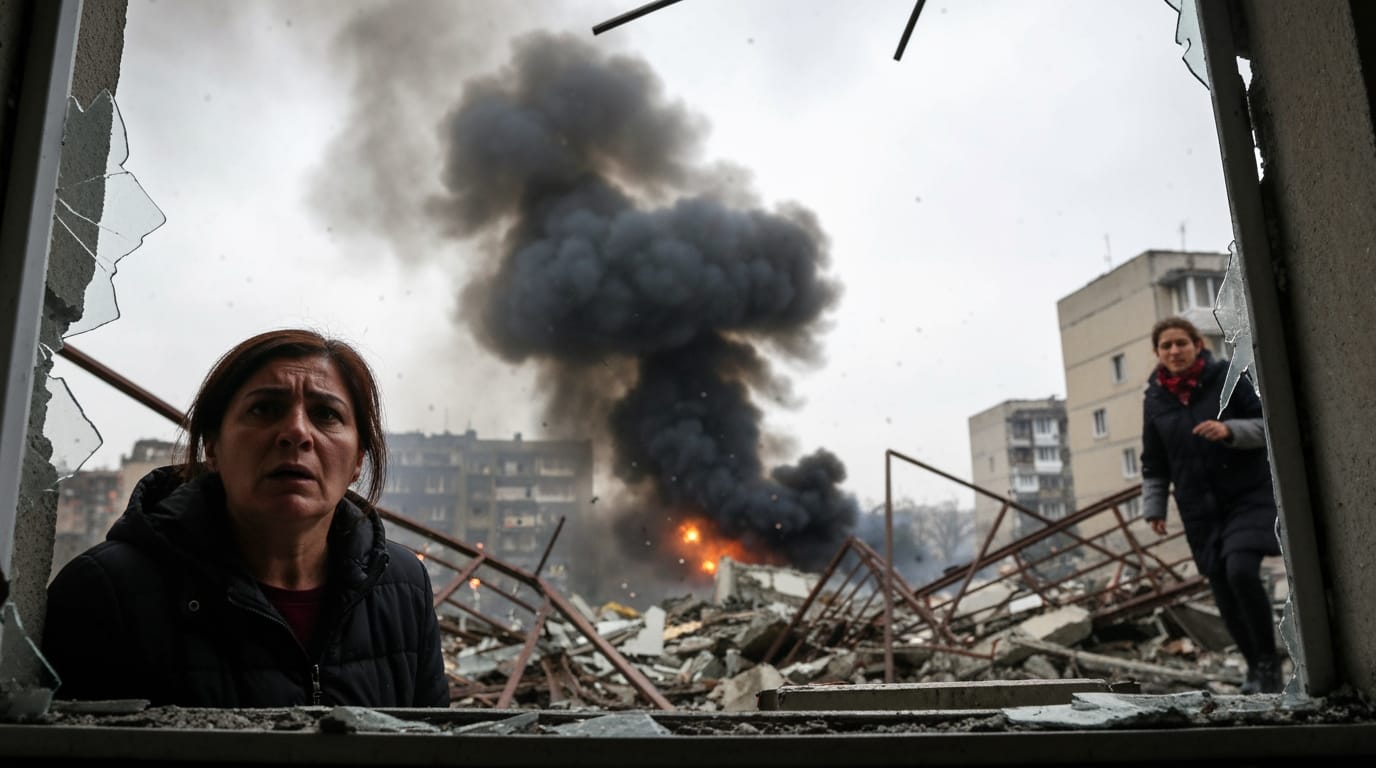
GALATI, Romania – A Russian drone struck an apartment building in the southeastern Romanian city of Galati during the early hours of Friday, May 29, 2026, injuring two civilians and igniting a fire. The incident marks the first confirmed instance of a Russian drone strike causing civilian casualties on NATO territory since the full-scale invasion of Ukraine began in February 2022, signaling a significant escalation in the ongoing cross-border spillover of the conflict. Romanian authorities swiftly responded, tracking the drone by radar and deploying emergency services to the scene, highlighting the persistent threat posed by Russia's sustained aerial assaults on neighboring Ukraine.
The Night's Terrifying Events in Galati
The tranquility of Galati was shattered in the pre-dawn hours of May 29 when a suspected Russian Shahed drone, previously tracked by Romanian radar systems, breached national airspace and crashed into a residential high-rise. The impact caused an explosion and triggered a fire on the tenth floor of the apartment building, leading to immediate panic and a rapid emergency response. Two individuals sustained injuries: a woman suffered first-degree burns, while a 14-year-old boy was treated for a panic attack. Both managed to self-evacuate before emergency teams arrived and were subsequently transported to a hospital for medical attention. In the wake of the strike, approximately 70 residents were evacuated from the damaged building, as police, ambulance services, and SMURD (Romania's supplementary emergency service) converged on the site. The Romanian Ministry of National Defense confirmed the drone's trajectory and impact, underscoring the direct threat posed to civilian lives and infrastructure within a NATO member state.
A Growing Threat on NATO's Eastern Flank
Galati, strategically located near the tripoint border of Moldova, Romania, and Ukraine, and directly across the Danube River from Ukraine's often-targeted port infrastructure, has found itself on the front lines of a conflict not its own. For months, Russian drones targeting Ukrainian ports have repeatedly breached Romanian airspace, with debris and fragments occasionally landing on Romanian territory. This latest incident, however, represents a dangerous escalation. While drone fragments have routinely been recovered, an incident in April 2026 marked the first time property was damaged in a populated area of Galati, impacting an electricity pole and an outbuilding, albeit without casualties. The current strike, directly hitting a residential building and causing civilian injuries, crosses a critical threshold, intensifying calls for a robust response to these persistent incursions. Residents in border communities have become accustomed to frequent air raid alerts, a stark reminder of the war's proximity.
Romania's Response and Broader Implications
In response to the incursion, the Romanian Ministry of National Defense issued a strong condemnation, labeling Russia's actions as "irresponsible" and emphasizing that they constitute a "new challenge to regional security and stability in the Black Sea area." The ministry highlighted that such incidents demonstrate Russia's "lack of respect for the norms of international law." As the drone was tracked, Romanian Air Force F-16 fighter jets and an IAR 330 SOCAT helicopter were scrambled, with pilots authorized to engage targets, though the drone was not intercepted before impact. Emergency "Ro-Alert" messages were disseminated to residents in Tulcea, Galati, and Braila counties, advising them to seek shelter.
As a NATO member, Romania's direct entanglement in the conflict raises significant questions about the alliance's collective security. While NATO has consistently condemned Russian aggression and affirmed its commitment to Article 5, its response to previous drone incursions into Romanian airspace has been largely confined to monitoring, condemnation, and scrambling jets, carefully avoiding kinetic action to prevent direct escalation. The current incident, with civilian casualties, places renewed pressure on this delicate balance. Romania revised its legislation in 2025 to permit its military to shoot down unauthorized drones entering its airspace, but has deliberately refrained from doing so, primarily due to operational constraints over populated areas and the risk of further escalating tensions. To bolster its defenses, Romania is in the process of integrating a U.S.-made, AI-powered counter-drone system, known as the Merops system, developed by Project Eagle, into its national air defense capabilities.
Escalating Tensions and an Uncertain Future
The Russian drone strike on a residential building in Galati, leading to civilian injuries, marks a dangerous precedent and underscores the inherent risks of a protracted conflict on Europe's eastern edge. It forces Romania and NATO to confront the reality of direct, albeit unintentional, impacts of the war on allied soil and citizens. The incident highlights the difficult challenge of maintaining regional stability while upholding the security of member states against indiscriminate attacks. As Russia continues its aerial bombardments of Ukrainian infrastructure, particularly near the shared border, the likelihood of further spillover incidents remains high. The delicate balance between deterrence and de-escalation will continue to define the responses of Romania and its NATO allies as they navigate an increasingly volatile security landscape in the Black Sea region.


