Russian General Killed in Moscow Car Bombing, Ukrainian Intelligence Suspected
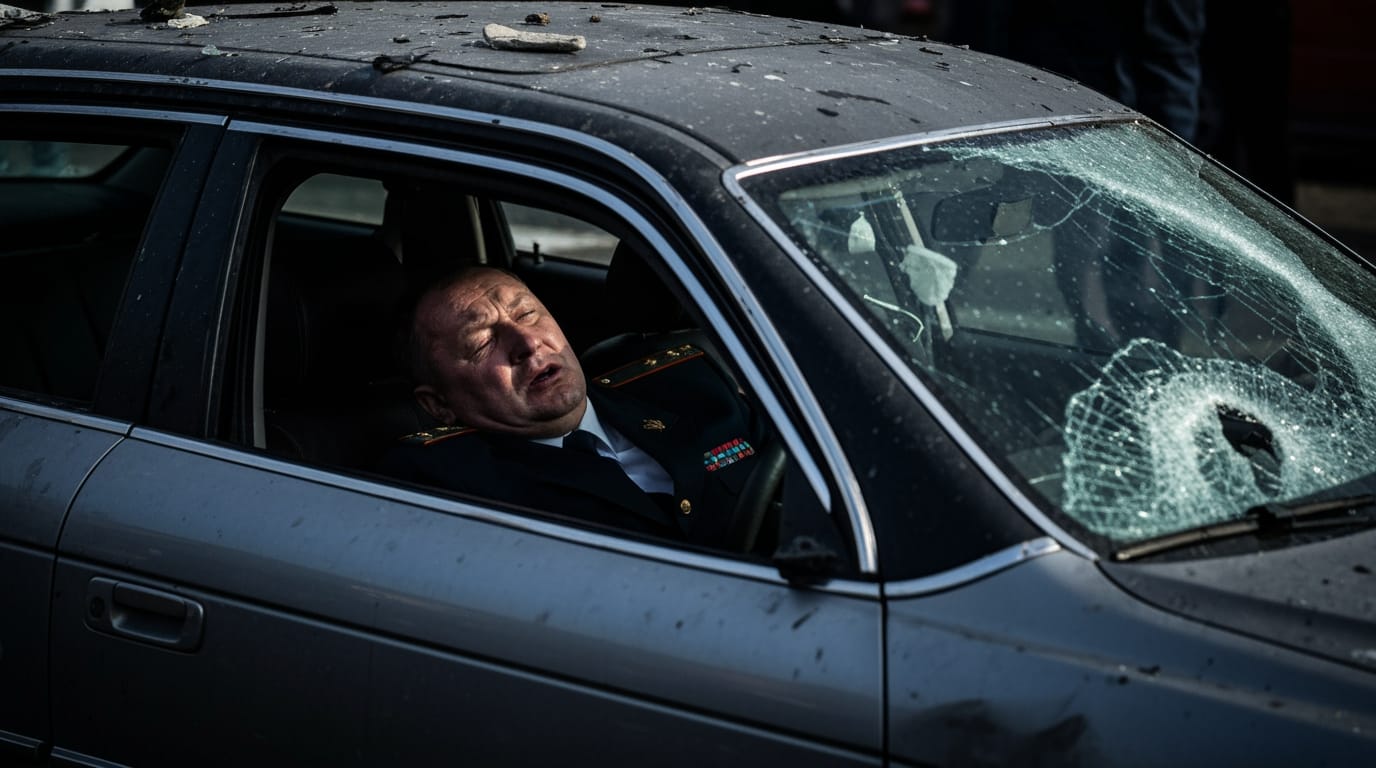
Lieutenant General Fanil Sarvarov, a high-ranking officer serving as the head of operational training at the Russian General Staff, was killed in Moscow today when an explosive device detonated beneath his vehicle. The assassination, which occurred on Monday morning in the southern part of the city, marks the latest in a series of targeted attacks against prominent Russian figures, which Moscow has swiftly attributed to Ukrainian intelligence services. The incident has sent shockwaves through the Russian capital, raising significant questions about internal security and the evolving tactics in the protracted conflict.
The Morning Attack
The deadly blast struck Lt. Gen. Sarvarov’s vehicle, a Kia Sorento, on Yasenyevaya Street, damaging several other cars and severely injuring the driver. Emergency services and investigators quickly converged on the scene, where the remnants of the car bore the clear signs of a powerful explosion. The Russian Investigative Committee confirmed Sarvarov’s death, stating that he succumbed to his injuries sustained in the detonation. Initial reports indicated the explosive device had been meticulously planted beneath the vehicle, suggesting a professional and premeditated act of assassination. The committee promptly initiated a criminal case under articles 105 and 222.1 of the Russian Criminal Code, pertaining to murder committed by particularly dangerous means and the illegal handling of explosives. Surveillance footage from the area is expected to be crucial in piecing together the moments leading up to the explosion, though immediate details were scarce.
A Distinguished Military Career
Lieutenant General Fanil Sarvarov, 56, was a career officer with extensive experience in the Russian armed forces. Appointed in 2016, he held the critical position of head of the operational training directorate at the General Staff, a role that involved overseeing the training and preparation of senior officers for staff exercises and other significant military events. His responsibilities were central to maintaining the operational readiness and strategic capabilities of the Russian military. Before his assignment to the General Staff, Sarvarov gained combat experience during counterterrorism operations in southern Russia in the late 1990s and early 2000s. He was also reportedly involved in the Russian military deployment in Syria, further underscoring his background in high-stakes military engagements. His assassination represents a significant loss to the Russian military command structure, particularly in a period of ongoing geopolitical tensions and active military operations.
A Disturbing Pattern of Targeted Killings
Russian officials have been quick to point fingers at Ukrainian intelligence services, identifying this as a primary line of investigation into Sarvarov’s death. This accusation comes amid a troubling series of assassinations targeting high-profile Russian military figures and pro-Kremlin individuals since the escalation of the conflict in Ukraine. The latest attack on General Sarvarov is the third such high-profile killing of a Russian general within the Moscow region in just over a year.
In December 2024, Lieutenant General Igor Kirillov, then commander of Russia's Nuclear, Chemical, and Biological Defense Forces, was killed by a bomb hidden in an e-scooter near his Moscow residence. Ukrainian intelligence had reportedly claimed responsibility for that attack. Just four months later, on April 25, 2025, Lieutenant General Yaroslav Moskalik, Deputy Chief of the Main Operational Directorate of the General Staff, died in a car explosion in Balashikha, a suburb of Moscow. Russian authorities stated that a homemade explosive device filled with shrapnel was used in Moskalik's killing, which also occurred as he approached or entered his vehicle. Moskalik was a prominent figure, having played key roles in the Normandy Format negotiations on Ukraine in 2015 and 2019, and participated in talks with Syrian President Bashar al-Assad in 2018. The Kremlin swiftly blamed Ukraine for Moskalik’s death as well, although Ukrainian authorities did not officially comment on the incident.
Beyond these military figures, other pro-Kremlin personalities have also been targets. In August 2022, Darya Dugina, daughter of ultranationalist philosopher Aleksandr Dugin, was killed by a car bomb in Moscow. In April 2023, military correspondent Maxim Fomin, known as Vladlen Tatarsky, was killed by an explosion in a St. Petersburg cafe. These incidents collectively underscore a pattern of sophisticated, targeted violence occurring within Russian territory, attributed by Moscow to external actors.
Investigation and National Security Concerns
The Russian Investigative Committee, led by its official spokesperson Svetlana Petrenko, stated that investigators are exploring multiple theories regarding General Sarvarov's murder, with Ukrainian intelligence services being a primary focus. The audacity of such an attack within Moscow, particularly against a high-ranking military official, is likely to trigger a thorough and extensive investigation by Russian security agencies. The government's response will almost certainly involve increased security measures, not only in the capital but potentially across the country, for high-value targets.
The recurring nature of these assassinations, often employing improvised explosive devices and appearing to be remotely orchestrated, points to a persistent and evolving threat. The ability of perpetrators to execute such operations deep within Russian territory challenges the effectiveness of Russian counterintelligence and internal security apparatuses. Kremlin officials have expressed serious concerns, with President Vladimir Putin previously acknowledging "very serious blunders" by security agencies following the killing of General Kirillov in December 2024. This latest incident will undoubtedly intensify scrutiny on these agencies and demand a robust response.
Geopolitical Implications
The assassination of Lieutenant General Sarvarov carries significant geopolitical implications. It is likely to further inflame tensions between Russia and Ukraine, with Russia potentially seeking retaliatory actions. Such events, occurring in the heart of the Russian capital, serve as a stark reminder that the conflict extends beyond traditional battlefields. They could be interpreted as attempts to destabilize the Russian military leadership, sow fear, or send a strong message to Moscow regarding the costs of the ongoing conflict.
The continued success of such targeted attacks, regardless of who is ultimately responsible, signals a capability to strike at the core of Russian power structures. This could have a demoralizing effect on Russian military personnel and the wider public, while potentially bolstering the resolve of those opposing Moscow’s actions. The international community will be watching closely for Russia's response and any potential escalation, as the conflict continues to demonstrate its unpredictable and far-reaching consequences. The targeting of high-ranking officers within Russia highlights a new and dangerous phase of proxy warfare, where the lines between internal and external security threats become increasingly blurred.
Conclusion
The car bombing that claimed the life of Lieutenant General Fanil Sarvarov in Moscow is a stark and grim development in the ongoing conflict. As Russian authorities launch an intensive investigation and point towards Ukrainian intelligence, the incident reinforces a disturbing pattern of assassinations reaching into the heart of Russia. The targeting of a senior officer responsible for military training underscores the severity of the threat and the audacity of the perpetrators. This event not only deepens the complexity of the current geopolitical landscape but also poses profound challenges to Russia's internal security, promising to further escalate an already volatile situation. The full implications of this latest killing will likely unfold in the coming weeks and months, shaping the trajectory of the conflict and the security environment within Russia.


