Russian Schools Expand Patriotic Curriculum to Frame Wartime Sacrifice as Civic Duty
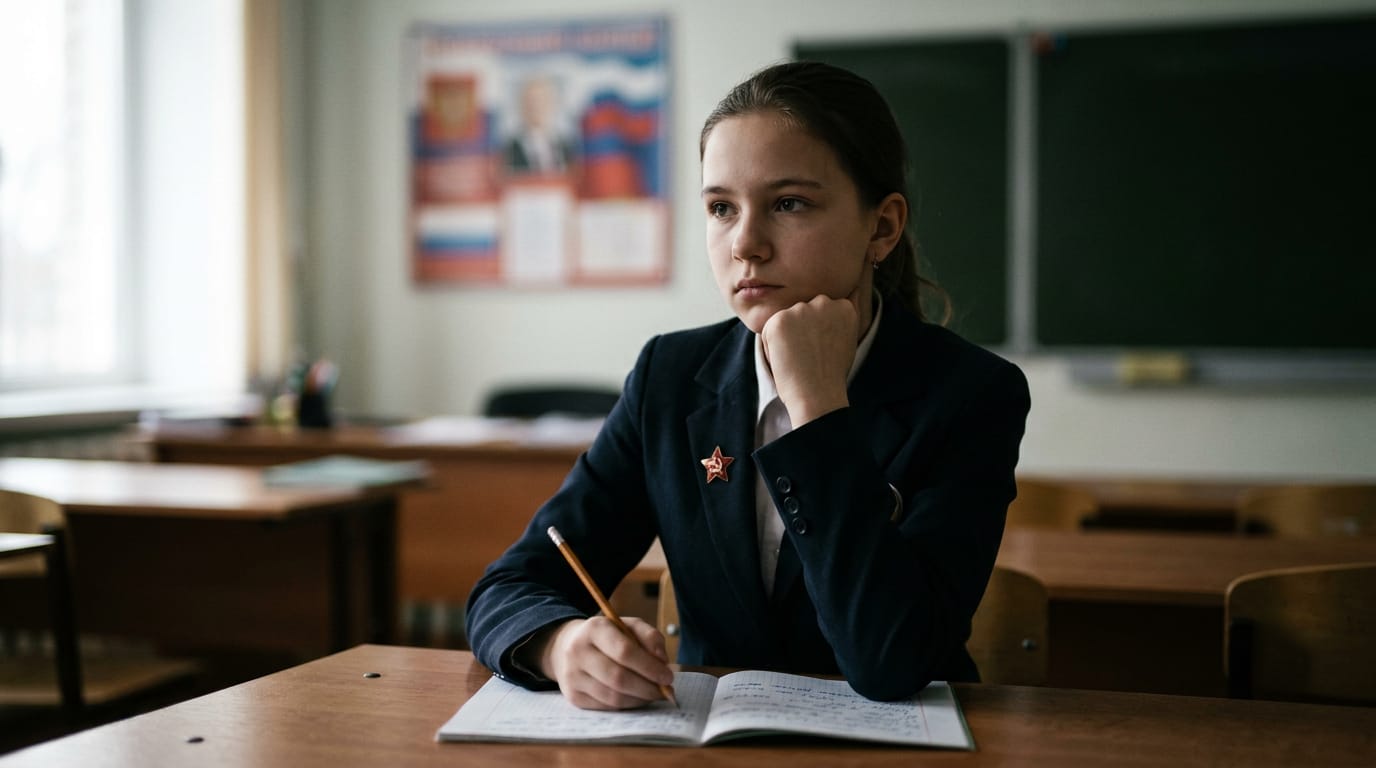
Classrooms across the Russian Federation are undergoing a broad ideological shift, as revised textbooks, mandatory lectures, and specialized training programs increasingly instruct children that the ultimate expression of civic loyalty is the willingness to die on the battlefield. The curriculum changes, which have intensified following the military invasion of Ukraine, seek to align the worldview of school-age youths with the strategic goals of the Kremlin. While state officials defend these initiatives as essential tools for national unity and moral grounding, students and independent observers warn that the lessons promote militarism and suppress critical inquiry.
Textbooks Frame Mortality as Ultimate Patriotic Act
Recent educational materials introduced in regional school districts reflect an escalating effort to reshape student attitudes toward national defense. In the Siberian city of Novosibirsk, municipal authorities distributed specialized manuals designed for spiritual, moral, and patriotic instruction. The texts explicitly connect devotion to the state with mortal sacrifice, asserting that legitimate love for the motherland requires an readiness to give one's life.
The curriculum materials extend beyond traditional civic education, contrasting Russian social order against Western societies. Throughout the instructional guides, Western nations are depicted as historically predatory and culturally corrosive, with authors attributing social decline to foreign entertainment, video games, and modern media. Conversely, Russian imperial and Soviet histories are presented in an entirely positive light, framed as benevolent civilizing missions. Although such regional supplementary guides are not yet universally cataloged in the core federal directory, rights monitors identify them as part of a synchronized push to institutionalize wartime ideology in public education.
Overhauling the Routine: Monday Ceremonies and Defense Drills
The classroom changes are reinforced by structural revisions to daily schooling implemented nationwide since late 2022. Russian primary and secondary schools open each academic week with a synchronized flag-raising ritual followed by a compulsory lesson titled "Conversations About Important Things". These weekly sessions, created by the Institute for Education Development Strategy under the Ministry of Education, establish standard interpretations of current geopolitical events, domestic holidays, and historical conflicts.
Complementing these homeroom sessions is a revamped program called "Fundamentals of Homeland Security and Defense," which replaced general civil defense instruction. Under this program, teenagers receive practical instruction in handling firearms, military drill routines, and basic unmanned aerial vehicle operations. Classrooms also regularly host front-line veterans invited to discuss career decisions in the armed forces, while school facilities establish permanent displays dedicated to fallen local soldiers. State education authorities maintain that these programs build character, instill respect for legal obligations, and counter hostile foreign information campaigns aimed at destabilizing Russian society.
Skepticism and Subversion Among Students
Despite the ubiquity of patriotic messaging, reception among students remains fractured. In regional population centers, several older teenagers report treating the lectures with quiet indifference or private resistance. High school students express concern that the narrative of noble martyrdom serves primarily to replenish frontline combat forces rather than protect defensive borders.
For many youths, resistance does not manifest in public protest, which carries severe legal and academic penalties, but rather through evasion and digital circumvention. Attendance at voluntary patriotic assemblies is frequently minimal unless supervised directly by faculty administrators. Furthermore, state measures to curtail independent perspectives—such as platform restrictions on major video-sharing and communication networks—have prompted students to question official directives rather than accept them passively. For these youths, access to outside historical analysis and independent reporting creates a sharp divergence between official school rhetoric and personal belief.
Legal Repercussions and Educator Pressures
The institutional push has severely curtailed academic autonomy for teaching staff. Teachers who omit prescribed talking points, dispute historical revisions, or advise parents on how to opt out of ideological modules face administrative reprimands, contract termination, and judicial prosecution under statutes prohibiting the discrediting of the armed forces.
The pressure extends directly into the home. Parents who formally object to their children attending ideological sessions have been investigated by child welfare services or faced official inquiries into family stability. Independent pedagogical unions that previously contested mandatory patriotic directives have been dismantled or marginalized through regulatory actions, leaving local school administrators to enforce compliance strictly down the chain of command.
The Long-Term Trajectory of State Education
The systematic transformation of primary and secondary schooling points toward a long-term strategy of demographic mobilization. By normalizing themes of state sacrifice and presenting international conflicts as existential struggles, authorities aim to produce a generation culturally conditioned to accept protracted military readiness as the standard baseline of civic life.
While the immediate outcome is widespread formal adherence to state protocols, the deeper efficacy of the policy remains uncertain. As Russian classrooms become front lines in the broader ideological dispute between official domestic doctrine and global connectivity, the growing friction between institutional requirements and private doubts continues to shape the outlook of the country’s younger generation.


