Russian Universities Entice Students into Military Service with Deceptive Contracts
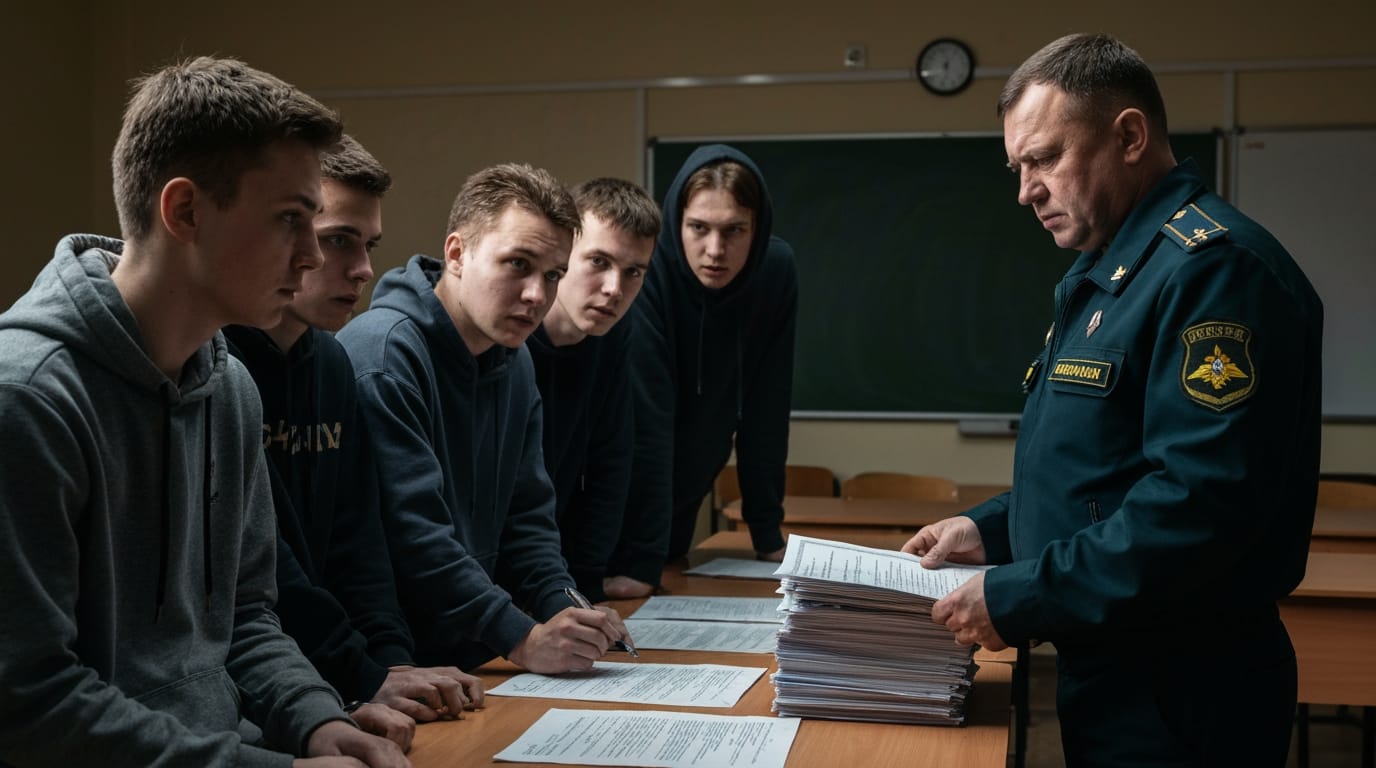
Moscow, Russia – Russian universities are increasingly becoming frontlines in the nation's military recruitment efforts, employing a "carrot and stick" approach that lures students into contract service with promises of high pay, specialized roles, and academic leniency, only to ensnare them in potentially indefinite military commitments. Reports indicate that over 70 educational institutions across 24 regions of Russia, including occupied Crimea, are actively participating in a campaign to recruit students for military contracts, primarily for service in Ukraine. The drive, intensified since early 2026, reveals a calculated strategy by the Ministry of Defense to replenish forces amidst ongoing conflict and rising casualties, leveraging academic institutions to target a younger, vulnerable demographic.
The Allure of "Carrots": Financial Incentives and High-Tech Hopes
The recruitment campaign deploys a range of enticing offers designed to appeal to students. A primary incentive is substantial financial compensation, often presented as one-time payments that can reach 2.3 million rubles (over $30,000 USD), with some universities reportedly supplementing these amounts. This economic lure is particularly potent for young people seeking financial stability or a means to resolve academic debts.
Beyond monetary benefits, recruiters emphasize the opportunity to join "unmanned systems forces" as drone operators, framing it as a "high-tech career" far removed from the direct line of combat. Students are told they would serve approximately 20 kilometers from the front, engaging in advanced technological roles. Recruitment materials frequently depict this service as prestigious and technologically advanced, often promising students they could return "famous." Universities, such as Plekhanov Russian University of Economics and the Far Eastern Federal University, have even reportedly created dedicated "detachments" or implemented internal quotas for student recruitment, further integrating the military drive into the academic environment.
Academic promises also form a significant part of the "carrot." Students are often assured that their military service would be considered "academic leave," allowing them to pause their studies and seamlessly return after a year. For those struggling academically, the offer extends to resolving poor performance or avoiding expulsion. The Higher School of Economics, for instance, reportedly offered students who had failed exams the chance to sign a military contract as an alternative to expulsion. This presents a seemingly appealing escape route for students facing academic jeopardy, with the added benefit of tuition-free studies upon their return.
The Pressure of the "Stick": Coercion and Intimidation Tactics
While incentives are a key component, a coercive "stick" is frequently applied to pressure students into signing contracts. Educational institutions and military recruiters target students with poor academic performance, summoning them to administrative offices where they are pressured to enlist as an alternative to expulsion. Administrators may hint that academic problems can be "resolved" if a student signs a military contract.
The pressure can escalate to outright intimidation. Students have been threatened with sanctions for failing to attend mandatory meetings with military recruiters. In one reported incident in Novosibirsk, a college director reportedly labeled students "cowards" during a screening of propaganda films, shaming those who refused to volunteer for service. During these meetings, often disguised as exam discussions or employer gatherings, students are presented with the military as their only potential employer. Recruiters employ tactics such as displaying camouflage nets and drone videos of casualties, while intimidating students by claiming military service is "inevitable."
<h3>The Deceptive Nature of "Special Contracts"</h3>Perhaps the most alarming aspect of this recruitment drive is the widespread deception regarding the terms of service. Students are often told they are signing "special contracts" that guarantee discharge after one year of service, particularly in drone operations. However, legal experts and human rights organizations, such as "Get Lost" (Idite Lesom), have warned that these promises are frequently false.
Under Russia's current mobilization laws, which remain in effect, the terms of military service can be unilaterally extended indefinitely. This means a student who signs a contract under the impression of a one-year commitment could find themselves serving for an open-ended period. Lawyers emphasize that there are no "special contracts" that supersede standard military service agreements. What students are signing are regular military contracts that cannot be easily terminated. Furthermore, there is no guarantee that recruits will actually serve as drone operators; they may be transferred to other units, including infantry, if they fail the selection process for specialized roles. The promised safety of working far from the front lines is not assured.
<h3>A Broader Context: Replenishing Forces Amidst Conflict</h3>This aggressive student recruitment campaign is not an isolated phenomenon but rather a critical component of Russia's broader effort to maintain and bolster its military forces. With the war in Ukraine having surpassed the four-year mark, and significant casualties incurred, the Ministry of Defense is actively seeking new sources of manpower. This push into universities and colleges represents a new wave of mobilization, targeting a demographic previously less impacted by direct conscription efforts.
The shift in tactics follows the widely unpopular "partial mobilization" of 300,000 reservists in late 2022, which prompted hundreds of thousands to flee the country. By focusing on students through universities, the government aims to project an image of voluntary contract service while ensuring a steady influx of recruits. The explicit imposition of recruitment quotas on universities by the Defense Ministry underscores the centralized and systematic nature of this initiative. Experts suggest this strategy allows Russia to continue its "slow war of attrition" in Ukraine, preparing for potential new offensives by shoring up its troop numbers.
<h3>The Human Toll and Ethical Questions</h3>The recruitment tactics employed by Russian universities and military recruiters raise significant ethical concerns regarding coercion, deception, and the exploitation of young people. Students, often at a formative stage of their lives and facing academic or financial pressures, are being steered into high-risk military service under false pretenses. Organizations like "Get Lost" are working to inform students of their rights and the realities of these contracts, highlighting the difficulty of proving direct coercion once a contract is signed.
The long-term implications for these students, their families, and Russian society are profound. Many face the prospect of indefinite military service in a war zone, far removed from the "high-tech careers" and academic promises initially dangled before them. The integration of military recruitment into educational institutions blurs the lines between academic pursuit and state military objectives, transforming places of learning into conduits for the war effort. As the conflict in Ukraine continues, the pressure on Russian youth to join the ranks of the military is only intensifying, presenting a stark challenge to individual autonomy and academic freedom.