Russia's Staggering War Toll: 1.2 Million Casualties Reported in Ukraine Conflict
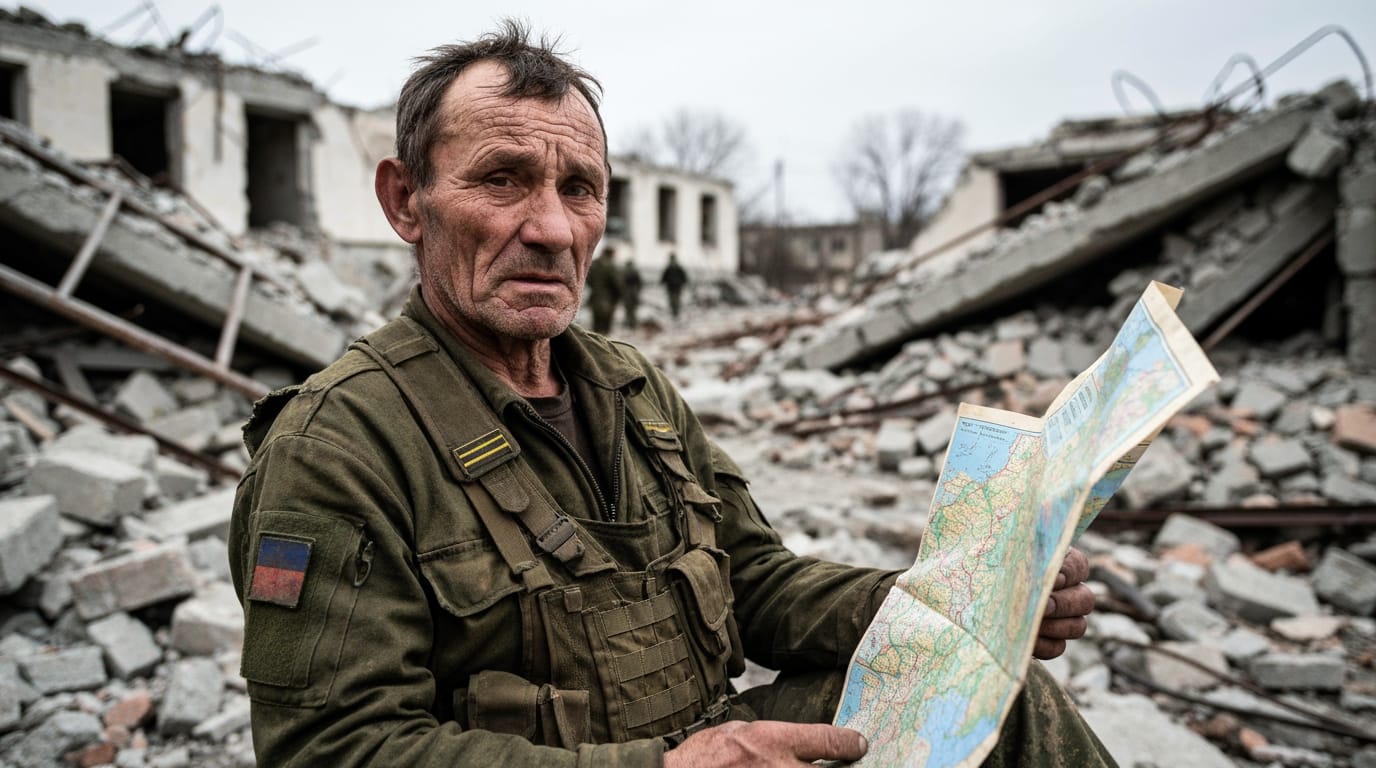
Kyiv, Ukraine – The human cost of the protracted conflict in Ukraine has reached a grim milestone, with a new report estimating that Russia has suffered approximately 1.2 million military casualties, encompassing killed, wounded, and missing personnel, since its full-scale invasion began in February 2022. This staggering figure, detailed in a study by the Washington-based Center for Strategic and International Studies (CSIS), underscores the immense and ongoing attrition faced by Russian forces as the war approaches its fourth year. The report, released on January 28, 2026, highlights that such losses are unprecedented for any major global power since the end of World War II, signaling a profound and unsustainable burden on Russia's military and society.
The Unprecedented Scale of Russian Losses
The CSIS assessment reveals that of the estimated 1.2 million Russian casualties between February 2022 and December 2025, up to 325,000 are believed to be fatalities. This comprehensive casualty count—which includes those killed, wounded, or unaccounted for—paints a stark picture of the intensity and lethality of the fighting. By any historical comparison, these losses are extraordinary, placing an immense strain on Russia's military capabilities and its societal fabric. The report suggests that Russian casualties significantly exceed those of Ukraine, with a ratio estimated to be roughly 2.5:1 or 2:1.
The gravity of these figures is further emphasized by the fact that neither Moscow nor Kyiv provides real-time, comprehensive data on their military losses, often treating such information as a closely guarded state secret. The Kremlin has officially dismissed the CSIS report as "not credible," asserting that only the Russian defense ministry possesses the authority to release Russian casualty figures. This denial aligns with a broader pattern of suppressing reports about military losses within Russian media, as noted by activists and independent journalists.
Methodology Behind the Estimates
The CSIS methodology for compiling these estimates involved a multi-faceted approach, drawing on interviews with Western and Ukrainian officials, as well as data meticulously collected by independent Russian media outlet Mediazona and the BBC Russian Service. These independent outlets undertake the arduous task of verifying military deaths through publicly available sources, including obituaries, social media posts from relatives, local media reports, and statements from regional authorities. While acknowledging that their named lists are not exhaustive, they also utilize statistical methods, such as analyzing excess male mortality data from national probate registries, to provide a more complete estimation of the true toll. As of January 16, 2026, Mediazona and the BBC Russian Service had identified more than 163,600 confirmed Russian military deaths, a figure that includes a significant number of volunteers, recruited prisoners, and mobilized soldiers.
For context, the CSIS report also estimated Ukrainian military casualties to be between 500,000 and 600,000, including 100,000 to 140,000 deaths, during the same period from February 2022 to December 2025. Ukrainian officials have provided varying figures, with President Volodymyr Zelenskyy stating in December 2024 that 43,000 Ukrainian soldiers had been killed and 370,000 injured. He later updated this in February 2025 to over 46,000 killed and 380,000 wounded. US intelligence reports from March 2025 estimated around 750,000 Russian casualties and over 425,000 Ukrainian casualties. The discrepancies highlight the inherent challenges in accurately tracking losses during active warfare and the strategic reasons for both sides to manage public perception of casualties.
Deepening Implications for Russia's Military and Economy
The profound human losses suffered by Russia carry significant implications for its military effectiveness and long-term strategic posture. The CSIS report contends that despite Russia's assertions of battlefield momentum, the data indicates an "extraordinary price for minimal gains" and suggests Russia is "in decline as a major power." Experts attribute Russia's high casualty rates to a combination of factors, including its failure to effectively execute combined arms and joint warfare, alongside poor tactics, inadequate training, persistent corruption, and low troop morale. Ukraine's robust defense-in-depth strategy has also played a crucial role in inflicting heavy casualties on invading forces.
Russia's current military approach is largely characterized by an attrition strategy, where the acceptance of high casualties is viewed as a means to incrementally wear down Ukraine's military and societal resistance. However, this strategy has come at a steep price, with Russian forces advancing at remarkably slow rates. In some offensives, progress has been as limited as 70 meters per day, a pace slower than even the most brutal campaigns of the last century, such as the Battle of the Somme in World War I. Since the beginning of 2024, Russia has gained less than 1.5% of Ukrainian territory.
Beyond the battlefield, the war's immense toll is also manifesting in significant economic strains within Russia. The conflict has led to declining manufacturing, weakening consumer demand, stubbornly high inflation, and a growing labor crunch. Russia's economic growth slowed to 0.6% in 2025, and the country faces challenges in key technological sectors, such as artificial intelligence. Furthermore, elite units within the Russian military have experienced substantial attrition, with the Naval Infantry declining from 35,000 to 10,000 troops and the Airborne Forces shrinking from 45,000 to 35,000. Despite these losses, Russian President Vladimir Putin has ordered an expansion of the army, aiming for a total of 1.5 million soldiers, suggesting a continued commitment to bolstering military strength even amidst heavy casualties.
The Broader Human Cost and Future Outlook
The nearly four-year conflict has profoundly impacted the lives of millions. Beyond the military figures, UN monitors have verified almost 15,000 civilian deaths since 2022, a number considered significantly higher in reality. Recent Russian drone and missile attacks across Ukraine have continued to exact a civilian toll, with reports of fatalities in areas such as Kharkiv and near Kyiv, and multiple injuries in Odesa, Kryvyi Rih, and Zaporizhzhia.
The CSIS report warns that at current rates, the combined Russian and Ukrainian military casualties could reach as high as 2 million by the spring of 2026. This grim projection underscores the ongoing intensity of the conflict and the devastating human price paid by both nations. The war has now lasted longer than what is remembered in Russia as the Great Patriotic War (the period of World War II), a comparison that resonates deeply within Russian society and is often invoked in propaganda efforts. The mounting casualties and economic pressures present profound challenges for Russia, raising questions about the long-term sustainability of its current military strategy and its standing on the global stage.


