Sanctions Target Iranian Aviation, Sowing Turmoil for Travelers Across the Region
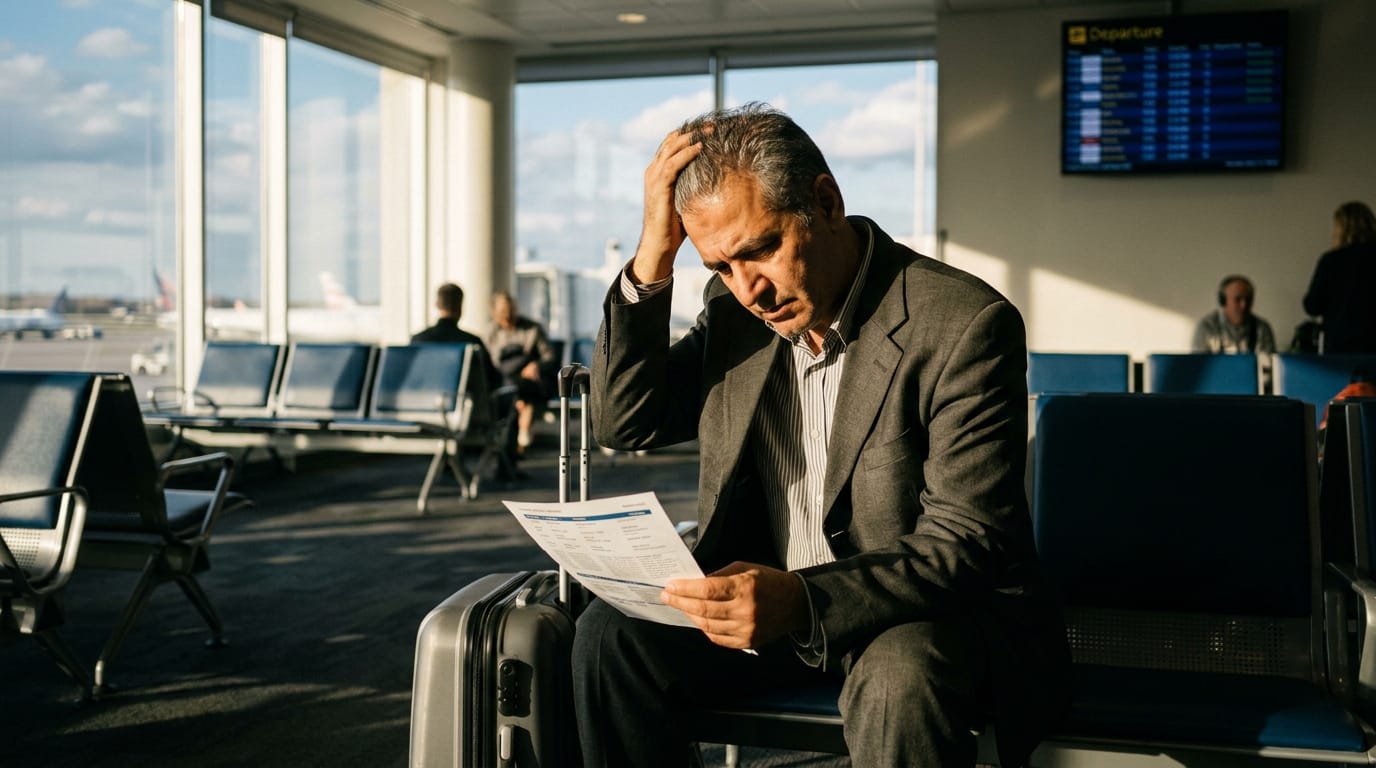
A fresh sweep of United States sanctions targeting Iran's commercial airline sector has unleashed widespread disruption across Middle Eastern transit hubs, stranding passengers and sharply curtailing air connectivity. As regional airports and aviation service providers move swiftly to avoid secondary penalties from Washington, international flight schedules have deteriorated into a state of acute unpredictability.
The sweeping measures by the U.S. Department of the Treasury's Office of Foreign Assets Control designated 27 Iranian commercial airlines and numerous supporting entities. Designed to restrict the movement of state-linked materiel and pressure Tehran's economy, the sanctions have effectively shut down between 80% and 90% of Iran's outbound international flights by choking off foreign operational support.
A Fast-Closing Net Across Regional Hubs
The immediate consequence for passengers has been a rapid cascade of cancellations across traditional transit corridors. Within days of the restrictions taking effect, airport authorities and civil aviation regulators across the Persian Gulf, the Caucasus, and Central Asia suspended or severely restricted operations involving Iranian aircraft.
The United Arab Emirates suspended all flights operated by Iranian carriers. Because Dubai and Sharjah have long served as primary international gateways for travelers entering and leaving Iran, the measure dismantled a vital transit artery overnight.
Similar suspensions followed across neighboring states. Commercial airports in Baghdad, Najaf, Erbil, and Sulaimaniyah in Iraq halted services involving Iranian airlines, throwing religious pilgrimage corridors into disarray. Authorities in Oman, Azerbaijan, Georgia, and Turkmenistan followed suit with suspensions or airspace refusals, in one instance forcing a flight en route to Central Asia to turn back mid-journey.
While routes toward select destinations such as China and Turkey saw partial continuity, schedules have grown increasingly volatile as service companies evaluate their legal exposure.
The Chokehold of Secondary Penalties
Unlike direct airspace closures, which the United States cannot unilaterally enforce over foreign sovereign territory, the disruptive power of the latest measures stems from secondary economic pressure. Washington warned global airport operators, ground-handling firms, and fueling agencies that assisting sanctioned Iranian carriers would jeopardize their own access to the American financial system and dollar transactions.
A commercial airliner requires multiple contracted services to complete an international leg: jet fuel, baggage handling, maintenance clearances, and navigation data. When foreign ground companies pull back to insulate themselves from financial risk, flights cannot legally or safely depart.
The sanctions also restricted authorizations covering certain overflights and entries into Iranian territory by foreign carriers operating American-made or American-regulated equipment. This mechanism has made foreign operators hesitate to expand or maintain their own flights into Tehran, narrowing the options for travelers who might otherwise rely on international airlines.
In response to the operational clampdown, Iranian officials lodged a formal complaint with the International Civil Aviation Organization, asserting that the restrictions violate multilateral treaties governing civil transport. Security officials in Tehran have simultaneously cautioned neighboring countries that cooperating with foreign pressure could invite reciprocal logistical friction.
Everyday Passengers Absorb the Shock
Behind the geopolitics lies a growing humanitarian and commercial burden for everyday travelers. Thousands of students attending foreign universities, business travelers, and dual nationals visiting family have found themselves stranded with little notice and limited avenues for return.
Airfares for the remaining operational routes have surged dramatically as supply plummeted against constant demand. Travelers seeking to leave Iran are increasingly forced into arduous multi-leg overland journeys through northern border posts or facing days of uncertainty at crowded border crossings.
The disruption extends directly to health care access. Public health specialists have warned that commercial cargo holds routinely transport essential medical supplies, including temperature-sensitive pharmaceuticals and specialized equipment. With commercial flight frequencies slashed, the logistics chains that sustain hospital inventories and patient travel for critical medical procedures abroad face mounting strain.
Competing Objectives and Lingering Instability
Policy analysts note the acute divergence in how both sides view the aviation measures. Western officials maintain that commercial air networks have been repurposed for state security objectives, justifying measures that deny Tehran access to global aviation infrastructure. From this perspective, targeted civil restrictions offer a non-military mechanism to restrict illicit logistics without resorting to physical conflict.
Critics and regional diplomats counter that sweeping actions against commercial carriers disproportionately damage the civilian populace while leaving security apparatuses largely intact. Some regional partners are already caught in the middle. In Iraq, where bilateral trade and religious tourism are critical domestic economic drivers, officials have begun petitioning Washington for specific exemptions to resume essential passenger connections.
The confrontation highlights how deeply integrated modern civil aviation is with international finance, and how rapidly political measures can dismantle travel norms across an entire region. As foreign airports balance the risks of secondary penalties against regional commerce, predictable flight itineraries across the Persian Gulf appear unlikely to return anytime soon.