Saxony-Anhalt at a Crossroads: Industrial Backbone Meets Political Upheaval
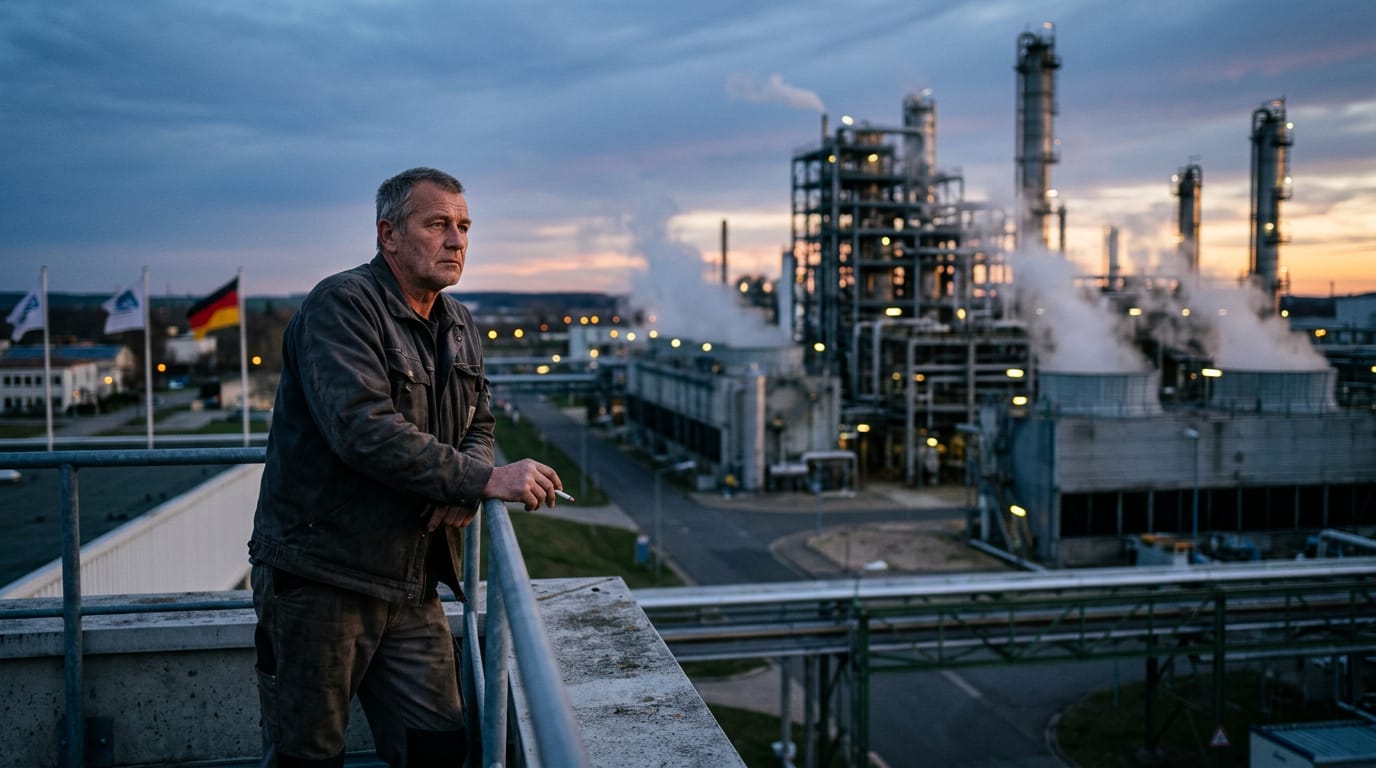
MAGDEBURG, GERMANY – The eastern German state of Saxony-Anhalt finds itself navigating a complex confluence of economic heritage and a dramatic political shift. Long recognized as a powerhouse of the chemical industry, a sector critical to both its local economy and broader European supply chains, the region is now poised to potentially elect the Alternative for Germany (AfD) to lead its government, a development that would mark an unprecedented moment in Germany's post-war political landscape. This upcoming state election on September 6, 2026, draws national and international attention, highlighting the profound anxieties and evolving political allegiances within a state grappling with its post-reunification legacy.
The Enduring Legacy of the Chemical Triangle
Saxony-Anhalt boasts a rich industrial history, particularly in the chemical sector, which has been a defining feature of the region for over 130 years. The "German Chemical Triangle," encompassing major production sites such as Leuna, Schkopau, and Bitterfeld-Wolfen, is a globally recognized hub that has seen significant innovations, including the development of the first artificial silk, PVC, and color film. This industrial cradle of Central Germany continues to be a major economic driving force, making Saxony-Anhalt the top chemical producer in Eastern Germany.
The state is home to five large chemical parks—Bitterfeld-Wolfen, Leuna, Schkopau, Piesteritz, and Zeitz—which collectively offer over 40 square kilometers of industrial space with modern infrastructure. These integrated clusters foster synergies through shared services and facilities, making them competitive and efficient. Leuna and Bitterfeld stand out as two of Germany's three largest chemical parks. Over the past two decades, approximately 30,000 chemical manufacturing jobs have been created in the German Chemical Triangle, and the sector in Saxony-Anhalt currently employs more than 50,000 individuals across over 500 companies. This robust industry spans the entire value chain, producing everything from basic chemicals and polymers to high-tech applications, agrochemicals, and pharmaceutical ingredients. Its strength in this sector has attracted more foreign direct investment to Saxony-Anhalt than any other state in eastern Germany.
Despite its historical and economic significance, the chemical industry in Saxony-Anhalt faces considerable challenges. High energy and operating costs, coupled with rising CO₂ costs and weakened demand in key industries, have led to plant closures. For instance, U.S. chemical giant Dow announced the closure of some facilities in Schkopau by the end of 2027, affecting around 550 employees. These economic pressures, alongside a looming shortage of skilled workers and an aging population, contribute to an environment of uncertainty for many residents. The state, however, is also a pioneer in "green chemistry," with new initiatives focusing on CO₂ utilization, bio-based raw materials, and the energy transition, including the construction of the first battery-grade lithium hydroxide refinery in the European Union in Bitterfeld-Wolfen.
The Ascendance of the AfD
Parallel to its industrial identity, Saxony-Anhalt has witnessed a significant rise in support for the far-right Alternative for Germany (AfD). Recent polls indicate that the AfD is the leading political force in the state, with support ranging between 41% and 43%, significantly outpacing the conservative Christian Democratic Union (CDU), which polls at 23% to 24%. This level of support puts the AfD in a position where it could potentially govern alone, a scenario that would be unprecedented for a far-right party in Germany since World War II. The state's domestic intelligence agency has classified the Saxony-Anhalt branch of the AfD as "confirmed far-right extremist."
Several factors contribute to the AfD's strong showing in Saxony-Anhalt. The state has long struggled with structural disadvantages, including Germany's second-highest poverty rate, a comparatively weak local economy, and significant population decline since 1990. High unemployment, recorded at 8.1% in July 2026, above the national average of 6.4%, and a contracted real GDP in 2025 further fuel widespread fears of social decline and economic insecurity. Many voters express low public trust in the federal government and dissatisfaction with the economic situation, often viewing AfD support as a protest against established parties.
Demographically, Saxony-Anhalt's largely rural population and highest average age in Germany represent a key demographic for populist movements. The AfD skillfully taps into a pervasive sentiment among nearly two-thirds of the population who feel like "second-class citizens" by framing itself as a credible alternative to the political establishment. Migration also remains a central theme for the party, which links it to various societal issues, despite the state having a relatively low proportion of residents with immigrant backgrounds.
The Intersecting Realities: Industry, Politics, and Society
The dual realities of Saxony-Anhalt's robust chemical industry and the AfD's political ascent create a complex environment. The challenges faced by the industrial sector—such as high energy costs and potential job losses—can exacerbate existing economic anxieties that the AfD readily exploits. The chemical industry, an international sector, relies on foreign workers, making the AfD's proposed "remigration offensive" a source of significant concern for industry representatives. Analysts are skeptical that a restrictive migration policy would improve the economy and warn it could worsen the skilled labor shortage in an aging state like Saxony-Anhalt.
The energy transition, while offering opportunities for green chemistry and renewable energy production (Saxony-Anhalt is a leading location for wind power), also presents challenges and local resistance, particularly concerning the expansion of wind farms. These complex issues, combined with a perceived lack of government effectiveness, foster a sense of pessimism and a desire for radical change among many citizens.
If the AfD were to lead the state government, it could instigate significant changes, particularly in education and cultural policy, areas where federal states hold considerable power. Proposed policies, such as terminating public broadcasting agreements and changes to schooling, could have far-reaching implications. An AfD-led government could also face a substantial annual budget shortfall, estimated at €2.2 billion, making the full implementation of its program challenging given the state's existing €25 billion debt. Beyond immediate policy changes, a far-right government in Saxony-Anhalt could set a precedent, potentially influencing political trends in other eastern German states and even at the federal level.
Conclusion
Saxony-Anhalt stands as a microcosm of broader national and European tensions, where deep-seated economic grievances and a desire for political change converge. The state's foundational chemical industry, a symbol of its enduring economic strength and innovation, faces evolving global challenges, while its political landscape is being reshaped by a potent wave of populist sentiment. The upcoming election is more than a local contest; it is a critical litmus test for Germany's democratic resilience and its capacity to address the concerns of a population caught between industrial tradition, economic uncertainty, and a powerful call for political transformation. The interplay between these forces will define Saxony-Anhalt’s future and potentially cast a long shadow over Germany's political trajectory.