Second LPG Tanker Arrives in India, Easing Supply Concerns Amid West Asian Tensions
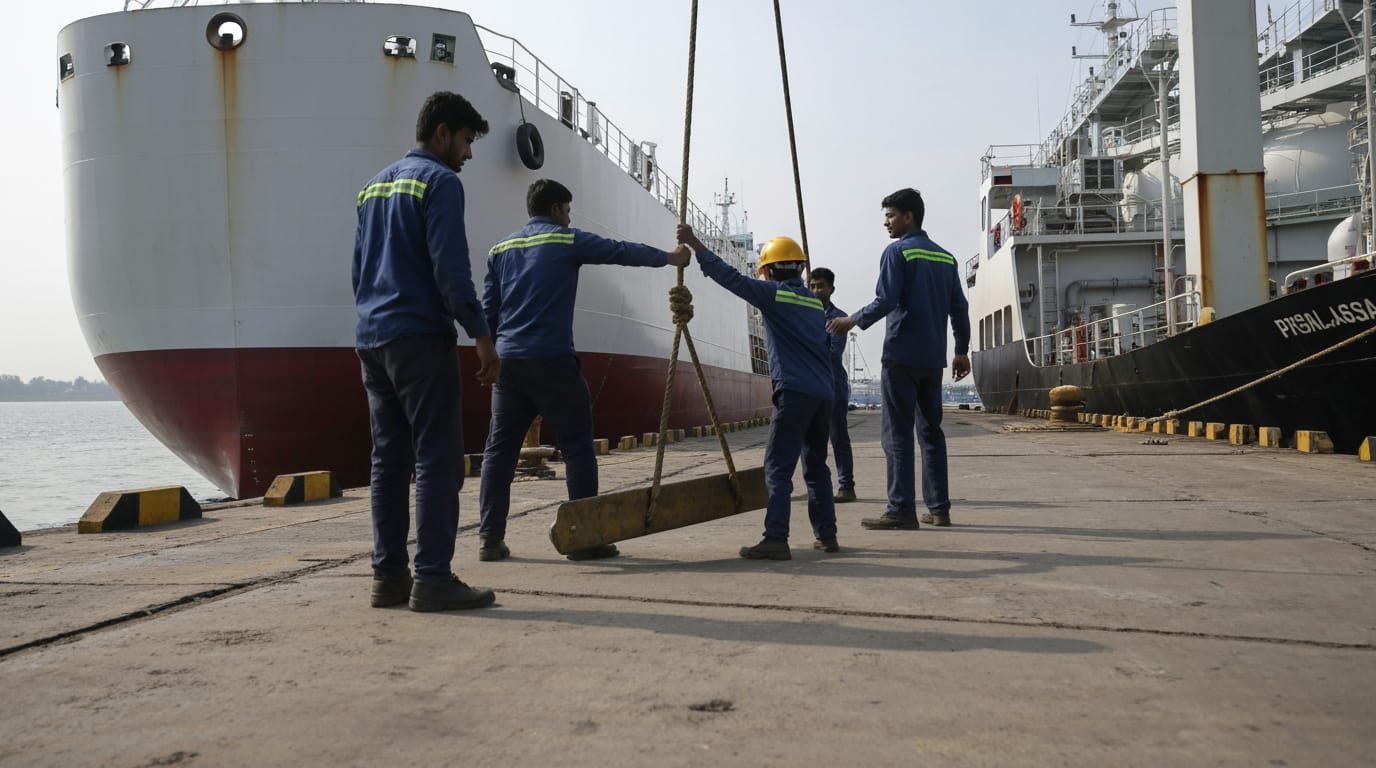
Gujarat, India – India has welcomed a second liquefied petroleum gas (LPG) tanker, 'Nanda Devi,' to its shores, docking at Vadinar Port in Gujarat on Tuesday. This arrival follows closely on the heels of the 'Shivalik' tanker, which reached Mundra Port on Monday, collectively bringing over 92,000 metric tonnes of crucial cooking gas to the nation. The successful transit of both Indian-flagged vessels through the conflict-ridden Strait of Hormuz offers a significant, albeit temporary, reprieve to India's energy security concerns sparked by escalating tensions in West Asia.
The arrival of the 'Nanda Devi,' carrying more than 47,000 metric tonnes of LPG, and the 'Shivalik,' with approximately 46,000 metric tonnes, underscores India's proactive efforts to mitigate potential shortages of a fuel vital to millions of households. These shipments are critical, particularly as India, the world's second-largest LPG consumer, relies heavily on imports to meet its domestic demand.
Navigating a Volatile Chokepoint
The recent conflict in West Asia, which began on February 28, 2026, has severely disrupted global energy supply chains, with the Strait of Hormuz at its epicenter. This narrow waterway is an indispensable transit point for a substantial portion of the world's energy resources, including an estimated 20% of global crude, natural gas, and LPG. For India, the vulnerability is particularly acute, as nearly 90% of its LPG imports typically traverse this strategic corridor.
The closure or significant disruption of commercial shipping through the Strait of Hormuz has intensified fears of a gas shortage across India. Reports indicated that insurance premiums for tankers navigating the Gulf surged by over 500 percent, highlighting the increased risks and costs associated with the route. In response to this volatile situation, the Indian Navy activated Operation Sankalp, deploying warships and surveillance assets to ensure the safe passage of Indian-flagged merchant vessels and energy tankers. This naval escort proved instrumental in securing the safe transit of both the 'Shivalik' and 'Nanda Devi.'
India's Growing Reliance and Inherent Vulnerabilities
India's dependence on imported LPG has steadily climbed, now accounting for approximately 60% of its domestic requirement, a notable increase from 47% in 2015. The nation consumes roughly 3 million tonnes of LPG monthly, making it the second-largest global consumer. This surge in demand is largely attributed to government initiatives such as the Pradhan Mantri Ujjwala Yojana (PMUY), which has provided deposit-free LPG connections to millions of underprivileged households, expanding access to clean cooking fuel. While these programs have significantly improved public health and energy access, they have also deepened India's reliance on external sources.
Despite robust consumption, India's existing LPG storage infrastructure can accommodate less than half of its monthly requirement, providing a buffer of only about two weeks of national consumption. This limited storage capacity leaves the country susceptible to supply shocks and underscores the critical need for continuous imports. The current crisis has exposed these structural vulnerabilities, highlighting the challenges of maintaining a consistent supply in the face of geopolitical instability.
Government's Multi-pronged Response
To counter the immediate threat of a supply crunch and enhance long-term energy resilience, the Indian government has implemented several measures. On March 8, 2026, the LPG Control Order was issued, compelling Indian refineries to maximize LPG yields. This directive led to a significant 28% increase in domestic LPG production within just five days. Furthermore, the government has actively diversified its procurement sources, securing new cargoes from countries including the United States, Norway, Canada, Algeria, and Russia. This strategic shift aims to reduce India's historical dependence on Gulf countries, lowering it from 99% to approximately 70% of imports. An early-2026 agreement with the U.S. for 2.2 million tonnes of LPG annually, equivalent to about 10% of India's yearly requirement, is expected to further bolster supply resilience.
Domestically, the government has prioritized household LPG supplies, curtailing allocations for industrial and commercial use. Incentives are also being offered to encourage consumers to transition to piped natural gas (PNG). Concerns over panic buying, which briefly led to a surge in LPG refill bookings, appear to be stabilizing, with a reported decline in bookings. Authorities are also stepping up vigilance against hoarding and black marketing of cylinders.
Impact on Everyday Life and Future Outlook
While government assurances and the arrival of these tankers have provided some relief, the impact of the disruptions has been felt across various sectors. Reports from states like Kerala indicated fears of livelihood loss and food scarcity. Restaurants, hotels, and small businesses experienced disruptions, with some facing potential closures, and black market prices for LPG cylinders reportedly soared in some cities. The 46,000 metric tonnes of LPG carried by 'Shivalik' alone is equivalent to about 3.24 million standard 14.2 kg domestic cylinders, enough to meet nearly one day of India's LPG import needs. The cargo from 'Nanda Devi' includes 24,000 metric tons destined for Tamil Nadu.
The immediate arrivals of 'Shivalik' and 'Nanda Devi' serve as a crucial lifeline, helping to stabilize the market and reassure consumers. However, the ongoing crisis in West Asia underscores the long-term imperative for India to strengthen its energy security framework. Experts suggest expanding strategic LPG storage, particularly through underground caverns, and further diversifying import sources and routes as essential steps. The current events highlight that while immediate actions can alleviate pressing concerns, a robust and diversified energy infrastructure is paramount for a nation so dependent on external fuel sources.


