Securing the Eastern Flank: Lithuanian Skies Are Declared NATO Skies as Border Tensions Escalate
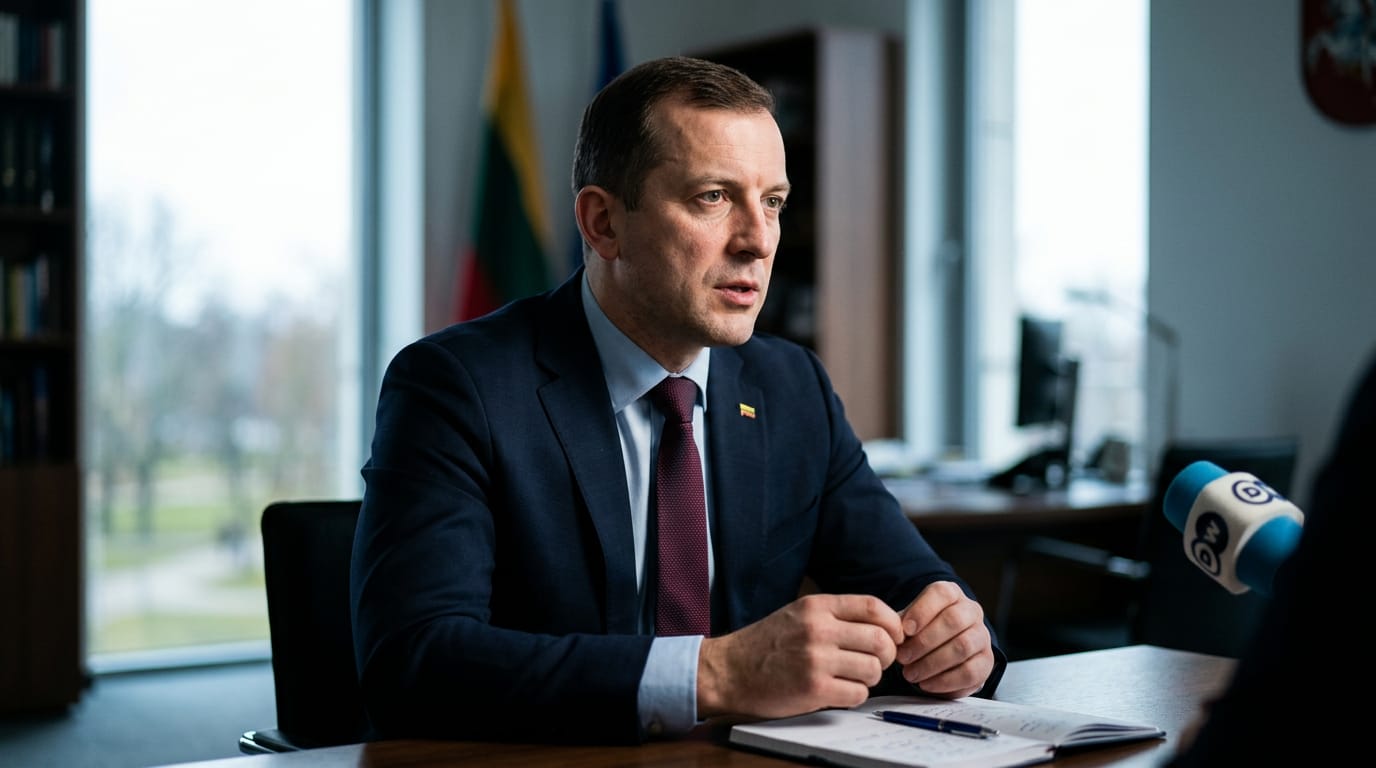
VILNIUS — Facing an intensified wave of aerial incursions and hybrid security threats along Europe’s eastern border, Lithuania is urging its Western partners to treat the protection of Baltic airspace as an urgent priority for the entire transatlantic alliance. The country’s leadership has emphasized that local security boundaries can no longer be separated from broader regional safety, declaring that national skies are essentially shared NATO territory.
The position reflects mounting unease across the Baltic states as cross-border incidents involving unmanned aerial vehicles, meteorological surveillance balloons, and state-sponsored migration pressure test air defenses and border response systems. Situated between the heavily militarized Russian exclave of Kaliningrad and Moscow-aligned Belarus, Lithuania occupies a critical frontline along NATO’s eastern perimeter, where small violations risk escalating into wider crises.
Escalating Aerial Pressures on the Border
The push for integrated defenses follows several recent incidents that tested regional preparedness. In one major encounter, allied fighter aircraft intercepted and brought down an armed unmanned aerial system roughly 60 miles west of Vilnius. The aircraft was intercepted after crossing into Lithuanian territory from Belarus and traveling near populated districts before allied pilots neutralized the threat over the Kaišiadorys district.
The interception marked the first time that an airborne drone had been downed inside Lithuanian air boundaries. Military investigators reported the wreckage indicated the craft was probably carrying explosives, underscoring the lethal nature of modern hybrid tactics. In addition to drone activity, officials have logged repeated cross-border movements of unauthorized weather balloons and sustained attempts to push irregular migrants across the southern frontier.
Lithuania shares an extensive border with Belarus and borders the Russian exclave of Kaliningrad, leaving its narrow land corridor—the Suwalki Gap—vulnerable to tactical isolation in the event of open conflict. Authorities maintain that these aerial incursions are deliberate attempts to test radar tracking responses, slow allied decision cycles, and sow public anxiety across frontline states.
Redefining Collective Air Defense
To counter these provocations, Lithuanian defense authorities are pushing for a fundamental update to the alliance's operational structure. Under current standard practices, the Baltic Air Policing mission focuses primarily on identifying and tracking foreign aircraft that fly without flight plans or transponders. Vilnius wants this framework shifted rapidly into a fully active rotational air defense model that can intercept hostile incursions immediately.
Alliance members have acknowledged the challenge. While mutual assistance under Article 5 remains the bedrock of collective security, Baltic leaders argue that mutual protection must be proactive rather than reactive. Securing the northern European rim, officials stress, serves as the first line of defense for the entire continent. If northern and eastern frontiers remain porous to automated strikes or reconnaissance platforms, European skies as a whole remain exposed.
This campaign for allied solidarity has prompted key international deployments. Germany has committed to stationing a permanent brigade of roughly 5,000 personnel on Lithuanian soil, transitioning away from short-term rotational footprints. The United States has also maintained rotational armored and air elements in the country, while multinational air detachments regularly deploy to Šiauliai Air Base. Even with these deployments, officials insist that surface-to-air missile units and advanced electronic tracking networks must be permanently integrated along the external frontier.
The Dual Architecture of National Defense
Lithuanian policy maintains that reliance on foreign assistance cannot replace substantial national commitment. The nation has expanded its domestic military budget, allocating well over 5% of its gross domestic product to defense expenditures. This rate makes Lithuania one of the highest defense spenders relative to economic size across all 32 NATO member states. The resources fund mechanized vehicles, modern air defense batteries, drone platforms, and modernized ammunition stockpiles.
At the same time, national security planners are pursuing a broader, whole-of-society security framework. Officials emphasize that military acquisitions alone cannot ensure complete resilience. National strategy links physical armament with civil protection, public trust, and social welfare. Government contingency planning includes civil evacuation protocols designed to keep transport arteries clear during emergencies, alongside regular shelter drills and community mobilization training.
This balanced perspective bridges defense priorities with vital domestic needs. Policymakers caution that focusing exclusively on hardware could erode trust if public institutions fail to care for vulnerable populations, including the sick and unemployed. A society disconnected from its civil institutions, officials argue, cannot maintain the cohesion needed to withstand protracted foreign intimidation.
Geopolitical Shifts and Democratic Resilience
The growing security demands on the Baltic perimeter coincide with volatile political currents across the European continent. The rise of populist and nationalist factions in several Western European capitals has created uncertainty regarding the long-term stamina of European support for eastern deterrence. Frontline states depend on sustained political unity across the European Union and NATO to ensure funding, supply chains, and military deterrence hold firm.
Public sentiment inside Lithuania demonstrates clear resolve. Recent polling reveals that approximately 90% of the public supports membership in NATO, with 70% identifying neighboring revanchism as a direct and immediate threat to national sovereignty. Despite political divisions on domestic policies, parliamentary factions have maintained a unified consensus regarding territorial defense, international alliances, and assistance to Ukraine.
Regional planners are also monitoring security across the wider Baltic Sea basin, coordinating tracking and radar systems with Estonia, Latvia, and newer Nordic allies. The integration of regional sensor data aims to reduce reaction times, allowing commanders to dispatch interceptors before encroaching platforms cross sovereign territorial borders.
Securing a Common Frontier
Lithuania's strategic message emphasizes that the security of its eastern border is a collective European responsibility, not just an isolated border dispute. Small, repeated violations of sovereign airspace represent calculated efforts to probe for institutional weaknesses within the alliance.
As security strategies evolve, the focus remains on closing the gap between diplomatic pledges and immediate operational capability. By balancing heavy defense spending with social investments, and integrating domestic readiness with allied air defense shields, Lithuania seeks to establish an enduring deterrent. The overarching objective remains constant: ensuring that any violation of the border is addressed swiftly as a direct breach of common transatlantic security.


