Senate Passes ICE-Free DHS Funding, Ending Protracted Shutdown
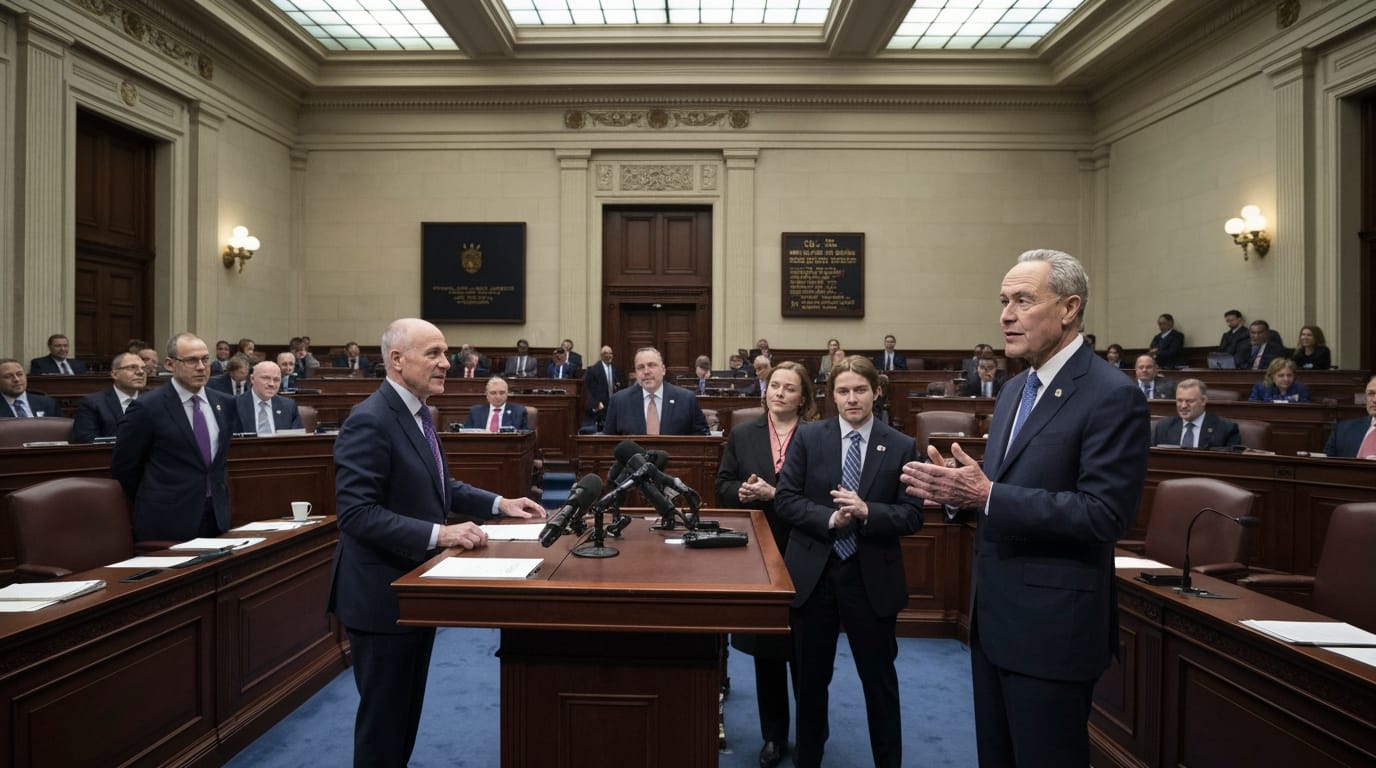
WASHINGTON – After weeks of a debilitating partial government shutdown, the U.S. Senate early Friday morning passed a Department of Homeland Security (DHS) funding bill, providing critical appropriations for most of the agency but conspicuously omitting funding for Immigration and Customs Enforcement (ICE) and significant portions of Customs and Border Protection (CBP). The bipartisan move, approved by a voice vote in a rare overnight session, brings a halt to a 41-day standoff that has disrupted airport security and other vital federal functions, though the legislation now awaits action in the House of Representatives.
The Senate's approval marks a significant, albeit partial, resolution to the prolonged fiscal impasse, which began on February 14 after lawmakers failed to agree on terms for DHS appropriations. The dispute, rooted deeply in contentious debates over immigration enforcement, left tens of thousands of Transportation Security Administration (TSA) personnel working without pay and led to widespread airport delays and worker absences across the nation.
A Standoff Resolved, But Divisions Linger
The shutdown, the second such event in the current fiscal year affecting parts of the federal government, specifically impacted DHS and its constellation of agencies. While other federal departments remained funded, the lack of appropriations for DHS agencies, including the Coast Guard, Federal Emergency Management Agency (FEMA), and TSA, triggered growing concerns about national security and public safety. The Senate's passage of the funding package comes after a month-long period characterized by intense negotiations, escalating political rhetoric, and the tangible strain on federal workers and public services.
Throughout the crisis, airports reported historic wait times, with TSA absences reaching critical levels, prompting President Donald Trump to issue an order to pay TSA officers, claiming emergency powers to address the stalemate. The pressure from these operational disruptions undoubtedly contributed to the urgency for a resolution. Senate Majority Leader John Thune, R-S.D., and Minority Leader Chuck Schumer, D-N.Y., played pivotal roles in guiding the chamber towards this late-night agreement.
The "ICE-Free" Imperative: A Response to Enforcement Controversies
The defining feature of the newly passed Senate bill is its deliberate exclusion of funding for ICE's enforcement and removal operations (ERO), as well as a segment of CBP. This unprecedented move stems directly from intense Democratic demands for reforms to immigration enforcement tactics, particularly following the fatal shootings of two U.S. citizens, Renee Good and Alex Pretti, by federal agents in Minneapolis in January 2026. Democrats consistently asserted that they would not provide a "blank check" for an agency they accused of being "lawless" without significant changes to its operating procedures.
Among the reforms sought by Democrats were requirements for ICE agents to wear body cameras, a ban on officers wearing face masks during operations, and a mandate for judicial warrants—rather than administrative warrants—for entering private property. While the passed bill does not explicitly include these reforms, the decision to withhold direct funding for ICE's primary enforcement arm is a clear victory for Democrats in their push for greater accountability. It is noteworthy that ICE and CBP were already largely insulated from the immediate funding lapse due to a substantial $75 billion allocation from the "One Big Beautiful Bill Act" passed in 2025, providing a financial cushion that could sustain many of their operations for months.
Political Maneuvering and Future Legislative Battles
The Senate's action represents a complex political calculus. While Democrats claimed a victory in forcing an "ICE-free" funding bill, Republicans were quick to emphasize that no actual reforms to ICE procedures were included in this specific legislation. Senate Majority Leader Thune indicated that the battle over ICE funding is far from over, suggesting that Republicans intend to pursue separate legislation, potentially through the budget reconciliation process, to fully fund ICE and CBP. This separate effort might also include provisions from the "Save America Act," a Republican-backed voter ID and proof-of-citizenship bill that President Trump has championed.
President Trump's own stance on the DHS funding had been a moving target, initially demanding that no deal be reached until the "Save America Act" was approved, but later signaling support for the Senate's approach. The White House's changing position underscores the high-stakes political maneuvering surrounding immigration and border security, issues that remain central to the current administration's agenda.
The immediate focus now shifts to the House of Representatives, where the bill's passage is not guaranteed. While a swift vote is anticipated, securing a two-thirds majority under suspension of the rules—a fast-track process—would require significant Democratic support, potentially setting the stage for further debate and challenges.
Operational Relief and Unresolved Questions
For the immediate future, the passage of this bill means that agencies like the Transportation Security Administration, the U.S. Coast Guard, and FEMA will see their funding restored, bringing relief to thousands of federal employees and ensuring continuity of essential services. These agencies are integral to national security, disaster response, and safe travel, and their full operation is critical.
However, the future of ICE and CBP remains under a cloud of uncertainty. While ICE's core mission encompasses broader responsibilities such as combating transnational crime and human trafficking, its immigration enforcement functions have become a focal point of intense national debate. The current legislation ensures that the debate over the scope and nature of immigration enforcement will continue to dominate the legislative landscape, with Republicans committed to securing full funding for these agencies and Democrats equally determined to enact reforms. The Senate's action has ended one chapter of this contentious saga, but the larger narrative of immigration policy and government accountability in the U.S. is far from complete.


