Senate Republicans Approve Trump's Tax and Spending Cuts After All-Night Session
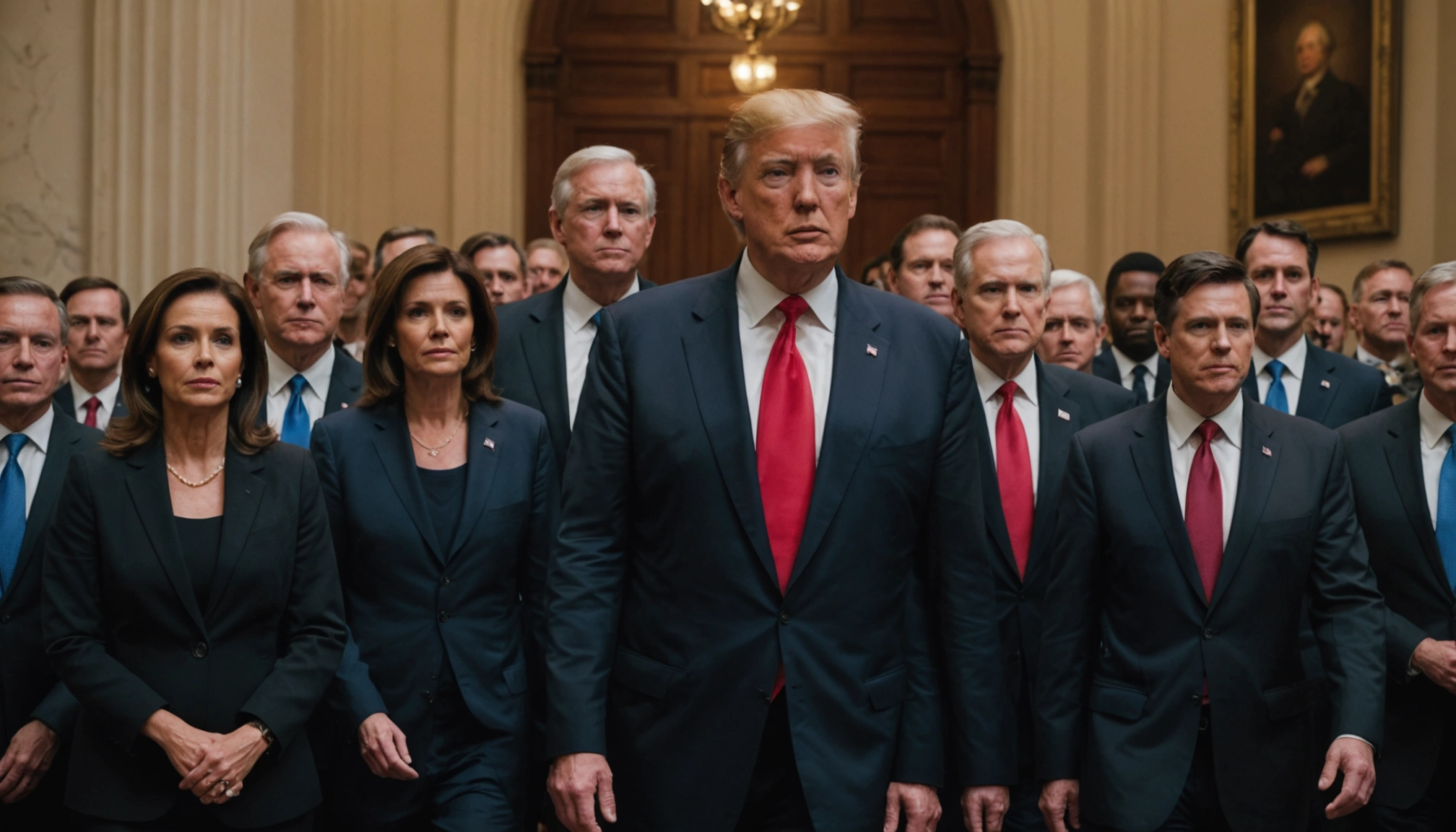
In a significant victory for President Donald Trump, Senate Republicans approved a framework for sweeping tax breaks and spending cuts early Saturday morning after an all-night session. The 51-49 vote, largely along party lines, paves the way for a major overhaul of the nation's fiscal policy, fulfilling a key promise of the Trump administration. However, the plan faces strong opposition from Democrats and raises concerns about its potential impact on the economy and social safety net programs.
Contentious Vote Follows "Vote-a-Rama"
The Senate's approval came after a marathon voting session, known as a "vote-a-rama," during which Democrats introduced numerous amendments aimed at highlighting the plan's potential drawbacks. These amendments, which largely failed, included proposals to protect Medicaid, block tax cuts for the wealthy, end Trump's tariffs, and prevent the use of commercial messaging applications for war plans.
Despite unified Democratic opposition, Republicans remained determined to push the framework forward. Senate Majority Leader John Thune, R-S.D., signaled the GOP's resolve, stating, "Let the voting begin," as the session commenced Friday night.
Key Components of the Framework
The approved framework includes approximately $4.5 trillion in tax breaks and $2 trillion in spending cuts. A central goal is to make permanent the tax cuts enacted during Trump's first term, while also authorizing an additional $1.5 trillion in tax cuts. The plan also aims to raise the debt ceiling by as much as $5 trillion.
Republicans argue that the tax cuts will stimulate economic growth, create jobs, and boost wages. They also maintain that the spending cuts are necessary to reduce the national debt and promote fiscal responsibility.
Senator John Barrasso, R-Wyo., stated that the framework "fulfills our promises to secure the border, to rebuild our economy, and to restore peace through strength."
Democratic Opposition and Concerns
Democrats have vehemently criticized the Republican plan, arguing that it disproportionately benefits the wealthy and corporations while harming middle- and lower-income families. They also express concerns that the spending cuts will undermine essential social programs and services.
Senate Minority Leader Chuck Schumer, D-N.Y., accused Republicans of "favoring billionaires and against families." He argued that the tax cuts would add trillions to the national debt and exacerbate income inequality. Democrats also claim that Republicans are laying the groundwork for cutting key safety net programs such as Medicaid and nutritional assistance to pay for the tax cuts.
Economic Uncertainty and Tariff Concerns
The Senate vote comes at a time of economic uncertainty, fueled in part by Trump's vast tariff scheme. Experts have warned of soaring costs for consumers and the potential for a recession. Some Republicans have also expressed concerns about the economic impact of the tariffs.
The Joint Committee on Taxation estimates that the tax breaks will add $5.5 trillion to the national debt over the next decade, including interest. This figure could rise to $7 trillion if additional campaign promises, such as no taxes on tips, Social Security benefits, and overtime, are included.
House Action and Future Prospects
The framework now moves to the House of Representatives, where Speaker Mike Johnson, R-La., could bring it up for a vote as early as next week. The House and Senate will need to resolve their differences to pass a final bill.
House Republicans have already approved their version of the plan, which includes $4.5 trillion in tax breaks and $2 trillion in budget cuts, with a focus on changes to Medicaid, food stamps, and other programs. Some House Republicans have expressed reservations about the Senate's approach.
The reconciliation process, which allows Congress to bypass the 60-vote threshold typically required in the Senate, will likely be used to advance the bill. This means that Republicans can pass the bill without Democratic support, provided they maintain party unity.
Bipartisan Efforts and Potential Compromises
Despite the partisan divide, some areas of potential compromise exist. For example, there is bipartisan support for increasing the $10,000 deduction for state and local taxes, a provision that is particularly important to lawmakers from states such as New York, California, and New Jersey.
Ultimately, the fate of Trump's tax and spending cuts framework will depend on the ability of Republicans to navigate the legislative process and address concerns from both within their own party and from across the aisle. The coming weeks and months will be crucial as the House considers the framework and negotiations continue between the two chambers of Congress. The outcome will have significant implications for the U.S. economy and the lives of millions of Americans.
Related Articles


Ratko Mladić, "Butcher of Bosnia" and Convicted War Criminal, Dies at 84
THE HAGUE, Netherlands – Ratko Mladić, the former Bosnian Serb military commander known as the "Butcher of Bosnia" and convicted of genocide, war crimes, and crimes against humanity, has died at the age of 84. Serbian...


Long-Awaited 9/11 Mastermind Trial Set for 2028, Decades After Attacks
GUANTANAMO BAY, Cuba – Nearly a quarter-century after the devastating terror attacks of September 11, 2001, a military judge has finally set a trial date for Khalid Sheikh Mohammed, the alleged mastermind behind the...