Senior Russian General Shot in Apparent Moscow Assassination Attempt
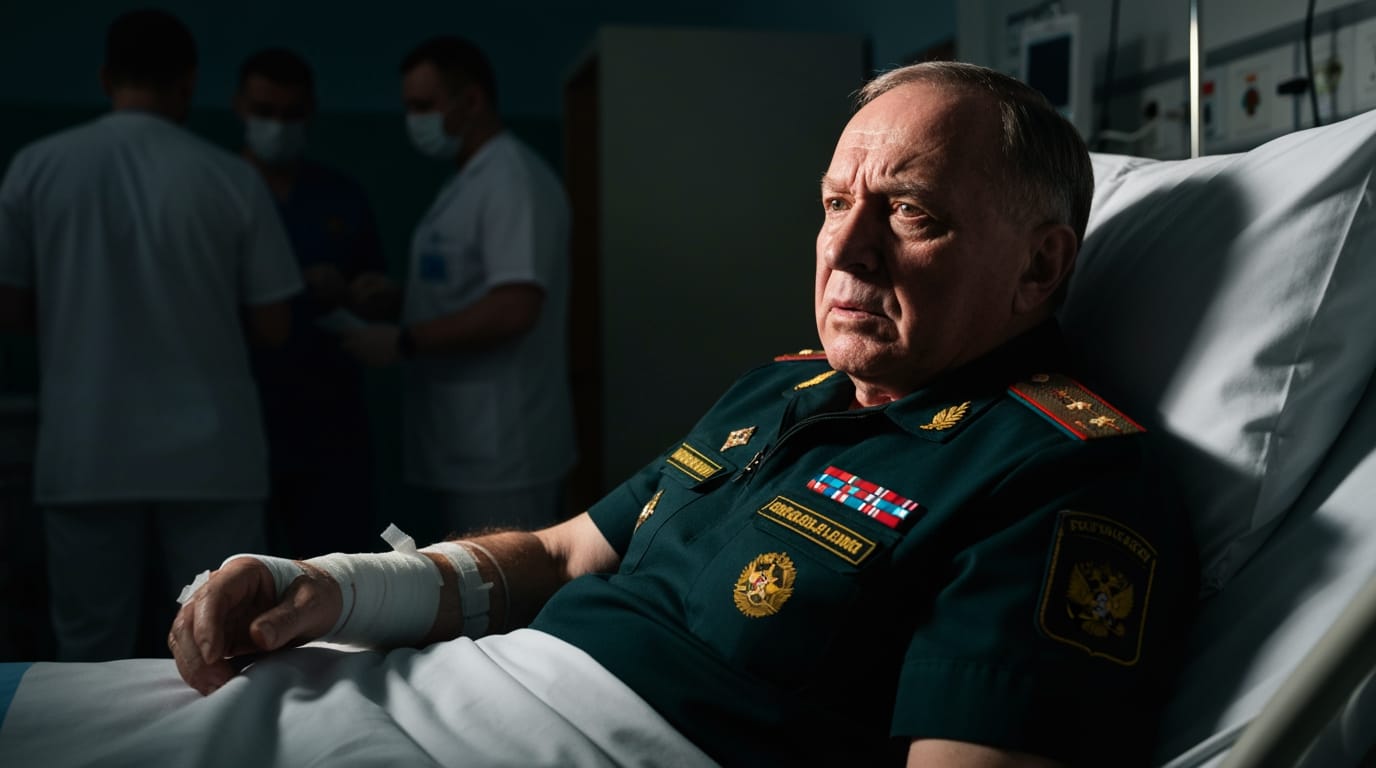
MOSCOW, Russia – Lieutenant General Vladimir Alexeyev, a high-ranking Russian military official, was hospitalized Friday morning after being shot multiple times in what authorities are investigating as an apparent assassination attempt in Moscow. The brazen attack on the senior general marks another escalation in a series of targeting incidents against prominent military figures within Russia since the onset of the conflict in Ukraine.
The Attack on General Alexeyev
The incident unfolded in a residential building located on the northwestern outskirts of Moscow. According to state media reports, citing Russian investigators, an unidentified assailant fired several shots at Lieutenant General Vladimir Alexeyev before fleeing the scene. Alexeyev was immediately rushed to a hospital, though his current condition remains unknown. Svetlana Petrenko, a spokesperson for Russia's Investigative Committee, confirmed the shooting and the general's hospitalization, indicating that a thorough investigation is underway. The attack has sent ripples through Russia's security establishment, raising questions about the safety of high-ranking personnel even within the capital.
The description of the event as an "assassination attempt" by several sources underscores the severity and deliberate nature of the shooting. The targeting of such a senior figure in a residential area of Moscow points to sophisticated planning and execution by the perpetrator or perpetrators. As of yet, no group has claimed responsibility for the attack, and Russian authorities have not publicly identified any suspects or motives. The lack of immediate clarity surrounding the assailant's identity and intentions adds a layer of uncertainty to an already tense security landscape.
Lieutenant General Vladimir Alexeyev: A Key Military Figure
Lieutenant General Vladimir Alexeyev holds a significant position within the Russian military hierarchy. He serves as the deputy chief of the Main Directorate of the General Staff at the Defence Ministry. Other reports identify him as the first deputy head of Russia's military intelligence, a role he has held since 2011. His career includes leading intelligence operations during Russia's intervention in Syria, demonstrating his experience in sensitive and critical military engagements.
Perhaps most notably, Alexeyev played a crucial role during the short-lived mutiny led by mercenary chief Yevgeny Prigozhin in June 2023. During that volatile period, he was among the top officials dispatched to negotiate with Prigozhin, a testament to his influence and perceived reliability within the military leadership. This past involvement highlights his central position in both operational and political aspects of Russia's defense apparatus. The targeting of an individual with such a profile inevitably invites speculation about the broader implications for Russia's internal stability and ongoing military operations.
A Troubling Pattern of Attacks on Russian Military Officials
The shooting of Lieutenant General Alexeyev is not an isolated incident but rather the latest in a troubling series of attacks targeting high-ranking Russian military officials since the full-scale invasion of Ukraine began in February 2022. These incidents, many of which have occurred within Russia, have varied in method and target, but collectively indicate a sustained effort to undermine Russia's military leadership. Moscow has consistently attributed many of these attacks to Kyiv.
One notable case involved Lieutenant General Igor Kirillov, who was the chief of Russia's nuclear, biological, and chemical protection forces. Kirillov was killed in December 2024 when a bomb hidden in an electric scooter detonated outside his apartment building in Moscow. This assassination occurred just a day after Ukraine's security service had reportedly leveled criminal charges against him. Interestingly, records later revealed that Kirillov had been hospitalized months earlier, in March 2024, for a gunshot wound to his upper right thigh, the circumstances of which were never clarified or publicly disclosed at the time. Ukraine's security services later claimed responsibility for Kirillov's assassination, with Russia's Federal Security Service (FSB) subsequently detaining a suspect who reportedly confessed to being recruited by Ukrainian special services.
Another high-profile general, Lieutenant General Fanil Sarvarov, head of the Russian General Staff's army operational training directorate, was assassinated in December 2025. He was killed by a car bomb planted beneath his vehicle in Moscow. This attack occurred hours after separate talks between Russian and Ukrainian delegations regarding a ceasefire. Earlier that same year, in April 2025, Lieutenant General Yaroslav Moskalik, a deputy head of the main operational department in the General Staff, died in a car bombing near Moscow. In July 2025, Major General Mikail Goodov, the deputy head of the Russian Navy, was reportedly killed in a Ukrainian missile attack. These incidents underscore a calculated and persistent campaign against figures deemed central to Russia's military efforts.
Unanswered Questions and Broader Implications
The latest attack on Lieutenant General Alexeyev brings forth a renewed wave of security concerns for the Kremlin and its military command. The fact that such a senior officer could be targeted within the confines of the Russian capital raises significant questions about internal security protocols and the reach of those seeking to destabilize Russia's military infrastructure. While authorities have initiated an investigation, the immediate absence of details regarding the assailant and their motivation leaves a vacuum that could fuel speculation and uncertainty.
The repeated targeting of Russian generals, regardless of who is ultimately responsible, has several significant implications. It could contribute to a climate of fear among senior commanders and potentially disrupt military planning and operations. Moreover, these incidents present a psychological challenge to the Russian state, demonstrating that even high-ranking officials are vulnerable. The ongoing war in Ukraine, which began in February 2022 and has since caused hundreds of thousands of casualties, serves as the grim backdrop to these internal security events.
Conclusion
The shooting and hospitalization of Lieutenant General Vladimir Alexeyev in Moscow represents a grave incident within an already volatile geopolitical landscape. As a key figure in Russia's General Staff, with a history of involvement in critical operations and high-stakes negotiations, his targeting sends a clear message of continued vulnerability for the Russian military establishment. This event follows a disturbing pattern of assassinations and attacks against high-ranking Russian military officials, incidents that Moscow frequently attributes to Ukrainian involvement. While the immediate aftermath of the attack on Alexeyev is characterized by ongoing investigations and unanswered questions about the perpetrators, it undeniably reinforces the sense of heightened internal security challenges facing Russia amid its protracted conflict with Ukraine. The full ramifications of this latest attack remain to be seen, but it is poised to further intensify scrutiny on the safety of Russia's military leadership.


