Serbia Rocked by Renewed Clashes as Protesters Demand Early Elections Amid Fraud Allegations
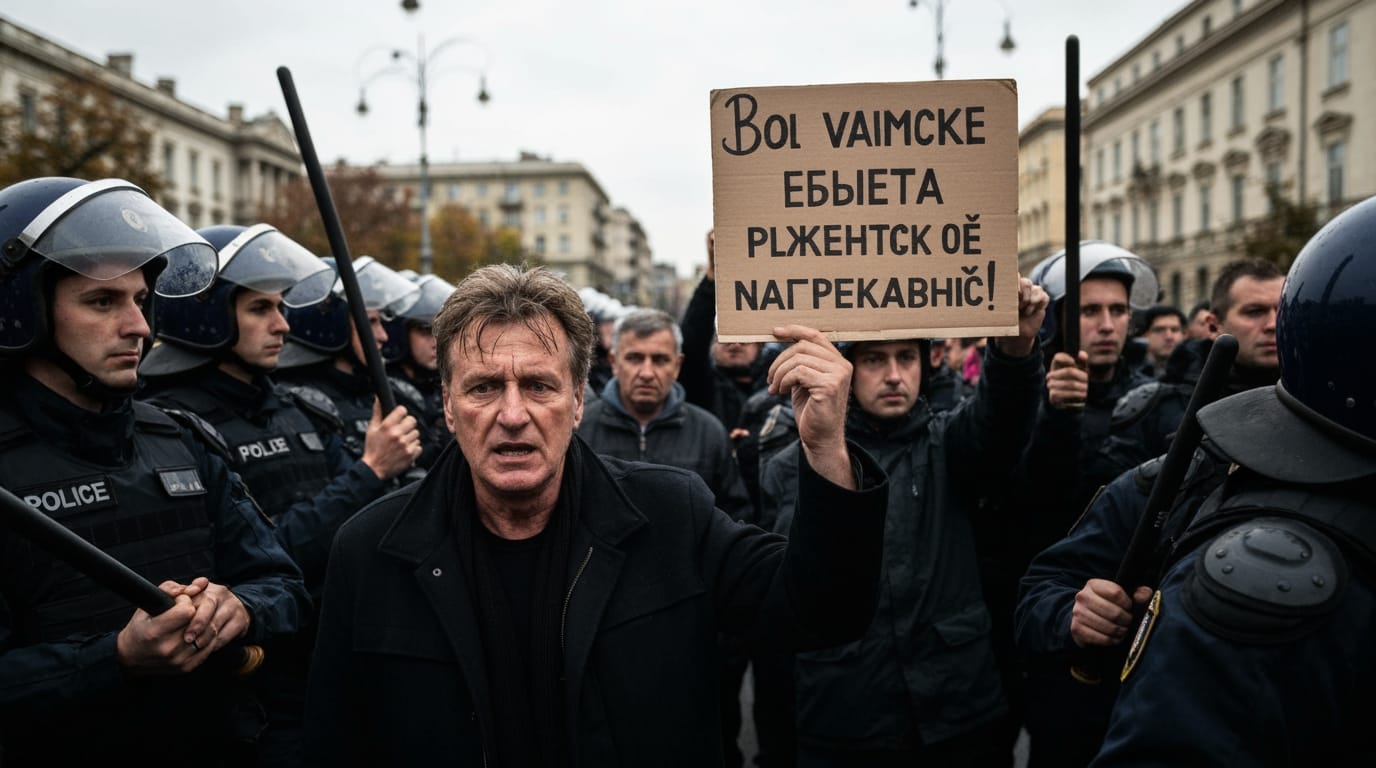
BELGRADE, Serbia – Tensions escalated sharply in Serbia's capital on Saturday, May 23, 2026, as anti-government protesters clashed with riot police in Belgrade, reigniting demands for early elections and intensified scrutiny over the integrity of the nation's democratic processes. Tens of thousands of demonstrators, largely fueled by a burgeoning student movement, accuse the government of widespread corruption and electoral fraud, leading to confrontational scenes that saw projectiles exchanged and numerous arrests. This latest outburst of unrest underscores deep-seated dissatisfaction with the ruling administration and President Aleksandar Vučić's nearly 12-year tenure, further casting doubt on political stability in the Balkan nation.
Escalation on the Streets: A Day of Confrontation
The protests on Saturday, May 23, 2026, began with a large, ostensibly peaceful rally in central Belgrade's Slavija Square, where demonstrators, many carrying banners with the "Students win" motto, voiced their grievances. However, the atmosphere quickly turned confrontational as groups of young demonstrators, including individuals identified as soccer hooligans, engaged riot police. Flares, rocks, and bottles were reportedly hurled at police cordons, prompting officers to respond with pepper spray and charges to disperse the crowds. Trash cans were rolled into the streets, while police deployed anti-riot vehicles to block demonstrators from returning to key areas. The clashes marked a significant escalation in a series of demonstrations that have periodically gripped Serbia. Protesters explicitly called for early elections and emphasized the need for the rule of law, accusing the government of pervasive crime and corruption. President Vučić, addressing the nation from a plane, criticized the demonstrators, stating they "have shown their violent nature" and would not succeed in destabilizing the state, rejecting claims of a revolution.
Roots of Discontent: Allegations of Electoral Fraud in 2023
The current wave of protests is deeply intertwined with unresolved allegations of electoral irregularities stemming from the snap parliamentary and Belgrade City Assembly elections held on December 17, 2023. Opposition groups, primarily the "Serbia Against Violence" (SPN) coalition, immediately challenged the results, citing widespread fraud. Reports from domestic and international observers, including the OSCE Office for Democratic Institutions and Human Rights (ODIHR) and the European Parliament, documented numerous irregularities. These included instances of vote buying, ballot box stuffing, group voting, and a practice dubbed the "Bulgarian train" method, alongside allegations of voters being bused in from outside Belgrade to sway local election outcomes.
The ODIHR's final report on the 2023 elections concluded that while technically well-administered, the electoral process was marred by the "decisive involvement of the President" and the ruling party's "systemic advantages," creating "unjust conditions for contestants." The European Parliament, in a resolution adopted in February 2024, regretted that the elections deviated from international standards due to "persistent and systematic abuse of the institutions and the media" by the incumbent. The opposition refused to recognize the results, particularly for the Belgrade city government where the ruling Serbian Progressive Party (SNS) claimed a narrow victory, and initiated daily protests demanding annulment and fresh elections. Despite these allegations and international concerns, the ruling SNS consistently denied any wrongdoing, with President Vučić dismissing the claims as lies promoted by the opposition and suggesting foreign interference.
A Broader Wave of Dissatisfaction: From Tragedy to Political Demands
The current political ferment in Serbia also draws momentum from a powerful student-led movement that emerged in late 2024. This movement initially coalesced in response to the tragic collapse of a railway station canopy in Novi Sad in November 2024, which killed 16 people. The disaster rapidly became a potent symbol of alleged state corruption and negligence, igniting widespread public outrage. What began as demands for accountability regarding the tragedy soon expanded into broader calls for early parliamentary elections and an end to what protesters describe as President Vučić's autocratic rule.
These student-led protests have evolved into one of the largest and most sustained civic movements in modern Serbian history, with some estimates putting attendance at rallies in Belgrade at over 100,000 people and a massive protest in March 2025 drawing over 300,000, surpassing the scale of the 2000 protests that overthrew Slobodan Milošević. Protesters adopted symbolic gestures, such as displaying "red hands" to signify "blood on the hands" of authorities, and engaged in creative forms of civil disobedience, including traffic blockades. The anti-corruption demonstrations even led to the resignation of then-Prime Minister Milos Vucevic in January 2025. However, these protests have also been met with accusations of disproportionate police force, with numerous reports of arrests and alleged beatings, drawing concern from international bodies like the Council of Europe.
Political Landscape and International Scrutiny
Serbia's political landscape has been characterized by the dominant role of President Aleksandar Vučić and his Serbian Progressive Party (SNS) since 2012. The frequent recourse to early elections, including the December 2023 vote being the third parliamentary election in less than four years, has been noted by international observers as a factor that "eroded public confidence in the functioning of democratic institutions."
The international community has closely monitored the unfolding events, with calls for investigations into electoral irregularities coming from various quarters. The United States Ambassador to Serbia urged transparency and respect for the will of the people, while the Party of European Socialists called for a full investigation into the allegations. Brussels is also under pressure to adopt a more assertive stance, particularly given Serbia's aspirations for European Union membership, with concerns raised about the country's adherence to democratic standards. Despite international calls for calm and investigations, the Serbian government has largely dismissed criticisms, often attributing the unrest to foreign incitement and defending the actions of its police force.
The recurring clashes and sustained protests reflect a nation grappling with fundamental questions about its democratic future. The confluence of alleged electoral malpractice, public frustration over corruption highlighted by a national tragedy, and a resilient opposition movement presents a significant challenge to the long-term stability and democratic credentials of Serbia. The ongoing demands for early elections, coupled with intense international observation, ensure that Serbia's political trajectory remains a key focus for both its citizens and the broader European community.


