Serbian Local Elections: Cracks Emerge in Vucic's Enduring Grip on Power
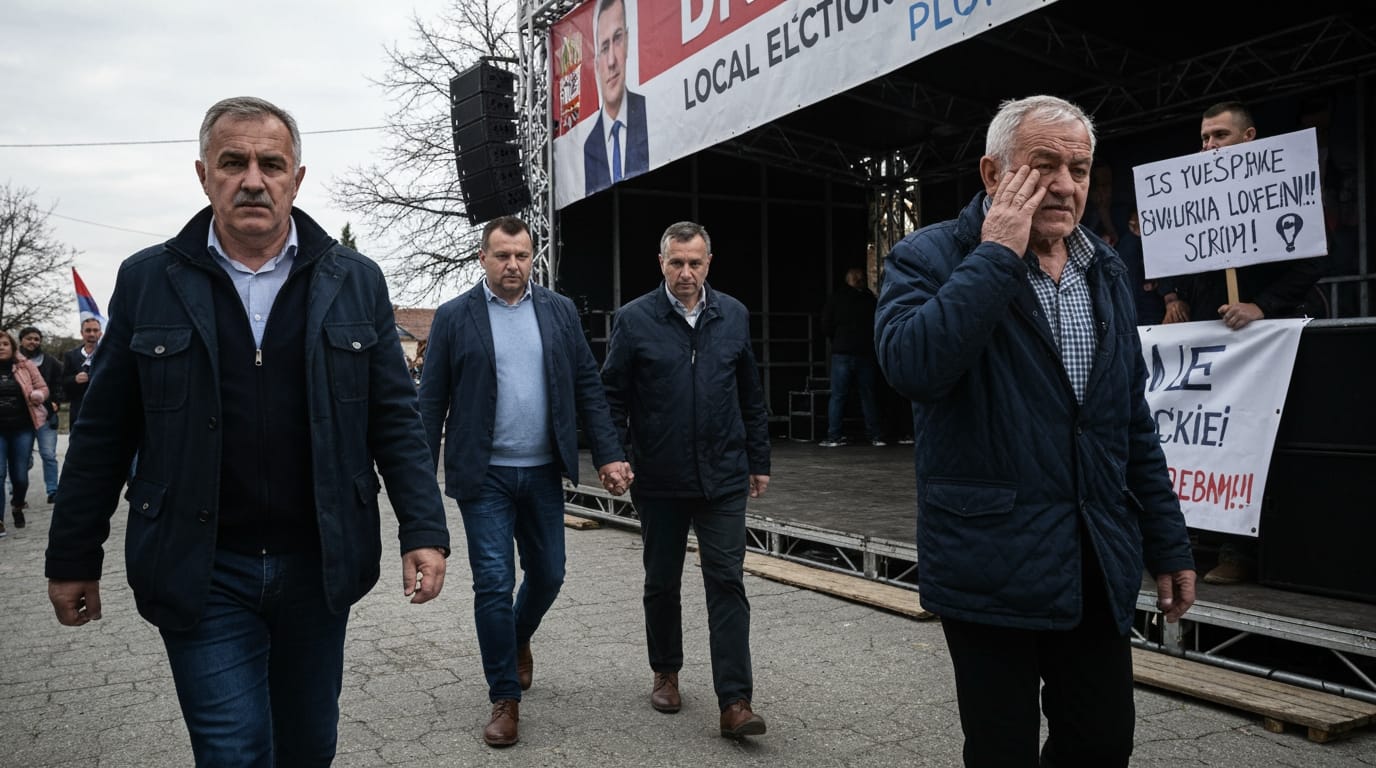
BELGRADE – Serbia's political landscape, long dominated by President Aleksandar Vucic and his Serbian Progressive Party (SNS), is showing subtle yet significant signs of strain following a series of recent local elections. While the SNS has consistently declared victory, the recurring allegations of widespread irregularities, coupled with narrowing margins in key contests and a surge in opposition and student-led activism, suggest a more contested political future for the Balkan nation. The question now looms whether these recent electoral challenges represent isolated incidents or the initial tremors of a foundational shift in Serbian power dynamics.
The Serbian Progressive Party has been the principal ruling entity in Serbia since 2012, with President Aleksandar Vucic serving as its central figure and driving force. His active campaigning, even after stepping down as the party's formal leader, underscores his pivotal role in electoral successes. The party's enduring appeal has cemented its control across various levels of government. For instance, in repeat local elections held on June 2, 2024, the SNS declared a sweeping victory in the capital, Belgrade, securing 52.85 percent of the vote and 64 out of 110 mandates in the city assembly. This performance marked a substantial improvement from the December 2023 elections in Belgrade, where the SNS had narrowly won 49 seats but failed to form a government, necessitating a rerun. Beyond the capital, the SNS also claimed victories in 88 other cities and municipalities, including Novi Sad, Serbia's second-largest city. However, even these victories were not without their undercurrents of dissent, often accompanied by reports of voter apathy.
A pervasive and deeply concerning element surrounding recent Serbian elections has been the consistent and widespread allegations of irregularities and electoral misconduct. These claims have been a hallmark of multiple election cycles, from the December 2023 parliamentary and local votes to the June 2024 repeat elections and even partial local elections as recently as March 2026. Independent observers, such as the Center for Research, Transparency and Accountability (CRTA) and the Center for Free Elections and Democracy (CeSID), along with opposition groups, have meticulously documented a range of concerning practices. These include instances of vote-buying, organized transportation of voters, double registration of voters, and possible identity manipulation. In the lead-up to elections, there have also been reports of media bias heavily favoring the ruling party, misuse of public resources for campaign purposes, and intimidation tactics against voters. The campaign environment has been described as highly polarized, with a less-than-level playing field for all political actors. Physical altercations, clashes, and obstruction of journalists and observers near polling stations have further marred the integrity of the electoral process in several locations. Despite these persistent accusations, which have led to weeks of protests and calls for investigation, the ruling party and President Vucic have consistently denied any wrongdoing, describing their victories as "incredible" and "pure and convincing."
Despite the SNS's declared successes, the collective performance of opposition parties and student movements points to a growing, albeit fragmented, challenge to the ruling party's dominance. In the December 2023 elections, the "Serbia Against Violence" coalition emerged as a formidable opponent, particularly in Belgrade, where it garnered a significant share of votes, prompting calls for protests over alleged electoral fraud. While the coalition subsequently fragmented, the spirit of opposition has found new avenues. Notably, in local elections held in Kosjerić and Zaječar in June 2025 (as reported by some sources), independent candidates backed by student protest leaders managed to significantly reduce the SNS's previous majority. In Kosjerić, a united opposition list secured 48.54% of the vote against the SNS coalition's 49.23%, a difference of just 51 votes, accompanied by an exceptionally high turnout of 85%. Similar trends were observed in Zaječar. More recently, in partial local elections across ten municipalities on March 29, 2026, while President Vucic declared an SNS victory in all contests, his party recorded a decline in support in eight of these municipalities compared to previous elections. In several of these races, student and opposition lists finished a close second, with differences of only a few percentage points, notably in places like Kula, Aranđelovac, Bor, and Sevojno. This persistent performance, often achieved despite alleged intimidation and the full weight of state resources against them, indicates a determined and increasingly mobilized segment of the electorate and civil society.
The cumulative picture emerging from these local elections paints a complex reality for Serbia. On one hand, President Vucic and the SNS continue to command significant electoral power, regularly securing majorities. On the other, the pattern of narrowing victories, particularly in urban centers and amidst strong opposition challenges, suggests that their grip, while still firm, is not as absolute as it once appeared. The relentless allegations of electoral malpractice, amplified by international observers and internal civil society organizations, cast a shadow over the democratic legitimacy of these outcomes. This erosion of trust, coupled with a more assertive and organized opposition, could lead to a more turbulent political environment moving forward. For a country aspiring to European Union membership, the adherence to democratic standards, including fair and transparent elections, remains a critical benchmark. The coming years will likely test the resilience of Serbia's democratic institutions and the capacity of its political actors to address the growing discontent and divisions within the electorate. The "grip" of Vucic's party may not be entirely lost, but it is undeniably facing unprecedented scrutiny and resistance from an increasingly vocal and engaged populace.


