Serbian President Criticizes Kosovo War Crimes Verdict and Highlights Unequal Justice
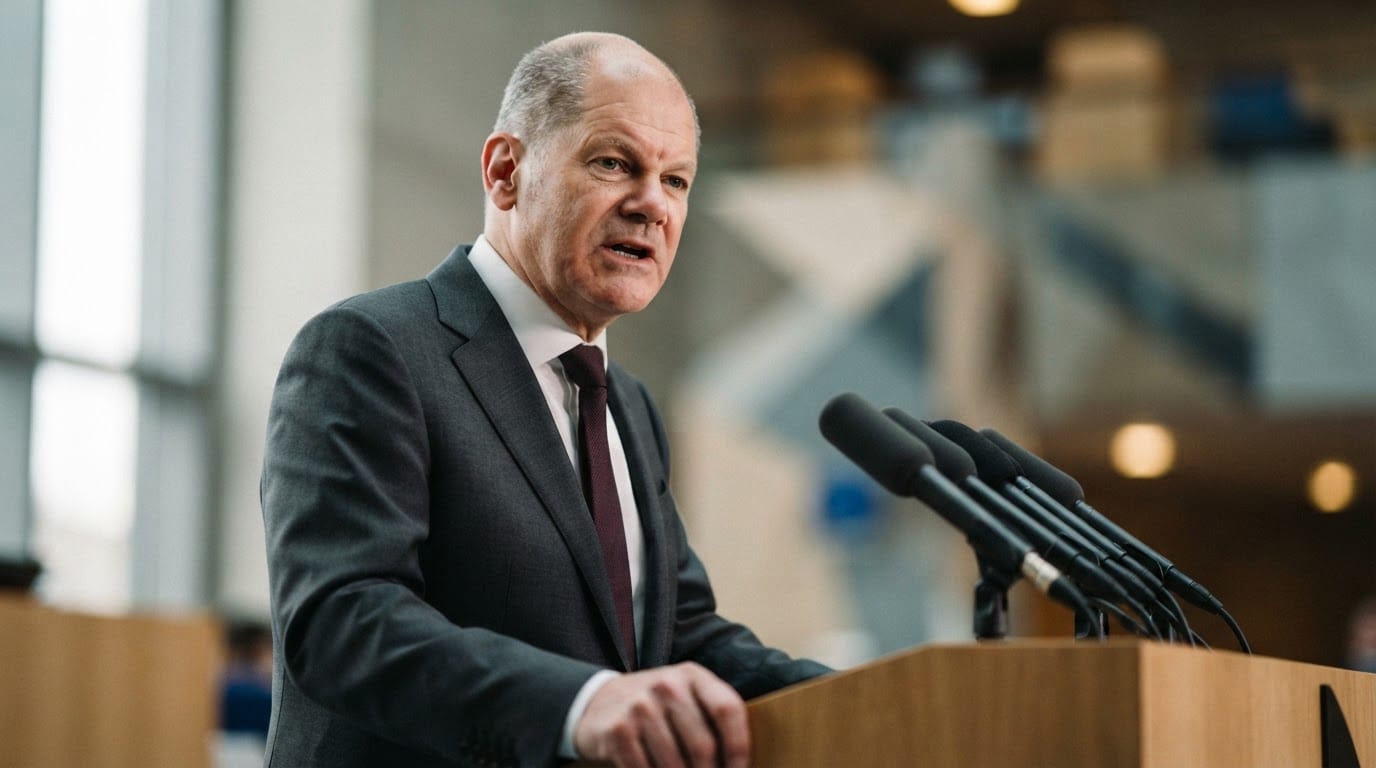
BELGRADE, Serbia — Serbian President Aleksandar Vucic criticized a major war crimes ruling against former Kosovo Liberation Army commanders, arguing that the judgment failed to deliver full justice to Serbian victims and laid bare persistent double standards across Europe.
Speaking at a news conference in Belgrade, Vucic urged the Serbian public to avoid celebration. While the Kosovo Specialist Chambers in The Hague handed down long prison terms to prominent former political and military figures, the Serbian leader insisted the legal outcome fell short by acquitting the defendants of broader crimes-against-humanity charges. His remarks reflect the enduring volatility surrounding post-conflict accountability in the Western Balkans, where contrasting interpretations of the 1998–1999 war continue to stall regional reconciliation.
The trial concluded with former Kosovo President Hashim Thaci and former parliament speaker Jakup Krasniqi each receiving 25-year sentences. Former assembly speaker Kadri Veseli received 18 years, and former military official Rexhep Selimi was sentenced to 13 years. Judges found the four men responsible for war crimes involving murder, torture, cruel treatment, and arbitrary detention. The judgment found them culpable for the deaths of 96 individuals, the illegal imprisonment of 385 people, and the torture of more than 300 captives, including ethnic Serbs, Roma, and political opponents among Kosovo Albanians.
Narrow Judicial Scope Draws Serbian Objection
Despite the severe prison terms, the Serbian government focused on what the verdict omitted. Vucic emphasized that the chamber had dismissed all counts alleging crimes against humanity, determining that prosecutors failed to demonstrate a widespread or systematic attack against the civilian population.
Vucic stated that this finding ignored crucial elements of the violence that affected ethnic Serb communities during the conflict. In Belgrade's view, narrowing the charges to individual war crimes diminished the organized nature of the campaign against minorities. The president pointed to unresolved disappearances, abductions, and murders of non-Albanian civilians, maintaining that judicial bodies repeatedly stop short of holding top leaders to the highest level of accountability.
Furthermore, Serbian officials raised concerns regarding jurisdictional boundaries that excluded alleged atrocities committed after major hostilities officially ended in June 1999. Many retaliatory attacks against Serbs and Roma occurred in the chaotic months following the withdrawal of Yugoslav forces. The dismissal of wider organizational guilt left victims' associations in Serbia feeling that institutional culpability remained unaddressed.
Accusations of International Double Standards
Vucic directed sharp criticism toward Western governments and neighboring Balkan officials, alleging an unfair asymmetry in how international observers judge wartime legacies. He claimed that while Serbian figures face immediate, unreserved condemnation from European capitals, leaders who defend former guerrilla commanders often face no formal diplomatic backlash.
The Serbian president specifically highlighted political statements from across the region praising the defendants as liberators and denouncing the tribunal's findings as unjust. Officials in Albania, North Macedonia, and Montenegro publicly challenged the ruling, describing the KLA campaign as an honorable fight for independence that should not be branded criminal.
Vucic argued that similar resistance from Belgrade against international convictions of Serbian figures routinely triggers sharp rebukes and threats of suspended European integration. He contrasted the response to the Hague sentences with the intense criticism directed at Serbian officials who attended the funeral of former Bosnian Serb commander Ratko Mladic, who died while serving a life term for genocide. Vucic cited that disparity as evidence that the international community treats former combatants with unequal measures of scrutiny.
Divergent Realities in Belgrade and Pristina
The mixed reactions across borders illustrate the ongoing divide between the two capitals. In Pristina, the capital of Kosovo, the conviction of Thaci and his peers provoked street demonstrations and deep public frustration. For the majority of ethnic Albanians, the KLA represents a necessary shield that prevented ethnic cleansing by Serbian security apparatuses under former Yugoslav leader Slobodan Milosevic. Political parties in Kosovo rallied behind the defendants, characterizing the tribunal as an outside body disproportionately targeting the defenders rather than the aggressors.
In contrast, Serbian public memory associates the guerrilla movement with abductions, the expulsion of tens of thousands of Serb families, and targeted killings of civilians. Serbian Interior Minister Ivica Dacic welcomed the guilty findings as legal validation of claims Belgrade has made for decades.
The trial also carries strong emotional weight for families of missing persons from all backgrounds. More than 13,000 people died during the 1998–1999 conflict, mostly ethnic Albanians, but hundreds of Serbs and other minorities also vanished or died in localized camps run by armed groups. The mixed legal outcome leaves many families without final answers or recognized status as victims of systemic persecution.
Implications for Regional Diplomacy
The judicial standoff lands in the middle of long-stalled European Union-mediated talks aimed at normalizing relations between Serbia and Kosovo. Kosovo declared independence in 2008, a move recognized by more than 100 nations, including the United States and most EU members, but rejected by Serbia, Russia, China, and five EU states.
The verdict is subject to appeal by both the defense and prosecution, ensuring years of additional legal wrangling before final sentences are established. With nationalist sentiment running high on both sides of the border, diplomats acknowledge that the courtroom proceedings create fresh obstacles to ongoing peace talks.
Vucic reiterated that Serbia remains open to dialogue, noting that engagement is preferable to renewed confrontation, but warned that genuine progress remains improbable as long as European mediators ignore Serbian grievances.
A Divided Path Forward
The aftermath of the Hague rulings demonstrates that judicial verdicts alone cannot resolve deep historical trauma in the Western Balkans. While the court sought to establish individual criminal liability for specific wartime abuses, the political reactions have reinforced existing ethnic divisions rather than bridging them.
By criticizing both the verdict's scope and the broader international reception, the Serbian leadership signaled that legal processes have not resolved longstanding disputes over accountability. As appeals move through the Hague judicial system, the competing interpretations of the Kosovo conflict remain a major hurdle to regional security and long-term European integration.


