Shared Sanctuaries: Germany's Enduring Experiment in Interfaith Coexistence
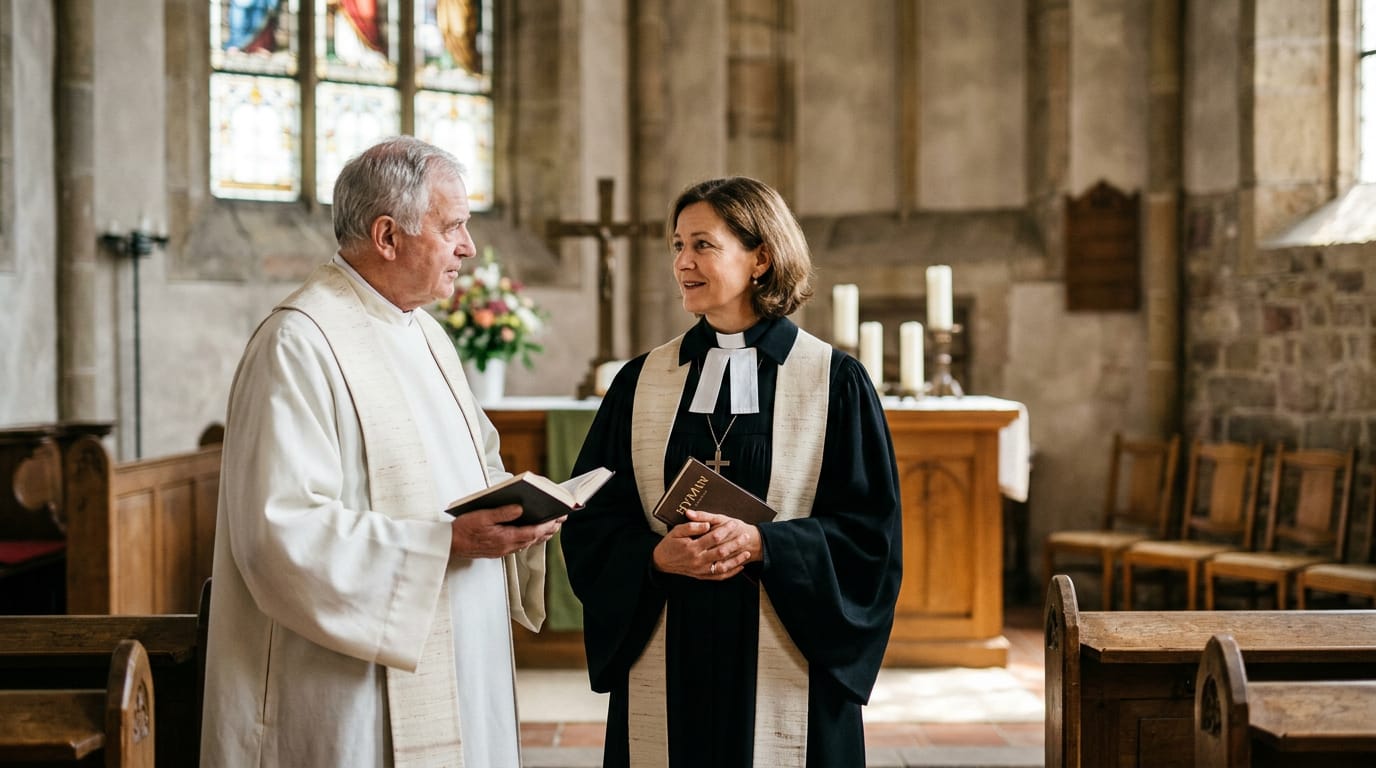
Germany stands as a unique crucible of Christian coexistence, a nation where the historical weight of the Protestant Reformation has forged centuries of intricate arrangements between Catholic and Protestant communities. From the ancient practice of physically sharing church buildings to the contemporary, often contentious, debate over sharing the Eucharist, the German experience offers a compelling narrative of adaptation, theological challenge, and ecumenical aspiration. This journey, marked by both pragmatic compromise and profound spiritual longing, continues to shape the religious landscape of a modern European state.
The Historical Foundation: The Simultaneum's Enduring Legacy
The concept of a "Simultaneum" — a term coined in 16th-century Germany — describes a church where public worship is conducted by adherents of two or more distinct religious groups, most commonly Roman Catholics and Protestants. This practice became widespread in German-speaking lands following the tumultuous Protestant Reformation. Born out of necessity and often imposed by pragmatic rulers, the Simultaneum represented a form of religious toleration, especially in regions where a ruler's faith differed from that of the majority population, or where they lacked the power to enforce religious uniformity.
Such shared churches function by allowing different denominations, such as Roman Catholics, Lutherans, or Reformed congregations, to utilize the same sacred space, albeit at distinct times and with their respective clergy. A notable historical instance occurred during the Nine Years' War (1688–1697) when Louis XIV of France introduced the Simultaneum in the predominantly Protestant Electorate of the Palatinate. Although the region later reverted to Protestant control, a last-minute addition to the Treaty of Ryswick ensured the continuation of this shared arrangement. The policy was also subsequently applied in parts of Protestant Alsace. These historical accommodations laid a foundational precedent for interdenominational relations, demonstrating a centuries-old German tradition of navigating religious pluralism within shared physical structures.
Modern Ecumenism and the Communion Divide
While shared physical spaces have historical roots, the modern era has shifted focus to shared spiritual practices, particularly the contentious issue of intercommunion — the reception of the Eucharist by members of different denominations. This topic carries significant weight in Germany, a country where Christians are almost evenly divided between Catholics and Protestants, and where mixed-faith marriages are common. For many couples, the inability to share the central sacrament of their faith poses a profound challenge. As one Catholic-Lutheran couple noted in 2018, it is "totally unimaginable" to be separated at the "table of the Lord" when they share every other aspect of their lives.
This deeply personal desire for unity at the altar has fueled a broader ecumenical movement in Germany, leading to calls for greater "ecumenical hospitality" within a deeply divided Christian tradition. However, the differing theological understandings of the Eucharist and ministry between Catholicism and various Protestant denominations present formidable doctrinal hurdles, creating a tension between pastoral needs and established Church doctrine.
A Flashpoint: The Ecumenical Convention and Vatican Response
The tensions surrounding intercommunion came to a head in May 2021 at an Ecumenical Convention in Frankfurt, where Protestant and Catholic worshippers openly defied traditional Church teaching by participating in each other's celebration of the Lord's Supper. During the event, Catholic attendees were invited to partake in an Evangelical Supper, and similarly, Protestants were extended an invitation to the Catholic Eucharist, with the decision left to individual conscience.
This bold move was epitomized by the actions of prominent leaders: Bettina Limperg, the Protestant co-president of the Ecumenical Church Congress, received Holy Communion at a Catholic Mass, while her Catholic counterpart, Thomas Sternberg, participated in a Protestant Lord's Supper service. Sternberg characterized the experience as deeply moving and an embodiment of "ecumenical hospitality".
However, these actions did not go unchallenged. Cardinal Gerhard Müller, Prefect Emeritus of the Congregation for the Doctrine of the Faith, strongly condemned the invitations as a "provocation," asserting that "Anyone who contradicts Catholic teaching and its binding interpretation by the Roman teaching office is no longer Catholic". Bishop Georg Bätzing, president of the German bishops' conference, adopted a more nuanced stance, stating that while general intercommunion was not permitted, he respected the "personal decision of conscience" of individuals to receive Communion in Catholic churches.
The Vatican's Congregation for the Doctrine of the Faith (CDF) had previously intervened in September 2020, voicing "strong objections" to proposals for shared communion. The CDF unequivocally stated that significant doctrinal differences concerning the Eucharist and ministry remain "still so grave" that they preclude reciprocal participation in the Lord's Supper and the Eucharist. The Congregation cautioned against steps towards intercommunion, emphasizing that existing differences "currently rule out reciprocal participation".
The Human Element and Ongoing Dialogue
Despite the Vatican's clear directives, the desire for shared communion persists, especially among the growing number of interfaith couples in Germany. The dilemma they face highlights a poignant human dimension to the theological debate. For these couples, the Church's stance can feel like a direct imposition on their shared spiritual journey and marital unity.
In response to these pastoral realities, the German Catholic bishops' conference attempted to draft guidelines in February 2018, aiming to provide priests with criteria for when they might distribute Catholic Communion to Protestants. This initiative, however, triggered a significant internal conflict between reformers and conservatives, and ultimately led to mixed signals and perceived "flip-flops" from the Vatican. While some dioceses reflect a more open attitude on their official websites, others remain hesitant, underscoring the ongoing confusion within the German Catholic Church.
Pope Francis, while affirming the sanctity of doctrine, has acknowledged the complexities. He has stated that while he cannot issue a general rule on shared communion, couples should engage in prayer and study, and then act according to their consciences. He also clarified that Catholic canon law does allow for intercommunion in "exceptional cases," granting bishops the authority to make such decisions within their dioceses. This guidance has, at times, been interpreted differently by various factions, contributing to the nuanced and evolving nature of the debate. Dialogue continues between the German Catholic bishops' conference and the council of the Evangelical Church in Germany, recognizing that while questions remain weighty, the pursuit of greater Christian unity is an ongoing endeavor.
Conclusion
Germany's journey with shared religious spaces and practices illustrates a dynamic interplay between historical precedent, evolving ecumenical aspirations, and deeply held theological convictions. The centuries-old Simultaneum stands as a testament to practical accommodation, fostering coexistence even amidst profound differences. In contrast, the contemporary debate over shared communion illuminates the more intricate challenges of reconciling doctrinal distinctions with a profound human desire for spiritual unity.
As German Catholic and Protestant communities continue to navigate these complexities, their experience offers a microcosm of broader global ecumenical efforts. The tension between maintaining distinct confessional identities and fostering greater Christian solidarity remains palpable. Yet, through ongoing dialogue, pastoral discernment, and the persistent longing for unity, Germany continues to write a unique chapter in the story of shared faith, where sacred spaces and sacred rites are both sources of division and powerful symbols of a shared Christian heritage.


