Shifting Sands? Examining the U.S. Command Role in South Korea
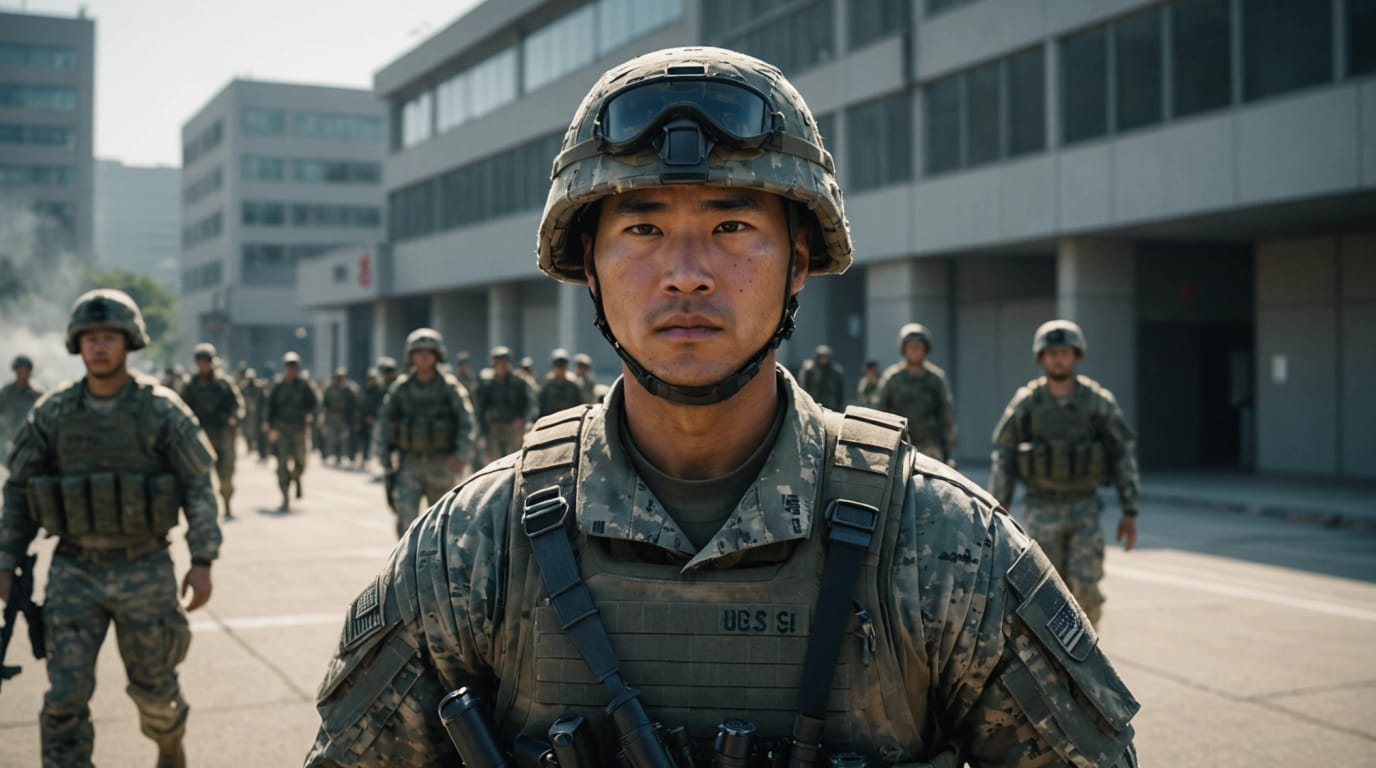
The United States and South Korea have maintained a robust military alliance for over seven decades, a partnership forged in the crucible of the Korean War. With approximately 28,500 U.S. troops stationed on the Korean Peninsula, the U.S. has played a central role in deterring North Korean aggression and maintaining regional stability. However, in light of South Korea's growing military capabilities, evolving geopolitical dynamics, and persistent questions regarding command structure, discussions about a potential re-evaluation of the U.S. command role have emerged.
A History of Combined Defense
The foundation of the U.S.-South Korea alliance is the 1953 Mutual Defense Treaty, committing the U.S. to defend South Korea against external aggression. This treaty led to a continuous U.S. military presence on the peninsula. In 1978, the two countries established the Combined Forces Command (CFC), a bi-national military organization. The CFC serves as the warfighting headquarters, with operational control over both South Korean and U.S. forces in the event of conflict. A U.S. general traditionally leads the CFC, while a South Korean general serves as the deputy commander. The U.S. Forces Korea (USFK) supports both the United Nations Command (UNC) and CFC by coordinating and planning among U.S. component commands and providing U.S. supporting forces to the CFC.
The U.S. military presence in South Korea is extensive, including active-duty soldiers, sailors, airmen, and marines, as well as nine major bases. Key components of USFK include the U.S. Eighth Army, U.S. Air Forces Korea (Seventh Air Force), U.S. Naval Forces Korea, U.S. Marine Forces Korea, and U.S. Special Operations Command Korea.
South Korea's Ascendant Military
South Korea has emerged as a significant military power in its own right. The country's defense capabilities have grown substantially, with a focus on advanced conventional weapons and an expanding indigenous defense manufacturing sector. South Korea's military is consistently ranked as a top global defense power. In 2025, South Korea was ranked 5th out of 145 countries considered for the annual Global Firepower review.
South Korea's military strategy has become increasingly offensive over the past decade, highlighted by the "three-axis system," which includes preemptive strike capabilities, a robust air and missile defense system, and a plan for massive retaliation against the North Korean leadership. This shift reflects South Korea's need to address the growing threat posed by a nuclear-capable North Korea.
The Question of Wartime Operational Control
One of the most debated aspects of the U.S.-South Korea alliance is the issue of wartime operational control (OPCON). Currently, in the event of war, South Korean forces would fall under the command of the U.S.-led CFC. For some time, Seoul has sought to reverse these command roles, with a South Korean general leading the CFC and an American general serving as the deputy.
The transfer of wartime OPCON to South Korea has been a long-standing goal, with discussions dating back to the George W. Bush administration. While progress has been made, the transfer has been repeatedly delayed due to concerns about South Korea's readiness and the evolving security situation on the Korean Peninsula. As of September 2023, the transfer of wartime control to South Korea is on an indefinite “conditions-based” timeline.
Cost-Sharing and Burden Sharing
Another factor influencing the U.S. command role is the issue of cost-sharing. The U.S. has long sought greater financial contributions from South Korea to offset the expenses of maintaining U.S. forces on the peninsula. Negotiations over cost-sharing agreements have sometimes been contentious, particularly during the Trump administration, when demands for increased payments led to friction between the two allies.
In November 2024, South Korea's National Assembly approved a new cost-sharing agreement with the United States for stationing American troops on the Korean Peninsula, clearing the way for the deal to take effect in 2026. Under the new terms, South Korea will pay $1.1 billion initially and increase its contribution annually in line with proportional changes to its consumer price index.
Future Trajectory
The U.S.-South Korea alliance remains a cornerstone of regional security, but the specific nature of the U.S. command role is subject to ongoing discussion and potential adjustments. Several factors could influence the future trajectory of this alliance.
- North Korea: The continued development of North Korea's nuclear and missile programs will likely remain a central concern, shaping the alliance's priorities and military posture.
- South Korea's Capabilities: As South Korea's military capabilities continue to advance, the argument for transferring wartime OPCON will likely gain further traction.
- Geopolitical Shifts: The rise of China and evolving dynamics in the Indo-Pacific region could prompt adjustments in the alliance's strategic focus and operational arrangements.
- U.S. Policy: Changes in U.S. foreign policy and defense strategy could also impact the U.S. command role in South Korea.
Conclusion
The U.S.-South Korea alliance has been a vital partnership for maintaining peace and stability on the Korean Peninsula and in the broader Indo-Pacific region. While the U.S. commitment to South Korea remains strong, the specific contours of the U.S. command role are likely to evolve in response to changing circumstances. As South Korea continues to strengthen its military capabilities and as geopolitical dynamics shift, both countries will need to adapt their alliance to ensure its continued effectiveness in deterring aggression and promoting regional security. The alliance is broadening in scale and scope, and the United States and the ROK will continue to withstand the strains of broader geopolitical dynamics, protect democratic values, and uphold the rules-based order.


